
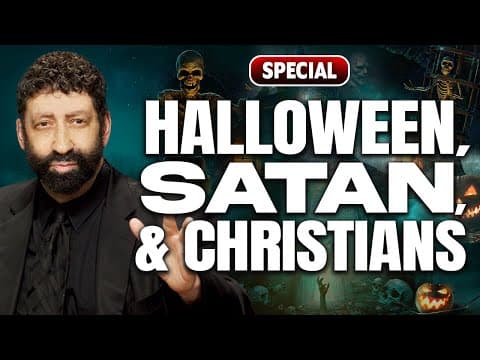
This blog post explores the origins and implications of Halloween from a Christian viewpoint. It discusses the holiday's connections to darkness, paganism, and the occult, questioning whether Christians should participate in Halloween festivities. The post also offers alternatives for believers to engage with the holiday in a way that glorifies God, emphasizing the importance of discernment and redemption in celebrating or abstaining from Halloween.
As autumn arrives, the air turns crisp, leaves change color, and Halloween approaches. This holiday, often filled with skeletons, ghosts, and other symbols of darkness, raises important questions for Christians: Is Halloween a harmless celebration, or does it have deeper, more sinister roots? In this post, we will explore the origins of Halloween, its implications for believers, and how Christians can navigate this holiday.
Halloween is a holiday that prominently features themes of darkness, evil, and the occult. It is characterized by costumes of witches, ghosts, and monsters, and encourages children to engage in trick-or-treating—a practice that can be viewed as extortion. Children dress up as frightening figures and go door-to-door, demanding treats with the threat of tricks if they are not given candy. This raises the question: what kind of values are we instilling in our children through this holiday?
The imagery associated with Halloween—skeletons, graveyards, and spirits—suggests a celebration of death and the macabre. The question arises: why would we want our children to participate in a holiday that glorifies such themes? The holiday's focus on evil and the supernatural can be troubling, especially for those who seek to follow a path of light and righteousness.
Halloween's origins can be traced back to ancient pagan traditions, particularly among the Celtic cultures of Ireland and Scotland. It marked the beginning of the darker half of the year, a time when the veil between the physical world and the spirit world was believed to be thin. During this time, people would offer food and drink to appease spirits, fearing their wrath if they did not receive offerings.
The term "Halloween" itself derives from "All Hallows' Eve," which is linked to All Saints' Day. However, even this connection has pagan roots, as it was originally a time to honor the dead. The practices of dressing up as spirits and going door-to-door for treats are remnants of ancient rituals meant to ward off evil spirits.
In contemporary America, Halloween has transformed into a massive commercial enterprise, generating approximately $13 billion annually. The decorations and costumes have become increasingly elaborate, with many households now spending significant amounts on Halloween decor, rivaling Christmas expenditures. This shift reflects a broader cultural trend of embracing darker themes while sidelining traditional Christian values.
Halloween is not just a harmless holiday; it is deeply intertwined with paganism and, in some cases, satanic practices. It is considered one of the most significant days on the satanic calendar, where rituals involving dark magic and the occult are performed. This raises serious concerns for Christians about participating in a holiday that celebrates such darkness.
When considering whether Christians should partake in Halloween, it is essential to reflect on the holiday's true nature. If Halloween were introduced today as a new holiday centered around death and spirits, it is unlikely that many would embrace it. The Bible warns against engaging with darkness and the appearance of evil, which Halloween embodies.
However, it is also important to recognize that not all believers view Halloween the same way. Some may choose to celebrate it without understanding its origins, while others may feel comfortable redeeming the day for positive purposes.
For those who wish to avoid Halloween's darker elements, there are several alternatives:
As Christians, we are called to glorify God in all that we do, including how we approach holidays like Halloween. Whether one chooses to abstain from Halloween entirely or to redeem it through positive activities, the focus should always be on bringing light into darkness. It is crucial to avoid judging others for their choices while remaining true to one's convictions.
Ultimately, the decision to participate in Halloween should be made with discernment, prayer, and a clear understanding of its implications. As we navigate this holiday, let us strive to honor God in our actions and choices, ensuring that we reflect His light in a world that often embraces darkness.



















