
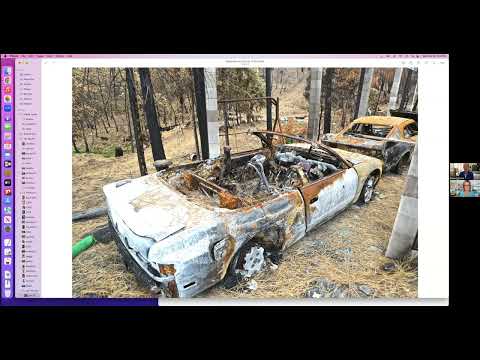
Forensic arborist Robert Brame discusses the peculiarities of recent wildfires in California and Chile, highlighting the unusual behavior of trees and materials during these fires, suggesting that many factors, including potential technological influences, contribute to the destruction observed.
In a recent discussion, forensic arborist Robert Brame shared his insights on the unusual behavior of trees and materials during wildfires, particularly focusing on the devastating fires in California and Chile. With decades of experience studying trees and their interactions with fire, Brame provides a unique perspective on the anomalies observed in these recent disasters.
Brame began by reflecting on his extensive experience with trees, noting that he has studied their behavior, growth, and demise for nearly fifty years. He emphasized that the patterns observed in the wildfires of California and Chile reveal significant anomalies that defy conventional understanding of how fires should behave.
Brame highlighted the 2017 Santa Ana fires and the 2018 Paradise fire, where thousands of homes were reduced to white ash while surrounding trees remained largely intact. He pointed out that the Ponderosa Pine, California's most common forest tree, did not burn as expected, raising questions about the conditions that led to such destruction.
Interestingly, Brame noted that the number of homes destroyed in Chile was comparable to those lost in California, with reports indicating around 15,000 homes affected. This similarity prompted further investigation into the underlying causes of these fires.
Brame's analysis revealed several key anomalies in the behavior of trees and materials during these fires:
Brame observed that many trees, particularly oaks, were burning from the inside out without any external ignition source. This behavior is contrary to what is typically expected, as younger trees should not have internal cavities that could ignite.
In many cases, materials that should have burned, such as plastic toys and garden hoses, remained intact, while surrounding structures were obliterated. Brame noted that this phenomenon was consistent across various fire sites, suggesting a pattern rather than isolated incidents.
Brame discussed the temperatures involved in these fires, noting that typical forest fires do not reach the extreme temperatures required to melt glass or aluminum. He pointed out that while forest fires generally peak at around 1,427 degrees Fahrenheit, the temperatures observed in these incidents were significantly higher, sometimes exceeding 2,500 degrees.
Brame speculated that various technological factors might be influencing the behavior of these fires. He mentioned the possibility of directed energy weapons or other advanced technologies that could create conditions leading to such anomalies. This speculation raises important questions about the nature of modern wildfires and the potential for human intervention.
The discussion with Robert Brame sheds light on the complex and often perplexing nature of recent wildfires in California and Chile. His observations challenge conventional wisdom about fire behavior and highlight the need for further investigation into the factors contributing to these devastating events. As wildfires continue to impact communities worldwide, understanding the underlying causes and anomalies becomes increasingly crucial for prevention and response efforts.



















