
A DW investigation reveals a massive climate fraud scheme involving Chinese companies and German carbon credit systems, where existing projects were falsely presented as new, leading to potential losses exceeding one billion euros.
It could be the biggest climate fraud in German history. A tool meant to make the oil industry cleaner has provided criminals with a unique opportunity for a billion-euro fraud. This blog post delves into the findings of an investigation conducted by DW's investigative unit in collaboration with Germany's public broadcaster ZDF, uncovering a complex web of deceit that stretches from Germany to oil fields in China.
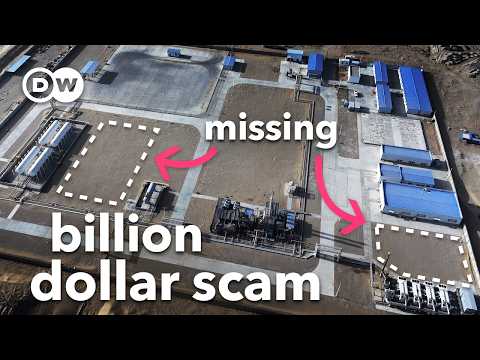
The investigation began with complex carbon credits certified in Germany, which were linked to the Shengli oilfield in Eastern China. Documents obtained by the investigative team indicated that the owners of this oilfield had supposedly installed new energy-efficient equipment designed to reduce carbon emissions by over 250,000 tons per year. This modernization was approved as an environmental protection project in Germany.
In May, a ZDF colleague traveled to the Shengli oilfield to verify the existence of the new equipment. However, local workers, including Mr. Cao, who had extensive experience in the area, reported that they had never seen such equipment. The investigation team then visited the company that was purportedly responsible for the installation, only to find an abandoned chicken coop at the listed coordinates.
The investigation revealed that many Chinese projects sold to German companies were fraudulent. Setting up a legitimate project costs tens of millions, while faking one requires only forged documents, yielding hundreds of millions in return. Since 2020, oil companies in Germany have been able to invest in projects that reduce carbon emissions in other countries, such as China, in exchange for carbon credits to meet their emission reduction obligations.
The Federal Environment Agency in Germany is responsible for approving these projects, with a key requirement being that the facilities must be new. However, the agency's president, Dirk Messner, admitted that none of its employees had ever visited the projects in China, relying instead on private auditing companies for verification.
The investigation uncovered numerous irregularities in project documentation. For instance, one project claimed to save over 120,000 tons of carbon emissions per year but had been operational since before its application date. Satellite images confirmed that existing installations were falsely submitted as new projects.
Experts in international climate policies, such as Axel Michaelowa, confirmed that many of these projects should never have been approved. The investigation identified at least 16 fraudulent projects in China, all seemingly submitted by different companies, raising questions about the knowledge of these loopholes among Chinese firms.
The investigation also highlighted the role of auditors in this scheme. An insider revealed that a significant portion of Chinese projects came from a single project proponent, with only a couple of auditing companies validating these projects. This concentration raised concerns about potential collusion.
The auditors involved in the projects had excellent reputations, yet inconsistencies in their reports suggested possible negligence or worse. For example, one project was reported to have six storage tanks, while satellite images only showed four. The auditors denied any wrongdoing, but the prosecutor's office in Berlin has since launched investigations into several auditing companies.
The fallout from the investigation has prompted political action, with members of the German Parliament questioning the president of the environmental agency. The agency has placed 45 projects under suspicion, valued at approximately one billion euros, and is working to rescind as many credits as possible.
The investigation reveals a troubling reality: it did not take much to defraud a system designed to promote climate protection. With the right paperwork and connections in Germany, a single Chinese company was able to generate hundreds of millions of euros from fraudulent claims. The full extent of the damage remains to be seen, but the implications for international climate policy and regulatory oversight are profound.



















