
Europe's reliance on imported raw materials has prompted a shift towards urban mining and recycling, aiming to recover strategic metals and reduce waste through innovative practices in electronics and construction.
Europe faces a significant challenge regarding its raw material supply, importing 90% of its critical resources. In response, the European Union is pushing for a circular economy to reduce this dependence. This blog post explores the concept of urban mining, focusing on how recycling and reusing materials can be both environmentally and economically beneficial.
The geopolitical landscape necessitates a shift towards circular practices. The European Union aims to ensure that by 2030, a quarter of the critical materials consumed will come from recycling. Currently, only about 12% of products used in the EU are derived from recycled materials. To achieve these ambitious goals, the EU is set to introduce a Circular Economy Act, which will update directives on electronic waste and other materials.
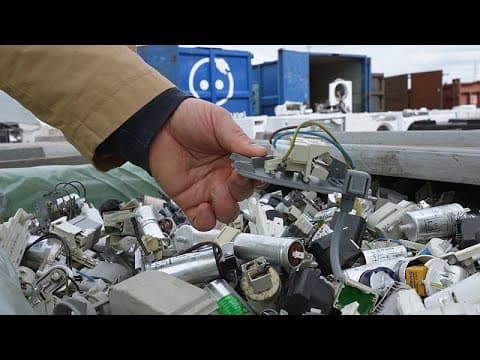
In the suburbs of Brussels, the Recupel Association is actively collecting electronic devices. On average, a Belgian family owns 74 electronic devices, with 13 of them lying unused. The collection tour focuses on recycling devices that are no longer in use. The goal is to recondition or recycle these devices to recover valuable materials such as rare earth metals, aluminum, and copper, which are essential for the green and digital transitions.
Companies like Comet Som are leading the charge in metal recycling, utilizing artificial intelligence to sort metals efficiently. This technology is crucial as the demand for resources continues to grow. The European Commission emphasizes the need for policies that promote circular competitiveness, ensuring that recycled materials become economically viable compared to virgin materials.
The building sector is another area where urban mining can make a significant impact. It accounts for 40% of total waste generated. In Denmark, pilot projects are underway to gently dismantle materials for reuse. For instance, bricks can be cleaned and reused, while concrete, known for its high CO2 emissions, can be repurposed without the need for recasting.
Despite the potential for reusing concrete, much of it is still downcycled, resulting in lower-value applications. The Circular Economy Act aims to address these challenges by reviewing waste legislation to minimize non-recycled materials. Innovative companies are investing in technology to sort mixed waste, which includes wood, concrete, metal, and plastic, making recycling more efficient and environmentally friendly.
A Danish scale-up, A gain, is creating construction products from waste materials that would otherwise be incinerated. Their products include plastic boards made from 100% consumer waste and glass partitions from demolition sites. Currently, Denmark's recycling rate in the building environment is only around 4%, highlighting the need for improvement as global construction demands increase.
Architects like Lendara are leading the way in sustainable building practices. They focus on reusing materials from existing structures, such as steel beams from a former wholesale market, to minimize waste. Their mantra, "form follows availability," emphasizes the importance of utilizing available resources responsibly.
The journey towards a more circular economy in Europe is gaining momentum, driven by innovative practices in recycling and urban mining. As the EU sets ambitious targets for material recovery, the collaboration between technology, policy, and sustainable practices will be crucial in transforming waste into valuable resources. The shift towards viewing materials as scarce assets is essential for ensuring a sustainable future.



















