
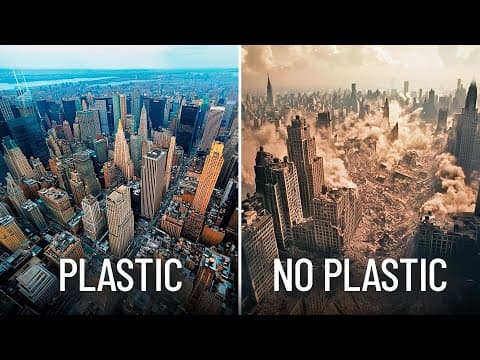
The sudden disappearance of all plastic on Earth would lead to catastrophic consequences for modern civilization, affecting infrastructure, healthcare, and daily life. While plastic pollution is a significant issue, innovative recycling technologies like Hydrochemolytic Technology offer potential solutions to manage plastic waste sustainably without sacrificing modern conveniences.
Plastic is an integral part of our daily lives, from the containers we use to store food to the materials that make up our smartphones. But what if all the plastic on Earth suddenly vanished? This thought experiment reveals the deep reliance modern civilization has on plastic and the potential chaos that could ensue.
Plastic is not just a convenience; it is a critical component of our infrastructure. It is used in construction materials, power cables, medical devices, and much more. The sudden absence of plastic would not merely inconvenience us; it could lead to catastrophic failures in essential services. Imagine airplanes falling from the sky, cities plunged into darkness, and hospitals unable to function due to the lack of plastic components in medical equipment.
While plastic is essential, our relationship with it is complicated. Currently, only about 10% of plastic is recycled. The rest ends up in landfills, incinerators, or, alarmingly, our oceans. Each year, between 1 to 8 million tons of plastic enter the oceans, harming marine life and ecosystems and introducing microplastics into our food chain. This raises the question: if plastic disappeared, would it save the planet or destroy modern civilization?
Many people believe that recycling is a straightforward solution to plastic waste. However, recycling is more complex than it appears. Plastics are categorized by resin identification codes, which indicate their chemical properties and recyclability. For example, type 1 plastic (like water bottles) is relatively easy to recycle, while type 6 plastic (like Styrofoam) poses significant challenges.
Recycling methods fall into two categories: mechanical and chemical. Mechanical recycling involves sorting plastics, melting them down, and reshaping them into new products. However, this process is labor-intensive and can be hindered by contamination, leading to only certain types of plastics being recycled effectively.
The idea of eliminating plastic altogether may seem appealing, but the consequences could be dire. Without plastic, everyday items like alarm clocks, phones, and even food packaging would vanish, leading to chaos in our daily lives. The absence of plastic would not just be an inconvenience; it would paralyze society, as we are not equipped to function without it.
Instead of eliminating plastic, innovative solutions are being developed to address the plastic waste crisis. One such solution is Hydrochemolytic Technology (HCT), developed by Aduro Clean Technologies in Ontario, Canada. HCT is a form of chemical recycling that breaks plastics down at the molecular level, turning them back into their basic building blocks.
The process involves shredding solid plastic waste and mixing it with water, a catalyst, and a hydrogen source in a reactor. This mixture is subjected to heat and special ingredients, resulting in high-purity liquid oils that can be transformed into new plastics or fuel. This method not only uses lower temperatures, reducing energy consumption and carbon footprint, but also addresses the issue of reliance on fossil fuels by reusing existing plastic.
Aduro Clean Technologies is working towards creating a circular economy where plastic is recovered, reused, and given a second life. After years of research and development, Aduro is scaling up its technology and building a pilot plant, with the potential to revolutionize how we manage plastic waste.
The sudden disappearance of plastic would not solve the problems associated with plastic pollution; it would create new, larger issues. Instead of wishing for a world without plastic, we should focus on innovative recycling technologies that allow us to manage plastic waste sustainably while maintaining the conveniences of modern life. As we explore solutions, it is crucial to remember that simply eliminating a problem does not always lead to a better outcome.



















