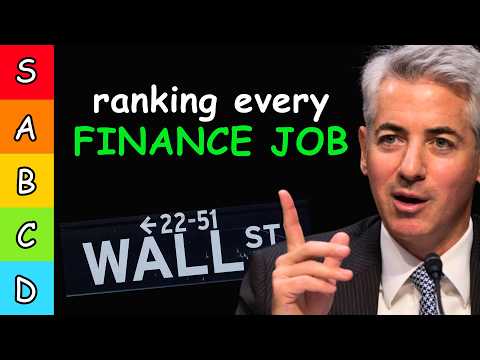
There are seven major career paths in high finance that many ambitious high school graduates consider after being inspired by movies like The Wolf of Wall Street. These are investment banking, private equity, hedge funds, venture capital, quantitative finance, asset management, and proprietary trading. Each of these careers is prestigious and well-paid but comes with very different roles, challenges, and trade-offs.
This guide ranks these seven careers across key factors that truly matter: compensation, work-life balance, entry difficulty, exit opportunities, job security, and the societal value of the work.
Investment Banking
Investment banking is often the first finance career people hear about, though many don’t understand what it entails. It is arguably the most prestigious but also one of the toughest in terms of quality of life.
- Pay: First-year analysts earn a base salary around $110K, with total compensation between $165K and $225K including bonuses. Associates with a couple of years’ experience can make between $285K and $500K. Managing Directors (MDs) can earn $1 million to $2 million, but it takes 12 to 15 years to reach that level.
- Hours: Extremely demanding, with leaked data showing first-year analysts working up to 95 hours per week and sleeping only 5 hours a night. Typical ranges are 70 to 90 hours weekly, with spikes over 100 during live deals.
- Entry Difficulty: Tough but achievable with a degree from a target school, strong GPA, and internships.
- Job Security: Moderate to low, as banks hire and fire in cycles depending on deal flow and economic conditions.
- Exit Opportunities: Excellent. Experience in investment banking opens doors to almost any other Wall Street job.
- Meaning: Moderate. The work involves helping corporations acquire others and building financial models, but it is largely abstract and focused on profit.
Overall Ranking: B tier. High pay and exit opportunities come at the cost of long hours and personal sacrifice.
Private Equity (PE)
Private equity is where investment bankers often go for more money and slightly better hours.
- Pay: Associates earn $250K to $400K, with mega funds paying even more. The real money comes from carried interest, a share of the fund’s profits, which can lead to seven or eight-figure earnings for partners.
- Hours: Still demanding, averaging 60 to 70 hours per week for associates, with senior roles easing to about 50 to 52 hours.
- Entry Difficulty: Very high. Most PE associates come from top investment banks, making entry extremely competitive.
- Job Security: Moderate. PE funds raise capital cyclically, and career progression is cutthroat.
- Exit Opportunities: Strong. Options include hedge funds, corporate strategy, portfolio operations, or launching your own fund.
- Meaning: Low. PE firms often buy companies, load them with debt, cut costs, and sell quickly, sometimes leading to layoffs and loss of company value.
Overall Ranking: A tier. High pay and exit opportunities balanced by difficult entry and moderate job security.
Hedge Funds
Hedge funds are the "wild west" of finance, where performance dictates survival.
- Pay: Analysts earn $200K to $600K, with portfolio managers (PMs) earning millions based on fund performance. Top owners can earn billions.
- Hours: Moderate, around 50 to 55 hours per week, with intense mental demands during market hours.
- Entry Difficulty: Moderate. Diverse backgrounds are accepted, but interviews are challenging.
- Job Security: Low. Job security depends entirely on fund performance.
- Exit Opportunities: Limited. Skills are highly specialized and less transferable outside the industry.
- Meaning: Low. The primary value is making wealthy people wealthier.
Overall Ranking: B tier. Great pay and manageable hours but high risk and limited societal impact.
Venture Capital (VC)
Venture capital offers a different culture and lifestyle, focusing on startups and innovation.
- Pay: Lower early pay ($100K to $200K), with significant earnings potential through carry for partners.
- Hours: Better work-life balance, averaging 50 to 60 hours per week.
- Entry Difficulty: High due to limited seats and lack of a typical recruiting pipeline. Requires startup experience, technical skills, and strong networks.
- Job Security: Moderate. Funds operate on 10-year cycles, with junior roles often on 2-year contracts.
- Exit Opportunities: Good. Opportunities to join portfolio companies, start your own fund, or become a founder.
- Meaning: High. VC supports early-stage startups and innovation, helping build the next big companies.
Overall Ranking: A tier. Best combination of lifestyle, meaning, and career growth.
Asset Management
Asset management is the quiet achiever of finance, offering stability and a balanced lifestyle.
- Pay: Moderate. Analysts earn around $95K, senior portfolio managers $300K to $500K.
- Hours: Normal workweek, about 45 to 55 hours.
- Entry Difficulty: Moderate. Requires a finance or economics degree and CFA progress.
- Job Security: High. Large firms like BlackRock and Vanguard manage trillions and are very stable.
- Exit Opportunities: Moderate. Options include wealth management, family offices, or pension funds.
- Meaning: Moderate. Helps regular people build retirement savings, providing social value.
Overall Ranking: A tier. Stable, well-compensated, and balanced career.
Proprietary Trading (Prop Trading)
Prop trading firms trade their own capital, focusing purely on performance.
- Pay: High. First-year traders earn $300K to $600K, senior traders $1 million to $10 million or more.
- Hours: Moderate, about 50 to 60 hours, tied to market hours.
- Entry Difficulty: Very high. Requires top STEM degrees and intense math interviews.
- Job Security: Low. Performance-based and highly competitive.
- Exit Opportunities: Limited. Skills are very specialized.
- Meaning: Low. Primarily focused on making money and providing market liquidity.
Overall Ranking: A tier. High pay and manageable hours but tough entry and limited societal impact.
Quantitative Finance (Quant Finance)
Quant finance is considered the sexiest job on Wall Street.
- Pay: Very high, similar to prop trading.
- Hours: Moderate, 50 to 60 hours per week, with some flexibility for researchers.
- Entry Difficulty: Extremely high. Requires a PhD in math, physics, statistics, or computer science.
- Job Security: Moderate. Tied to fund performance but demand for quantitative talent is growing.
- Exit Opportunities: Moderate. Skills transfer well to tech, fintech, academia, and other hedge funds.
- Meaning: Low. Work focuses on building models to predict markets, primarily for profit.
Overall Ranking: S tier. Highest pay, transferable skills, and reasonable hours, but very tough entry.
Conclusion
Choosing the right Wall Street career depends on your priorities: whether you value pay, work-life balance, job security, exit opportunities, or societal impact.
- For the highest pay and intellectual challenge, consider Quant Finance or Prop Trading.
- For prestige and exit opportunities, Investment Banking and Private Equity are top choices but come with long hours.
- For better lifestyle and meaningful work, Venture Capital stands out.
- For stability and balanced life, Asset Management is ideal.
- Hedge Funds offer high pay but come with high risk and limited job security.
Understanding these trade-offs will help you make an informed decision about your career path in high finance.
If you want to assess whether you have the psychological traits to succeed in finance, consider taking specialized career assessments to guide your journey.
This comprehensive overview aims to demystify the Wall Street career landscape and help you find the path that fits your ambitions and lifestyle best.