
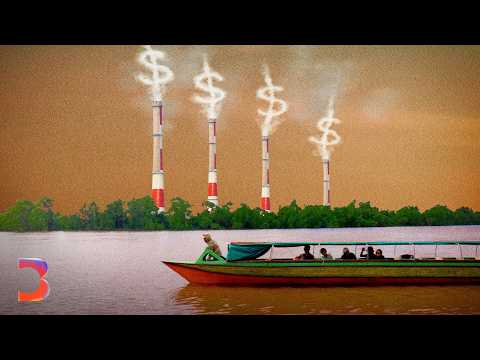
The Rimba Raya project in Indonesia exemplifies the complexities of carbon offset markets, highlighting the battle for profits among corporations, governments, and local communities while raising questions about the integrity and effectiveness of carbon credits in combating climate change.
In the heart of Borneo, Indonesia, lies Rimba Raya, a tropical forest that plays a crucial role in protecting one of the planet's most endangered ecosystems. This area, which could have been cleared for palm oil production, is now safeguarded thanks to investments from multinational corporations. As the world grapples with climate change, the question arises: who truly profits from efforts to save the planet?
Rimba Raya is not just a forest; it is one of the largest carbon offset projects globally. Covering an area comparable to Las Vegas, it borders the Tanjung Puting National Park and serves as a significant carbon sink, trapping and storing carbon dioxide, a major greenhouse gas. The project has become a focal point in the emerging asset class of natural capital, which is expected to grow in value as the demand for carbon offsets increases.
Carbon credits are designed to allow companies and countries to compensate for their emissions. These credits can be mandatory, as required by law, or voluntary, as part of corporate sustainability goals. For instance, Volkswagen aims to be carbon neutral by 2050 but emits nearly 6 million tons of greenhouse gases annually. To offset its pollution, VW purchases carbon credits from projects like Rimba Raya, which helps fund the preservation of forests and peatlands that store significantly more CO2 than typical rainforests.
The inception of Rimba Raya was spearheaded by Todd Lemons and his company, Infinite Earth. Initially met with skepticism by renowned primatologist Dr. Birutė Galdikas, who referred to them as "carbon cowboys," the project gained traction when they collaborated with local businessman Rusman Widjaja. Together, they successfully persuaded a palm oil company to abandon plans to clear the forest, thus protecting a vital ecosystem.
Despite its successes, the carbon offsets market is fraught with controversy. Critics argue that purchasing offsets can lead to complacency among corporations, allowing them to claim environmental responsibility without making substantial changes to reduce their emissions. This phenomenon, known as greenwashing, undermines public confidence in the integrity of carbon credits. Reports of bogus carbon offsets have further complicated the landscape, raising questions about the effectiveness of such initiatives.
The carbon offsets industry is currently valued at approximately one to two billion dollars, with projections suggesting it could reach one trillion dollars by 2050. This potential has caught the attention of Wall Street and governments alike. However, the Indonesian government, which has historically received only a small percentage of revenues from local carbon offset projects, has begun to assert more control over the sector. In 2021, it banned the sale of new carbon credits and later revoked Rimba Raya's license, citing regulatory violations, which the project developers deny.
The fallout from government intervention has been significant. Over 70% of Rimba Raya's staff faced layoffs, and the project has had to drastically cut its budget, limiting its conservation efforts. Local communities, once passive participants, are now increasingly aware of the lucrative nature of carbon markets and are demanding a fair share of the profits.
As Indonesia positions itself as a key player in the carbon offset market, President Prabowo Subianto emphasizes the need to optimize the country's carbon credit potential. With vast rainforests and significant untapped resources, Indonesia aims to generate billions in revenue from carbon credits to meet its climate commitments. However, the ongoing disputes and lack of clarity in regulations pose risks for investors and the future of projects like Rimba Raya.
The Rimba Raya project illustrates the complexities of the carbon offset market and the competing interests of corporations, governments, and local communities. As the world seeks solutions to climate change, the question of who profits from saving the planet remains critical. Ensuring that all stakeholders benefit from carbon markets is essential for the sustainability of such initiatives and the protection of vital ecosystems. Without proper management and equitable distribution of resources, the future of projects like Rimba Raya hangs in the balance, highlighting the urgent need for clarity and integrity in the carbon offset industry.



















