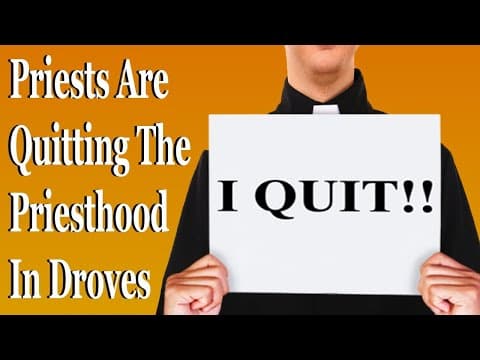
A significant number of seminarians and young priests are leaving the priesthood due to the unexpected administrative burdens and lack of community support. This trend raises concerns about morale, vocation sustainability, and the future of the Catholic Church, especially amid misconceptions about younger generations' religiosity and the evolving role of priests in modern parish life.
Recently, there has been growing concern about the increasing number of seminarians and young priests leaving the priesthood after only a few years of service. Many enter the priesthood with a vision of spiritual leadership and pastoral care but find themselves overwhelmed by administrative duties and parish management responsibilities. This shift in the role of priests has significant implications for the Catholic Church and its future.
Traditionally, priests have always had some administrative responsibilities, such as managing parish finances and protecting church assets. However, in recent times, the scope of these duties has expanded considerably. Modern parishes are involved in a wide range of activities that require extensive administration, fundraising, and project management.
The professionalization of parish and chancery offices means that many parishes now employ secretaries and financial officers, yet priests still find themselves deeply involved in administrative tasks. This can detract from their primary spiritual and pastoral roles, leading to frustration and burnout.
Many priests discover that their day-to-day work involves more administration than they anticipated. For example, some priests spend a significant amount of time on parish building projects and fundraising efforts rather than focusing on sacramental duties and spiritual guidance.
This mismatch between expectations and reality can be disheartening. Without adequate community support and understanding, priests may feel isolated and overwhelmed, which contributes to their decision to leave the priesthood.
Community support plays a crucial role in sustaining priests' morale and vocation. When priests lack a supportive parish community or feel undervalued, their risk of burnout increases. The demanding nature of their administrative responsibilities, combined with insufficient support, can lead to a decline in their spiritual well-being and commitment.
There is a prevalent myth that Generation Z is the most religious and conservative demographic group. However, this perception is not entirely accurate. While some data suggest increased religious interest among younger people, the reality is more nuanced. Many young Catholics face challenges in maintaining their faith amid societal changes and the evolving demands of religious life.
This myth can obscure the real issues affecting vocations and the sustainability of the priesthood, such as the administrative overload and lack of community engagement.
In a recent event, the White House issued a presidential message honoring the Feast of the Immaculate Conception, including a Mass and recognition of the Virgin Mary's role in salvation history. This gesture sparked mixed reactions among Catholics and Protestants alike, with some viewing it as performative political pandering, while others appreciated the acknowledgment of Catholic tradition at a national level.
Such events highlight the complex relationship between faith, politics, and public perception, which also influences the morale of priests and the broader Catholic community.
The discussion also touched on historical figures such as Bishop John Carroll, the first Catholic bishop in the United States, and his cousin Charles Carroll, a signer of the Declaration of Independence. These figures exemplify the longstanding presence and influence of Catholicism in American history.
American Catholics like Elizabeth Ann Seton, Francis Xavier Cabrini, and Fulton Sheen have demonstrated deep devotion to the Blessed Virgin Mary, underscoring the rich spiritual heritage that continues to inspire many today.
The trend of priests leaving the priesthood in large numbers is a multifaceted issue rooted in the evolving demands of parish administration, lack of community support, and misconceptions about younger generations' faith. Addressing these challenges requires a renewed focus on supporting priests in their spiritual and pastoral roles, reducing administrative burdens where possible, and fostering a vibrant, engaged Catholic community.
Recognizing and honoring the spiritual heritage of the Church, as seen in recent national acknowledgments, can also play a role in uplifting the morale of priests and laypeople alike. Ultimately, the future of the priesthood depends on balancing tradition with the practical realities of modern parish life and ensuring that those called to serve can do so with joy and fulfillment.
This comprehensive overview sheds light on why many priests are leaving the priesthood and what the Catholic Church might consider to support its clergy better in the years ahead.