
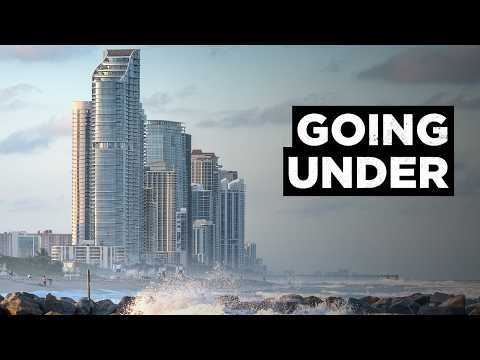
Miami's rapid skyscraper development is facing a concerning issue of subsidence, with at least 35 luxury buildings sinking due to geological factors and construction practices. This phenomenon raises alarms about the structural integrity of these high-rises and the city's future amidst rising sea levels.
Welcome to Miami, America's third tallest city, where the skyline is rapidly changing. Only New York and Chicago boast more high-rise buildings than this vibrant corner of South Florida. Remarkably, Miami did not have any skyscrapers until the mid-1980s, yet it now has at least a dozen under construction, including its first supertall building. This construction boom, combined with Miami's beautiful weather and coastline, has attracted a plethora of wealthy individuals, including billionaire investors and famous athletes, leading to the city's nickname, "Wall Street South."
Despite the allure of Miami, a new study from the University of Miami has raised significant concerns: approximately 35 luxury residential buildings along the coast are sinking. This alarming trend affects thousands of residents and has prompted researchers to investigate the underlying causes.
Notable figures such as Amazon founder Jeff Bezos, Citadel hedge fund boss Ken Griffin, and venture capitalist Peter Thiel have all relocated to Miami, expanding their businesses or considering significant investments in the area. The city's vibrant lifestyle, pristine beaches, and lack of state income tax have made it a magnet for the wealthy, contributing to its rapid growth as one of the fastest-growing metropolitan areas in the U.S.
Miami's geographical constraints complicate this growth. While it ranks just behind New York in skyscraper numbers, it is about eight times smaller in area. Consequently, developers are compelled to build upwards, leading to a surge in high-rise construction. However, this rapid development has resulted in concerning consequences, as highlighted by the University of Miami's findings.
The study revealed that over the past decade, more than 30 high-rises along Miami's Barrier Islands have sunk by as much as 8 centimeters. This subsidence is not limited to older buildings; even some of the newest and most luxurious structures, such as the Porsche Design Tower and the Ritz-Carlton Residences, have been affected. The research team, led by Professor Falk Amelung, utilized advanced technology to uncover these unsettling results.
The geological conditions beneath Miami play a crucial role in this subsidence. The subsoil consists of porous limestone mixed with sand, known as Miami Limestone or Oolite, which is unique to this region. The study suggests several potential causes for the sinking buildings:
While some subsidence is expected as buildings settle post-construction, the extent and duration of sinking observed in Miami's high-rises are alarming. Buildings are designed to settle slightly, but the ongoing subsidence raises concerns about their long-term stability. Differential settlement, where one part of a building sinks more than another, could lead to significant structural damage.
This issue is particularly poignant in light of the tragic collapse of the Champlain Towers South in 2021, which resulted in 98 fatalities. This disaster prompted investigations into the structural integrity of residential buildings across Florida, highlighting the urgent need for scrutiny in the wake of these new findings.
Miami is not alone in facing subsidence challenges. A 2023 study by the US Geological Survey indicated that New York is sinking by one to two millimeters annually, primarily due to the weight of its buildings. Globally, cities like Jakarta are experiencing severe subsidence, prompting the Indonesian government to relocate its capital. Venice has also struggled with sinking, necessitating expensive flood defense systems.
In response to these challenges, Miami is investing heavily in infrastructure improvements to combat rising sea levels. The city's Stormwater Master Plan outlines $5 billion in necessary upgrades over the next nine years, including new drainage systems and sea walls. However, experts warn that even these measures may not be sufficient, with projections indicating that 60% of Miami could be underwater by 2060.
As Miami continues to develop its skyline, the findings from the University of Miami's study serve as a critical reminder of the complexities involved in urban construction. While the demand for high-rises remains strong, the geological realities of the region must be carefully considered. The city is at a crossroads, balancing growth with the need for sustainable practices to ensure the safety and stability of its buildings and residents. As construction continues, ongoing monitoring and regulation will be essential to prevent further issues and protect Miami's future.



















