
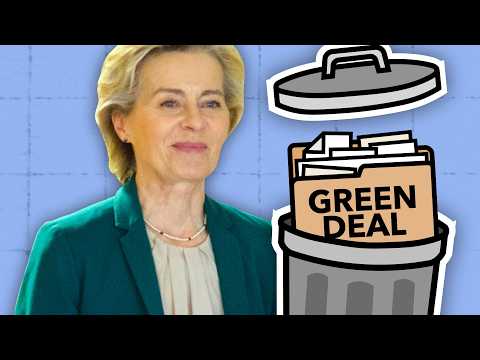
Despite significant progress in decarbonization, Europe is experiencing a decline in enthusiasm for the energy transition due to economic stagnation, rising costs, and competition from global markets, leading to political pushback against green policies.
Europe has made remarkable strides in decarbonization, achieving a nearly 40% reduction in greenhouse gas emissions since 1990. The European Union (EU) has set ambitious targets, aiming for a 55% reduction by 2030. However, recent years have seen a shift in political sentiment, with increasing scrutiny of green policies and the EU's Green Deal. This article explores Europe's achievements in the energy transition, the reasons behind its initial enthusiasm, and the factors contributing to its current skepticism.
As of 2023, the EU's net greenhouse gas emissions fell by 8%, marking the largest decrease in decades, aside from the pandemic. This progress positions the EU favorably compared to other regions, particularly the United States, where emissions are only 3% below 1990 levels. The Biden Administration has made significant strides in accelerating decarbonization, but the EU remains a leader in climate action.
According to data from Our World in Data, EU CO2 emissions per capita have nearly halved since their peak in 1979, standing at 5.7 tons per person. This figure is significantly lower than the U.S. at 14.3 tons and China at 8.4 tons, reflecting Europe's commitment to reducing its carbon footprint.
Europe's leadership in climate issues dates back to the first UN climate change conference in 1995, which led to the Kyoto Protocol in 1997. While the U.S. signed the agreement, it was never ratified by Congress, leaving Europe and Japan to spearhead the initiative. In 2019, European Commission President Ursula von der Leyen pledged to make Europe the first climate-neutral continent, further solidifying the EU's role as a global climate leader.
Several factors explain why Europe has historically embraced the energy transition more vigorously than other regions:
Despite these achievements, Europe is experiencing a decline in enthusiasm for the energy transition. Several factors contribute to this shift:
The energy transition has become increasingly expensive, particularly in light of Europe's economic stagnation. The EU's GDP is projected to grow by less than 1% in 2024, following a mere 0.8% growth in 2023. This lack of meaningful economic growth hampers both public and private sector investments in green initiatives. Additionally, rising inflation has led to increased interest rates, making it more challenging to secure funding for large upfront investments required for renewable energy projects.
The European Green Deal, which was a cornerstone of von der Leyen's agenda, has faced significant political pushback. Recent elections have seen green parties struggling, while radical right-wing parties have gained traction by criticizing the perceived excesses of net-zero policies. Notably, German Chancellor Olaf Scholz has called for delays on new environmental regulations, reflecting a broader trend of resistance against stringent green policies.
The expectation that the energy transition would create high-value manufacturing jobs has not materialized as anticipated. Green industries, such as solar energy, do not generate as many jobs as traditional sectors like coal mining. Furthermore, European efforts to establish domestic green industries have been undermined by competition from China and the U.S. The decline of Germany's solar industry serves as a cautionary tale, highlighting the challenges Europe faces in competing in the global green economy.
While Europe has made significant progress in its energy transition, the current landscape suggests a more cautious approach moving forward. Economic challenges, political resistance, and global competition are reshaping the narrative around net-zero ambitions. Although Europe has not abandoned its commitment to the energy transition, the path ahead may be more tentative than previously envisioned. The future of Europe's climate policies will depend on balancing economic realities with the urgent need for sustainable solutions.



















