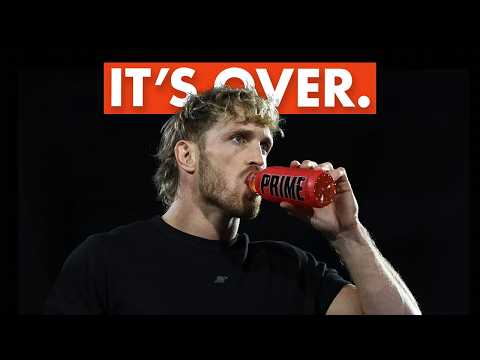
Prime, the influencer-backed drink brand co-founded by Logan Paul and KSI, experienced rapid growth and hype in 2023 but faced a steep decline in 2024. This article explores how Prime exemplifies modern 'grift economics' by leveraging influencer fame, minimal product value, and aggressive marketing tactics, leading to its predictable downfall and lessons for future brands.
Prime was one of the first influencer brands to break into the mainstream beverage market. Co-founded by popular influencers Logan Paul and KSI, Prime quickly became the fastest growing drink company in history. In its first year, the company reportedly made over 250 million dollars and sold its billionth bottle just a year later. However, by 2024, the hype around Prime had significantly diminished, and the brand faced a steep decline in sales and popularity.
Prime's initial success was largely fueled by the massive popularity of its co-founders. The brand leveraged their social media influence to create a frenzy around the product, with bottles selling for as much as 10 times their list price on resale markets. This rapid growth disrupted an industry dominated by a handful of legacy brands.
Despite its early success, Prime's popularity waned quickly. Google trend forecasts show a sharp drop in interest, and the drinks are now often found in bargain bins rather than on resale pages. In 2024, Prime experienced a 70% drop in revenue in the UK and over a 90% drop in overall profits. This decline was so significant that many articles began discussing the downfall of the company.
A Reddit commenter summarized the situation aptly: although Prime's drink has been heavily discounted for some time, the founders and investors made a substantial amount of money. If the company closes, they will likely move on to the next venture, as the business model capitalized on consumer enthusiasm rather than long-term product value.
Prime's story is not just about a brand that rose and fell quickly; it is a case study in modern marketing and sales tactics often referred to as "grift economics." These tactics involve selling products with little intrinsic value by exploiting hype, influencer culture, and aggressive marketing.
Product with Minimal Real Value
Prime's product itself was criticized for lacking genuine value. While some viral products offer real utility or quality, Prime's drink was seen as subpar. The term "grift" here refers to products that do not provide lasting value but are marketed as revolutionary or essential.
Leveraging Influencer Fame and Hype
The brand's success was heavily dependent on the fame of Logan Paul and KSI. Their social media presence created a frenzy that drove sales beyond what the product's quality might justify.
Aggressive and Repetitive Marketing Tactics
Prime used tactics such as comparing their products to competitors by highlighting minor differences in nutritional content to create a perception of superiority. For example, their new Prime Protein shake was marketed as having "protein locked technology," which is essentially the same ultra-filtered milk technology used by Fairlife for over a decade. They emphasized having 32 grams of protein and slightly less sugar than competitors, pitching it as a new innovation.
In 2024, Prime released a new product: the Prime Protein shake. This product was promoted as an "ultra-filtered milk shake" with 32 grams of protein, a significant amount for a ready-to-drink shake. The marketing heavily focused on their so-called "protein locked technology," which is essentially a repackaging of existing milk filtration technology pioneered by Fairlife, a Coca-Cola-owned brand.
Logan Paul and fitness influencer Bradley Martin, who partnered on this product, even staged a fake fight to promote the shake, demonstrating the brand's reliance on spectacle and influencer drama to drive attention.
Despite the marketing claims, the product's technology and formulation were not new or groundbreaking. Logan Paul himself posted a comparison showing Fairlife's protein shake alongside Prime's, highlighting minor nutritional differences to suggest superiority.
Prime's trajectory highlights several important lessons about modern consumer products and marketing:
Hype Can Drive Rapid Growth but Is Unsustainable Without Real Value: Prime's initial success was driven by influencer hype rather than product quality, leading to a rapid decline once the novelty wore off.
Modern Marketing Tactics Can Exploit Consumer Psychology: By using influencer partnerships, staged events, and selective comparisons, brands can create a perception of value that may not exist.
Consumers Should Be Wary of Products That Rely Heavily on Hype: Products that do not offer lasting utility or quality are likely to fade quickly.
The "Grift" Model Is Profitable but Short-Lived: While companies like Prime can make significant money quickly, their business models may not be sustainable long-term.
Prime's story is a cautionary tale about the power and pitfalls of influencer-driven marketing and modern sales tactics. While the brand achieved unprecedented growth and disrupted the beverage industry, its lack of genuine product value and reliance on hype led to a predictable downfall. As consumers and marketers, understanding these dynamics can help in making more informed decisions and recognizing when a product is more about spectacle than substance.