
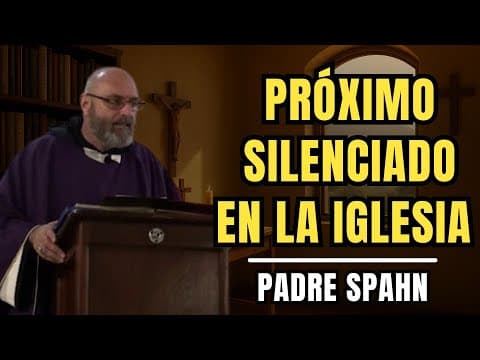
Father Carlos Spán has dedicated his life to spiritual formation and evangelization, growing a vibrant community despite humble beginnings. However, his work has faced internal opposition, rumors, and unjust accusations fueled by jealousy and misunderstandings. Despite positive testimonies and a clean apostolic visitation, efforts to silence him continue, raising questions about justice and truth within the Church.
In recent years, many have lamented the fading of faith, the emptying of churches, and the confusion that seems to envelop the world. Yet, even amid darkness, God raises silent lights—small works that grow away from the noise, souls formed to sustain those who have lost strength. One such light has been and continues to be the spiritual work of Father Carlos Spán.
This work began without resources, structures, or privileges but with an inner strength that soon transformed entire lives. It is precisely because it bore true fruit that many now seek to silence it.
Father Carlos Spán is not just a name on social media or a rumor; he is a priest who dedicated his entire life to forming consciences, teaching truth without distortion, and guiding souls with respect, prudence, and firmness.
He started his mission almost alone, accompanied by a few religious sisters who trusted his vision. They rented a small house that served as a place of life, formation, and prayer. Later, he rented a warehouse-like space, which he transformed through work and faith into the first headquarters of what would become Frisidim—the Religious Family of the Immaculate Heart and Divine Mercy.
Without luxury or ornamentation, and with only fidelity to the Gospel as a promise, a small group gathered seeking more than simple talks. They sought light, formation, and a faith that was not superficial. Father Carlos provided this by teaching philosophy, theology, catechism, social doctrine of the Church, Mariology, and Ignatian spirituality.
The gatherings grew steadily—from 50 to 400 people attending Sunday meetings. Many young people discovered vocations they had never felt before. Men and women seeking consecration found in Frisidim a serious, demanding, disciplined, yet deeply human and spiritual space.
Families formed, entrepreneurs offered help, and the community was able to purchase land in Berriosábal, Chiapas. There, they built retreat rooms, formation spaces, places for deep prayer, Ignatian retreats, days of silence, adoration, consecrations, and profound catechesis.
While faith was fading elsewhere, it grew strongly here. While youth fled other churches, they came knocking at Frisidim’s door.
As often happens in Church history, growth brings both fruits and resistance. Resistance came not only from evil but also from human jealousy, envy, and fear of losing influence. Some priests resented that Father Carlos attracted more faithful than entire parishes. Others were disturbed by the discipline and formation he demanded.
Rumors began to spread—first small, then more insistent and serious. Accusations without evidence surfaced, including absurd claims such as money laundering, despite the transparent and austere nature of the community’s finances.
A particularly damaging accusation came from a young woman who left the community, claiming to have been a victim of offenses against her dignity. However, religious sisters, young women living in the community, and witnesses all affirmed that such behavior was impossible given the strict discipline, respect, and separation maintained.
Despite her later retraction, the damage was done. A process began that was irregular and unjust. Father Carlos was asked to remain silent and not defend himself, trusting that the truth would prevail. Unfortunately, the process mixed administrative and penal procedures improperly, ignored testimonies from those who lived in the community, and accepted resentful voices from outsiders.
A visitation from Rome found only minor adjustments were needed in study plans, with no grave or immoral findings. Yet, the climate remained poisoned. The death of the supportive bishop and the arrival of an administrator apostolic unfamiliar with Frisidim worsened the situation.
Decisions were made hastily, testimonies ignored, and the process became more convoluted. Father Carlos found himself defenseless amid a growing campaign of rumors amplified by social media and voices that had never experienced the community firsthand.
Many who lived within Frisidim testified to the community’s integrity:
The problems did not arise from hidden truths but from a toxic mix of jealousy, misunderstandings, incomplete information, and rushed decisions during a diocesan transition. The lack of stable leadership led to injustices:
Consequently, the community’s programs were halted, vocations frozen, and initiatives stopped—not due to doctrinal or moral failings but due to procedural errors and prejudice.
Father Carlos’s preaching, fidelity to doctrine, deep Mariology, rapid growth, and internal discipline made him a target. When a priest does too much good, some prefer to silence him.
Yet, truth cannot be suppressed indefinitely. The faithful began to raise their voices, not to attack the Church but to defend truth and justice. They demanded a fair review of the process, inclusion of all testimonies, and correction of errors.
This story is not just about Father Carlos or an administrative dispute. It is about the fundamental right to defend truth and the future of a spiritual community that has borne visible fruits.
The Church must protect the faithful and act prudently when accusations arise, but it must also guarantee the right to defense and transparency. Without these, justice becomes an illusion, and truth becomes the victim.
The faithful who have experienced Frisidim know that what God has built cannot be easily erased. Though calumny and envy are loud, the truth will ultimately prevail.
The question remains: Why do some want to silence Father Carlos Spán? The answer lies in choosing between silencing a man or allowing truth to speak. Faithful believers know which path to take.
May God bless those who seek justice and may the Virgin accompany all who defend what is true.
If this story has touched you, if you feel moved to support the defense of good and fruitful works, consider joining the community that seeks truth. Pray for Father Carlos Spán, Frisidim, the young people in formation, and the entire Church. Together, through prayer and truth, justice will be restored.



















