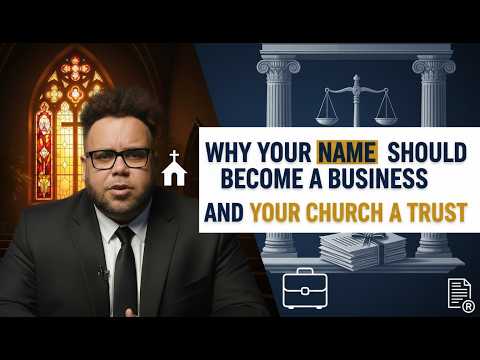
This comprehensive guide explores the concept of transforming your personal name into a business entity and establishing your church as a trust, specifically a 508 C1A ministry trust. It covers the legal definitions, benefits, and practical steps involved, including the use of trusts, unincorporated associations, and faith-based organizations to protect assets, maintain privacy, and exercise freedom of religion and speech.
In today's complex legal and financial landscape, understanding how to protect your assets and maintain control over your personal and spiritual affairs is crucial. One innovative approach is to transform your personal name into a business entity and establish your church as a trust, specifically a 508 C1A ministry trust. This article delves into the concepts, legal frameworks, and practical steps to achieve this, empowering you to take control of your financial and spiritual destiny.
A trust is a legal entity that can hold assets and manage them on behalf of beneficiaries. Trust companies often act as corporate trustees, managing assets and property. Trusts can be private or public, and they operate similarly to banks in that they hold and manage assets.
Many banks incorporate the word "trust" in their names, such as First Bankers Trust or SunTrust, indicating their role as holding companies. Holding companies do not own assets directly but hold them, similar to how trusts operate. This structure allows for asset protection and management.
The government acts as a public trustee, managing assets and funds on behalf of the public. The Social Security Trust is an example of a public trust funded by public debt. Understanding this helps clarify why your birth certificate and social security number are tied to government trusts.
By creating an LLC with your full name in all capital letters (e.g., FIRST MIDDLE LAST LLC), you establish a business entity that acts as a trustee for your assets. This LLC can be managed by a holding company, which in turn can be owned by a 508 C1A ministry trust.
A 508 C1A faith-based organization is a religious nonprofit tax-exempt entity distinct from a 501c3 charity. It enjoys mandatory exemptions from many restrictions imposed on 501c3 organizations, including free speech restrictions and IRS reporting requirements.
By establishing trusts and business entities, you can regain legal title and control over your assets, reducing government interference.
Covenants are formal agreements or contracts that can be established within your ministry or trust. They are legally binding and can protect your rights and assets. Creating covenants within your church or trust strengthens your legal position.
Operating as an unincorporated association under common law jurisdictions offers privacy and flexibility. These associations are not required to file with the IRS and are protected from certain government regulations.
Using trusts and business entities, you can open bank accounts without using your personal social security number or appearing in person, enhancing privacy and security.
The government and legal systems operate with rituals, symbols, and language rooted in historical and religious traditions. Understanding these can help you navigate and assert your rights effectively.
Transforming your name into a business and your church into a trust is a powerful strategy for asset protection, privacy, and exercising your constitutional rights to freedom of religion and speech. By establishing a 508 C1A ministry trust and utilizing unincorporated associations, you can create a private administration that safeguards your interests and empowers your spiritual community.
Prosperity is your divine birthright. Take control today by educating yourself and implementing these structures.
For those interested in deeper learning, consider consulting with experts and joining educational programs that specialize in trusts, ministry establishments, and private law.
Peace and love.