
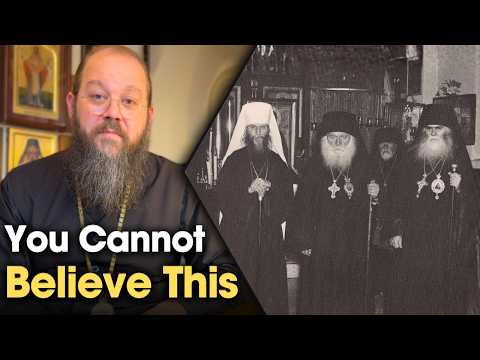
This article explores the significance of the anathemas proclaimed during the Orthodox Church's Rite of the Triumph of Orthodoxy. These anathemas define the boundaries of Christian belief, emphasizing that denying God's existence or divine providence excludes one from true Christianity. The piece explains the historical and spiritual context of these declarations and their role in safeguarding Orthodox doctrine.
In the name of the Father, and of the Son, and of the Holy Spirit, this article begins a detailed exploration of a unique aspect of Orthodox Christian tradition known as the anathemas. These are solemn declarations made during the Rite of the Triumph of Orthodoxy, celebrated on the first Sunday of Great and Holy Lent.
This series, titled "Catechism by Anathemas," is not a traditional catechism nor a complete introduction to Orthodoxy. Instead, it focuses on the anathemas themselves—what they say and their spiritual significance. The anathemas serve as pastoral tools that define the limits of Christian belief, showing where one can no longer be considered a member of the Church if certain doctrines are denied.
The Orthodox Church uses anathemas not as curses but as positive statements of doctrine and dogma. They complement the central creed, which every Orthodox Christian is expected to know and recite. While the creed affirms what is believed, the anathemas clarify what cannot be believed if one wishes to remain within the Church.
These declarations are proclaimed during a significant liturgical moment, immediately following the communal recitation of the Nicene Creed, which is altered slightly to say "we believe" instead of "I believe," emphasizing the unity of the Orthodox faithful.
During the Rite, the protodeacon or deacon leads the congregation in reciting the creed, affirming the faith inherited from the Church Fathers. After the creed, the deacon proclaims:
"This is the orthodox faith. This is the faith of the fathers. This is the orthodox faith and this faith confirmeth the universe."
This proclamation underscores the belief that Orthodox Christianity is the true faith that sustains all reality.
Following this, the deacon acknowledges the councils, traditions, and writings of the holy fathers that align with divine revelation. The Church recognizes that throughout history, there have been adversaries who oppose this truth, but it assures the faithful that these opponents are ultimately put to shame and defeated.
The service then blesses those who have submitted their understanding to divine revelation and contended for the faith. It also rejects and anathematizes those who oppose the truth and refuse to repent despite efforts to bring them back.
The anathemas serve as warnings rather than condemnations. They emphasize the Church's desire for repentance and conversion rather than punishment. However, when false teachings persist and teachers refuse to repent, the Church must reject them to protect the integrity of the faith.
The question arises: how does one discern false teaching? This is precisely where the anathemas are crucial—they clearly state the boundaries of acceptable belief.
The first of the seventeen anathemas proclaimed in the Church Abroad (ROCOR) is as follows:
"To those who deny the existence of God and assert that the world is self-existing, and that all things in it are made by chance, without the divine providence, anathema!"
This anathema sets the tone for all that follow. It addresses a troubling phenomenon in contemporary society where some claim to be Christians yet deny the existence of God or divine revelation. Such individuals may treat Christianity as a cultural identity rather than a true faith.
The Orthodox Church firmly teaches that belief in God as the Creator and Sustainer of the universe is fundamental. The world is not a product of chance but of divine providence. Denying these truths places one outside the bounds of authentic Christian faith.
The anathemas have deep historical roots, with the first twelve dating back many centuries. They reflect the Church's ongoing effort to preserve the apostolic faith handed down from the Old Testament through Jesus Christ and the Apostles.
The latter anathemas address more recent challenges, demonstrating the Church's commitment to guiding the faithful through changing historical circumstances.
The Rite of the Triumph of Orthodoxy and its anathemas play a vital role in defining and preserving the core beliefs of Orthodox Christianity. They remind believers of the essential truths that must be upheld and warn against deviations that threaten the faith's integrity.
Understanding these anathemas helps clarify what it truly means to be a Christian within the Orthodox tradition. Denying God's existence or divine providence is not compatible with genuine Christian belief.
May this exploration encourage reflection, deepen faith, and inspire prayer for all who seek to follow the true Orthodox faith.
Please feel free to ask questions and pray for the continued guidance and strength of the Church and its faithful.



















