Discover the fascinating hidden secrets of the US dollar, including the symbolism of the number 13, Latin phrases, the all-seeing eye, and conspiracy theories surrounding its design.
Most of us use dollar bills every single day, but have you ever looked closely at the paper? The US dollar holds many hidden secrets and symbols that reflect its rich history. In this post, we will explore ten mind-blowing secrets embedded in the design of the US dollar.
The number 13 appears frequently on the dollar bill, symbolizing the thirteen original colonies of the United States. You can find this number represented in various elements:
These elements pay tribute to the founding of the nation and its original colonies: Delaware, Pennsylvania, New Jersey, Georgia, Connecticut, Massachusetts, Maryland, South Carolina, New Hampshire, Virginia, New York, North Carolina, and Rhode Island.
The US dollar features several Latin phrases that convey significant meanings. One prominent phrase above the eagle's wings translates to "E Pluribus Unum," meaning "Out of many, one." This phrase symbolizes the unity of the thirteen colonies into one nation.
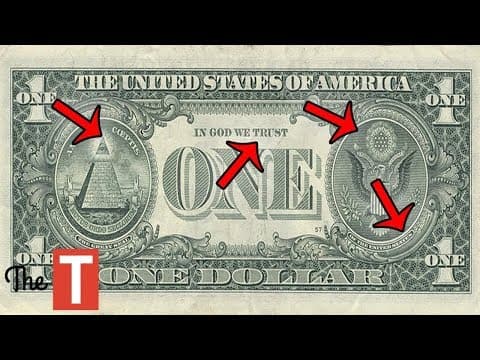
The pyramid on the Great Seal, accepted in 1782, represents strength and duration. It is unfinished, indicating future growth and expansion. The Roman numerals at the base of the pyramid represent the year 1776, marking the birth of the United States.
Atop the pyramid sits the all-seeing eye, also known as the Eye of Providence. This symbol has sparked controversy due to its association with the Illuminati. Originally part of Freemason iconography, the eye represents divine providence watching over the nation. The motto above it suggests that Providence favors American endeavors.
If you examine the left edge of the number one on the front of the bill, you might notice a small creature, often speculated to be an owl or a spider. This creature's symbolic meaning remains a mystery, with some theorizing it connects to Freemason symbolism.
The bald eagle, a symbol of strength and beauty, appears prominently on the dollar bill. It holds 13 arrows in its left talon, representing war, and an olive branch in its right, symbolizing peace. The placement of these elements signifies the balance between war and peace.
On the front of the bill, you will find circled letters that indicate where the bill was printed. These letters correspond to the twelve Federal Reserve Banks across the United States, from A (Boston) to I (San Francisco). This feature allows you to trace the origin of your dollar bill.
The serial numbers on the dollar bill can reveal whether a bill is counterfeit. The first letter of the serial number must match the letter on the Federal Reserve seal. Additionally, rare serial numbers can significantly increase a bill's value, with collectors seeking patterns like seven repeating digits.
The symbols on the dollar bill have led to numerous conspiracy theories. Some believe the all-seeing eye and the 13 stars above the eagle connect to the Illuminati and other secret societies. The tiny owl and various triangles have also been linked to satanic beliefs, fueling speculation about hidden meanings.
One of the most bizarre theories involves folding a $20 bill to reveal images resembling the Twin Towers on September 11. When folded correctly, some claim it depicts the towers ablaze, while other bills show different stages of destruction. This theory remains unconfirmed but adds to the intrigue surrounding the dollar's design.
The US dollar is more than just a medium of exchange; it is a canvas of history, symbolism, and mystery. From the significance of the number 13 to the all-seeing eye and conspiracy theories, the dollar bill holds secrets that reflect the nation's past and its values. Next time you handle a dollar, take a moment to appreciate the hidden stories it tells.