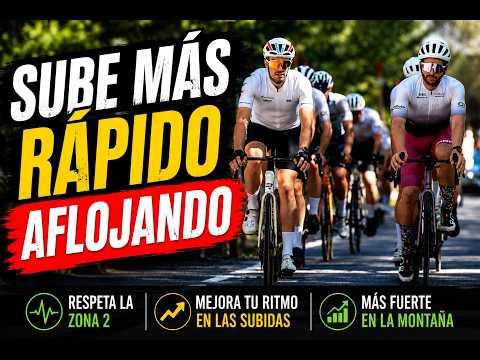
This article explores 17 biomechanical and training strategies employed by cycling champions Tadej Pogačar and Isaac del Toro to enhance speed and performance. From equipment choices like shorter crank arms and narrow handlebars to training methods such as high-intensity blocks and altitude training, these tips offer practical insights for cyclists of all levels to improve efficiency and endurance.
The recent cycling events have been nothing short of spectacular, with Boot Ber shaking up the Paris-Roubaix and Laulia turning into a chaos of extreme survival. While the headlines may focus on other names, Tadej Pogačar and Isaac del Toro remain the two athletes rewriting the physics and biomechanics of cycling in 2026.
This article dives deep into the minds and techniques of these two cycling phenoms, revealing 17 real tricks they use to become nearly unbeatable. The best part? You don't need a World Tour budget to start applying these tips tomorrow. Take note and get ready to enhance your cycling performance.
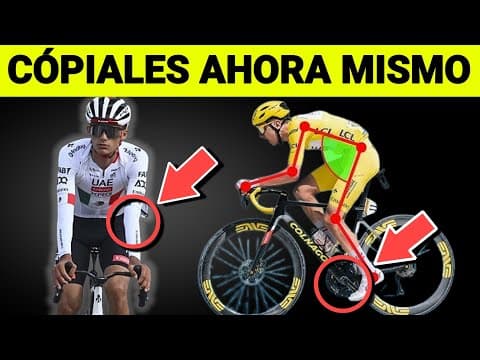
Pogačar uses unusually short crank arms of 165 mm. This is not due to any physical change but a biomechanical strategy to reduce wind resistance. When pedaling, the angle between your thigh and torso closes. Longer crank arms cause the knee to hit the belly, preventing a low aerodynamic position. Shorter cranks open this angle, allowing the torso to drop like a missile while maintaining good breathing, reducing frontal area and gaining free speed.
Watch del Toro riding fast on flat terrain; his elbows are tucked in close to his ribs, resembling a Tyrannosaurus Rex. This reduces the frontal area exposed to the wind. Open elbows act like a parachute, increasing drag. Tucking elbows in reduces frontal area, making it easier for air to flow around the body, saving nearly 15 watts at 40 km/h.
Modern pros, despite being tall (around 1.80 m), use handlebars as narrow as 40 cm, the legal limit. Wider bars (44 cm) spread the arms and increase wind resistance. Narrow bars allow the rider to close the door to the wind, improving aerodynamics without sacrificing bike control.
Del Toro and Pogačar pedal differently on steep climbs. Del Toro lowers his cadence to about 82 rpm, applying brute muscular force (torque) to crush the pedals. Pogačar pedals faster, over 100 rpm, relying more on cardiovascular endurance to avoid muscle fatigue. Power equals force times velocity; find whether you are a "tractor" (high force, low cadence) or a "blender" (high cadence, lower force) and train accordingly.
Forget boring 3-hour rides at a steady pace. These pros train in blocks: three or four consecutive days of high-intensity intervals pushing the body to the limit, followed by a full rest day. This approach breaks down muscle fibers, and rest days allow the body to rebuild stronger. Training at half effort never breaks the wall and never improves performance.
Del Toro spends weeks at high altitudes where oxygen is scarce, prompting the body to produce more red blood cells, effectively turbocharging the lungs. However, at altitude, it's hard to train intensely. They use smart rollers indoors with controlled oxygen or descend to valleys for hard training, then return to sleep at altitude, maximizing adaptation.
After grueling 6-hour stages, instead of resting completely, they perform very easy pedaling on a stationary bike at about 50 rpm with minimal force. This gentle movement acts like a pump, increasing blood flow by 25%, flushing out lactic acid and toxins, helping legs recover faster. This is known as the cyclist's "washing machine."
Muscles are literally broken after intense rides and need immediate repair. The first 30 minutes post-ride, known as the "golden window," are critical. Pogačar and del Toro consume a fast-absorbing protein shake with 30-40 grams of protein immediately after finishing. Delaying protein intake reduces its effectiveness in muscle repair.
Amateurs often let ego dictate training, pushing hard even when exhausted. Pros use devices measuring HRV during sleep to assess nervous system stress. If HRV indicates fatigue, they skip intense sessions and opt for rest or light rides, preventing overtraining and optimizing recovery.
Pogačar mentally rehearses his attacks the night before, visualizing exactly where and how he will suffer. This mental preparation reduces the brain's panic response to unexpected pain, increasing pain tolerance by about 15%, allowing him to push harder during races.
Del Toro advises turning off the Garmin or power meter display in the final kilometers. Watching heart rate or power drop can cause the brain to panic and reduce effort. Winning sprints and attacks rely on instinct and reading opponents' body language, not numbers.
Cycling at maximum effort hurts. Instead of seeking a pain-free position, these champions accept the burning sensation in their legs as the price to pay. Repeated exposure to this pain during training desensitizes the brain's alarm system, improving endurance.
Wrist-based heart rate monitors can give inaccurate readings due to vibrations on rough roads. Pogačar and others use optical sensors placed on the biceps or forearm, where vibrations are minimal, resulting in 20% more accurate heart rate data.
Old cycling wisdom suggested pumping tires to 8 kg/cm² for speed. However, Pogačar and team ride with pressures as low as 2 bars on mixed terrain and 4 bars on asphalt. Lower pressure allows tires to absorb bumps, improving grip and reducing energy loss from bouncing.
In rough races with cobblestones or mud, many riders remove the front derailleur and use a single large chainring. This reduces mechanical failures, chain drops, and friction, improving reliability and efficiency.
Mental stress consumes as much energy as physical effort. Del Toro trusts his teammates and delegates tasks like fetching water or monitoring wind, conserving mental energy. For amateurs, it's important to start rides with a clear mind, avoiding pre-ride stress over GPS or bike issues.
In 2026, media pressure is intense. Top riders delete Instagram and Twitter apps during race weeks to avoid stress and dopamine spikes from social media. Stress triggers cortisol release, which impairs muscle recovery. Staying off screens helps maintain focus and recovery.
These 17 tricks from Pogačar and del Toro demonstrate that cycling performance is a blend of biomechanics, training science, mental preparation, and smart equipment choices. While you don't need to be a pro to apply these tips, always use common sense. Sudden changes in bike setup without professional guidance can lead to injury. Start with simple adjustments and consult a bike fitting expert for position changes.
Implementing even a few of these strategies can help you ride faster, recover better, and enjoy cycling more. Remember, health and safety come first.
Good rides!