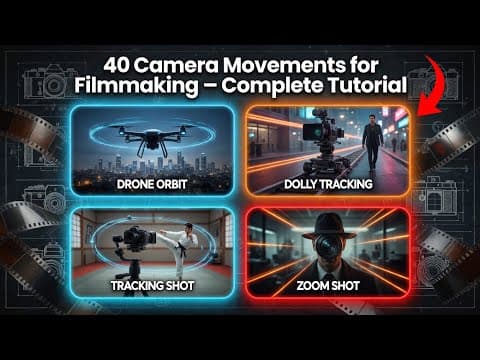
Discover 40 essential cinematic camera movements, from static shots to epic hero orbits, that filmmakers use to create visually stunning and emotionally engaging videos. Learn how each movement influences storytelling, mood, and viewer immersion, with examples ranging from slow push-ins to drone dives and time freeze orbits.
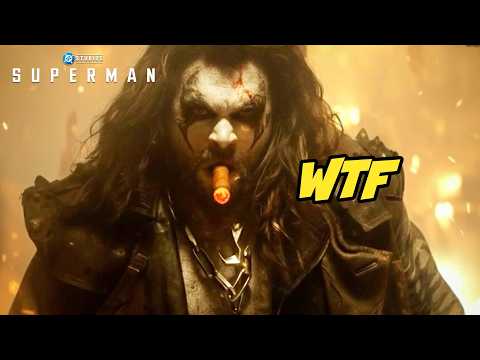
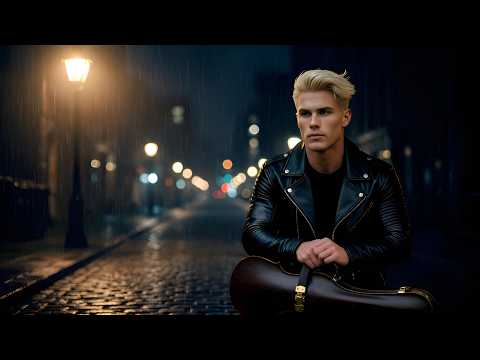
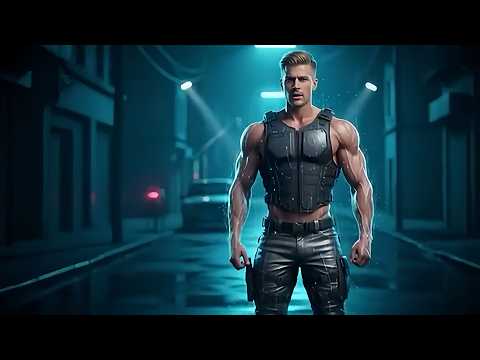
Stop scrolling for a second. What you're seeing right now wasn't filmed with a Hollywood crew. It was created with Grok AI. Today, we explore 40 cinematic camera movements—from the simplest to the most mind-blowing—that filmmakers use to make their videos look ten times more cinematic. By the end of this article, you'll know the exact shots that can transform your filmmaking.
A static shot is where the camera does not move at all. The camera stays completely still while the subject moves inside the frame. This technique is often used during dialogue scenes or calm moments to focus the audience fully on the subject.
The camera slowly moves closer to the subject, pulling the audience deeper into the scene and building emotion. This movement is commonly used during important or dramatic moments.
Here, the camera slowly moves away from the subject, revealing more of the environment. Filmmakers use this to show scale or to make a character feel small in a large world.
The camera rotates horizontally from right to left while staying in the same position. This movement reveals new parts of a scene or guides the viewer's attention across the environment.
The camera rotates horizontally from left to right. It is often used to follow a subject or slowly reveal something in the scene.
The camera tilts upward vertically, usually starting low and moving up to reveal the subject. This is used to introduce characters dramatically or show tall objects like buildings.
The camera tilts downward from a higher point, often used to reveal what is happening below or slowly introduce a location.
The camera lens zooms closer to the subject without physically moving the camera. This emphasizes emotions or important details.
The camera lens zooms away from the subject, allowing the viewer to see more of the surrounding environment.
The camera is held by hand instead of being fixed on a tripod, creating small natural shakes that make the scene feel more realistic and immersive.
The camera moves along with the subject as they move through the scene, keeping the subject in frame while showing the environment moving around them.
The camera follows directly behind the subject, making the viewer feel like they are walking or traveling with the character.
The camera moves sideways while following the subject from the side, often used during running, walking, or action scenes.
The camera smoothly moves forward toward the subject, making moments feel more dramatic and important.
The camera smoothly moves backward away from the subject, revealing more of the environment around the character.
The camera moves in a curved path around the subject, making scenes feel more cinematic and dynamic.
The camera circles around the subject while keeping them in the center of the frame, often used to highlight a character dramatically.
The camera frames the back of one person's shoulder while focusing on another person in front of them, commonly used during conversations.
The camera moves sideways while objects in the foreground move faster than objects in the background, creating strong depth in the image.
The camera movement slowly reveals something that was hidden, used to surprise the audience or introduce an important location.
The camera moves smoothly sideways along a short track, commonly used for product shots, food shots, and cinematic close-ups.
The camera is positioned low and moves closer to the subject, making the subject appear powerful or heroic.
The camera starts from a higher angle and moves away from the subject, often making the subject appear smaller within the environment.
Point of View shot shows what the character is seeing from their perspective, helping the audience feel like they are inside the scene.
The camera changes focus from one subject to another in the same frame, guiding the viewer's attention.
The camera lifts upward into the sky, used to reveal large landscapes and create epic opening shots.
The drone camera moves quickly downward toward the subject, creating a dramatic and energetic effect.
The camera rapidly follows a moving subject like a car or runner, creating a fast and thrilling feeling.
The camera swings quickly from one direction to another, with fast motion blur often used to transition between scenes.
The camera rises high into the air like a crane, used to reveal large scenes or crowds.
The camera is placed directly above the scene looking straight down, creating a unique and artistic perspective.
The camera moves forward or backward while the lens zooms in the opposite direction, creating a dramatic background distortion effect.
The action appears frozen while the camera moves around the subject, creating the feeling that time has slowed down.
The speed of the movement changes during the shot, with some parts becoming faster and others slower to make the scene more exciting.
The camera moves through a location very quickly over a long distance, creating a fast motion effect through the environment.
Everything in the scene appears frozen while the camera moves around the subject.
The camera moves through an object like a window or door to smoothly transition into another scene.
The camera flies through tight spaces that would normally be impossible for a real camera.
The camera keeps pulling farther and farther away from the location until the view expands into space.
The camera dramatically circles around a heroic character in a powerful environment, often used as a cinematic final shot.
From the simplest static shot to the mind-blowing epic hero orbit, these 40 cinematic camera movements show how filmmakers make videos look straight out of Hollywood. Each movement serves a purpose, whether to build emotion, reveal information, or immerse the viewer.
My personal favorite is the time freeze orbit, which creates a stunning effect of frozen time while the camera moves around the subject. Imagine using this in your own videos!
Which camera movement blew your mind the most? Feel free to explore these techniques and incorporate them into your filmmaking to elevate your storytelling and visual impact.