This blog post outlines seven key investment assets retirees should consider to ensure financial security and income stability throughout retirement. It emphasizes the importance of diversifying portfolios to mitigate risks associated with market fluctuations and inflation.
In today's discussion, we will explore crucial investments that can lead to a long-lasting and enjoyable retirement. As a certified financial planner and managing director at URS Advisory, I have identified specific assets that not only provide financial security but also enhance retirement income. This post aims to guide you through the necessary changes in your investment strategy as you transition from the accumulation phase of your career to retirement.
While working, many individuals invest primarily in 401(k)s, 403(b)s, and similar retirement accounts, often limited to a few mutual funds. These funds are typically low-cost and equity-focused, which is suitable for growing your nest egg. However, upon retirement, your investment strategy must evolve to include both growth and income.
Relying solely on market appreciation can be risky, especially if you retire during a market downturn. This is where the concept of sequence of returns risk comes into play. This risk refers to the potential negative impact of the order of investment returns during the early years of retirement on the longevity of your portfolio.
Consider two hypothetical investments, A and B, both starting with $500,000. Investment A has a sequence of returns starting with a positive 33% and ending with 28%, while Investment B starts with -28% and ends with 33%. Over 20 years, both investments yield the same total return. However, when withdrawals begin, Investment A remains robust, while Investment B runs out of money in year 18 due to the adverse sequence of returns. This illustrates the critical need for diversification in retirement portfolios.
Retirees often face several challenges when selecting income-generating assets:
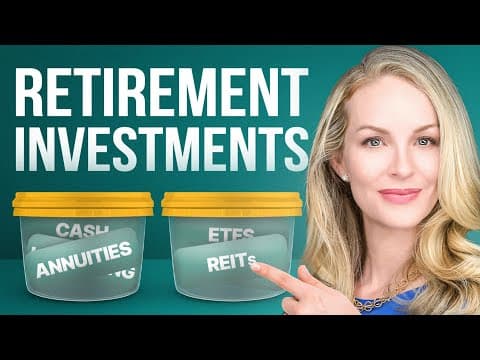
To build a sustainable retirement portfolio, consider the following investment buckets:
This bucket should cover the first 3 to 5 years of withdrawals from your portfolio. It is essential to have a mix of fixed income sources to mitigate sequence of returns risk. Here are some options:
For funds that you won’t need for at least five years, consider a balanced approach:
As you prepare for retirement, it is crucial to adapt your investment strategy from a traditional 60/40 stock-to-bond portfolio to a more diversified approach that emphasizes both growth and income. By considering these investment buckets and understanding the associated risks, you can create a sustainable income stream that supports your desired lifestyle throughout retirement. For more detailed strategies on optimizing your retirement plan, consider exploring additional resources available to you.