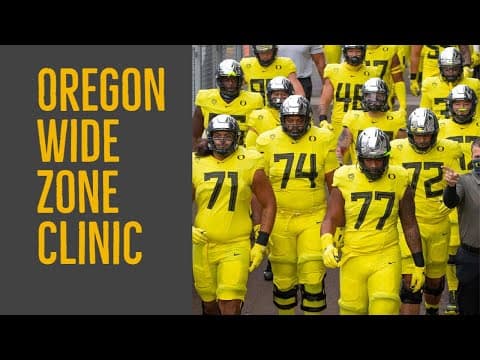
This article provides an in-depth analysis of the University of Oregon's wide zone running play, detailing offensive line techniques, blocking rules, player responsibilities, and practice drills. It covers the philosophy of running through defenders, the three-step decision process for linemen, and how the running back reads the defense. The article also includes insights from game and practice footage, emphasizing the importance of technique and adaptability.
The University of Oregon's offensive line and coaching staff have developed a distinctive approach to the wide zone running play, emphasizing specific blocking techniques, player responsibilities, and practice drills. This article explores the detailed mechanics of Oregon's wide zone scheme, including alignment rules, individual and combo blocks, running back reads, and the drills used to perfect execution.
Wide zone is a running play designed to stretch the defense horizontally and create cutback lanes for the running back. Oregon runs this play primarily from pistol and shotgun formations, with the running back aiming for a landmark behind the ghost tight end or tight end, depending on the formation.
Oregon's offensive line uses specific rules for covered and uncovered linemen:
Covered Linemen:
Uncovered Linemen:
The philosophy is to run through the defender's cylinder rather than around them, using their defensive techniques against them.
Uncovered linemen, especially the center, have a three-step decision:
This decision is made based on the defender's movement and alignment.
The running back's aiming point is the butt of the ghost tight end or tight end. The back reads the last hand down (usually the end man on the line of scrimmage) and decides whether to stretch the play outside or puncture inside. The second read is the next defensive lineman, often a three technique.
Rarely does the play end outside; it is a stretch and puncture play designed to create cutback lanes.
Oregon's wide zone running scheme is a well-coordinated system that relies on precise blocking techniques, quick decision-making by linemen, and intelligent reads by the running back. The emphasis on running through defenders, using their own defensive techniques against them, and adapting to defensive alignments makes this scheme effective. Practice drills using med balls and live defenders help players perfect their technique and execution.
This comprehensive approach, combined with detailed coaching and film study, has contributed to Oregon's success in running the wide zone play effectively in both practice and high-stakes games like the Rose Bowl.
This breakdown provides valuable insights for coaches, players, and fans interested in the technical aspects of offensive line play and running game strategy in college football.