A Multi-Axis Offensive is Unfolding in the Middle East That Could End the Islamic Republic of Iran
A significant escalation in the Middle East conflict is underway, with Israel conducting massive airstrikes on Iranian targets, Kurdish forces launching a ground offensive into Iranian territory, and Azerbaijan mobilizing its military along Iran's northern border. This multi-front pressure threatens the survival of the Islamic Republic of Iran, marking the most existential crisis the regime has faced in decades.
Something massive has erupted in the Middle East, signaling a potential end to the Islamic Republic of Iran as it has been known. This is not about bombs over Tyrron or Israeli F-35s flying through Iranian airspace. Instead, it is a multi-directional ground and air offensive that Iran has feared for decades, more than any American bombers or Israeli missiles.
The Current State of the Conflict
Over the last 12 hours, the conflict has dramatically escalated. The Israeli Defense Forces (IDF) launched a massive wave of large-scale strikes across Tyrron, targeting a compound housing the headquarters of every major Iranian security organization, including the IRGC, intelligence divisions, and the Baz. Over 100 Israeli jets reportedly dropped more than 250 munitions on this single compound while Iranian soldiers were still operating inside.
Simultaneously, the United States Central Command (Sentcom) posted videos showing Iranian mobile missile launchers being destroyed in real time, emphasizing lethal precision in neutralizing threats. U.S. Defense Secretary Pete Heget declared that America is accelerating its efforts, not decelerating, and that Iran's capabilities are diminishing by the hour.
General Dan Kaine, Chairman of the Joint Chiefs, stated that localized air superiority has been achieved across southern Iran's coast, with plans to strike progressively deeper into Iranian territory. Thousands of military targets have been destroyed, including more than twenty Iranian naval vessels and at least one submarine. Iran's ballistic missile launches have dropped dramatically by upwards of 80% since the conflict began.
Due to these successes, Israel has lowered its homefront command guidelines from severe to moderate, indicating a significant reduction in missile retaliation threats within 72 to 96 hours.
The Kurdish Ground Offensive
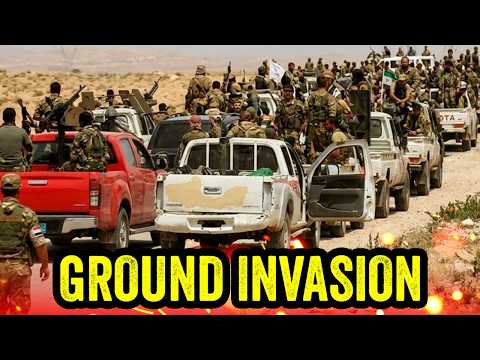
A groundbreaking development in the last 12 hours is the Kurdish forces launching a ground offensive into Iranian territory. Thousands of Kurdish fighters, mainly from the Pesak group—Iranian Kurds who fled into Iraq and trained for this moment—have crossed the border and taken combat positions in the mountainous Maruan region along the Iran-Iraq border.
Multiple Kurdish parties, including the Kurdistan Free Life Party (PJK), the PDKI, the Kurdistan Freedom Party, the PAK, Kamala, and the Kabad Organization, have formed a coalition of political forces of Iranian Kurdistan. These battle-hardened fighters, many veterans of the war against ISIS, are deploying deep into the Zagros mountains.
Reports indicate that the CIA has been closely working to arm these Kurdish forces over several months to spark a popular uprising inside Iran. Light weapons have been smuggled into western Iran since early 2025, arming thousands of Kurdish volunteers.
Iranian forces evacuated the border city of Maravan on March 3rd, pulling back and ceding space in their Kurdish region. The Kurdish coalition is calling on Iranian security forces in Kurdistan to defect from the Islamic Republic and urging civilians to avoid military sites for safety.