This blog post explores the complex social class divisions in America, highlighting how perceptions of class influence our interactions, opportunities, and identities. Through various perspectives, it reveals the subtle yet pervasive nature of class distinctions and their impact on American society.
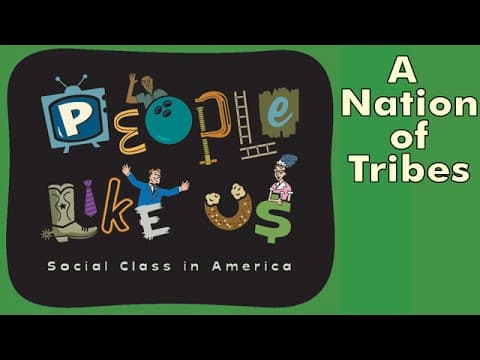
In the first episode of "People Like Us," the discussion centers around the intricate social class divisions that exist within American society. The episode reveals how these divisions are often based on appearances, backgrounds, and economic status, leading to a complex web of social interactions and perceptions.
The episode opens with individuals making snap judgments about others based on their appearance. Comments about clothing, demeanor, and even the type of house someone lives in illustrate how quickly people categorize each other into social classes. For instance, one participant notes that someone looks lower class based on their plaid shorts and the screen door behind them, while another confidently identifies someone as upper class, associating them with wealth and privilege.
Despite the American ideal of equality, the reality is that class distinctions are deeply ingrained in society. Participants express that acknowledging the existence of a class system is challenging for many Americans, as it contradicts the belief in a classless society. However, social class is often measured by various factors, including wealth, education, and even family history.
The narrative shifts to personal stories, where individuals reflect on their family histories and the significance of their homes. One man shares his pride in living in a house that has been in his family for generations, emphasizing the comfort and reassurance it brings him. This connection to heritage highlights how class can be tied to familial legacy and social standing.
Consumer choices also reflect class distinctions. One participant expresses disdain for certain car brands, associating them with specific social classes. This sentiment illustrates how material possessions can serve as markers of class identity, influencing how individuals perceive themselves and others.
As the discussion progresses, it becomes clear that social class affects opportunities and aspirations. Participants share anecdotes about their upbringing and the expectations set by their families. The pressure to succeed and the desire to associate with the right social circles often dictate educational and career choices.
Education is a significant factor in class mobility. The episode highlights how sending children to private schools has shifted from a racial issue to one of class, with parents seeking to ensure their children are surrounded by peers from similar economic backgrounds. This desire for social alignment perpetuates class divisions and reinforces existing inequalities.
The episode delves into the complexities of class identity, revealing that individuals often unconsciously separate themselves from those who do not fit into their social group. This separation can manifest in various ways, from social gatherings to everyday interactions. One woman candidly admits that she can identify people who do not belong to her class, even in casual settings like the beach.
Class distinctions also reflect deeper societal values and prejudices. The episode discusses how perceptions of class can reveal underlying fears and biases, shaping how individuals interact with one another. The notion of being part of a tribe—whether it be defined by wealth, profession, or lifestyle—plays a crucial role in how people navigate their social environments.
In conclusion, the exploration of social class in America reveals a complex landscape of identities, perceptions, and interactions. The episode of "People Like Us" serves as a reminder that while we may strive for equality, the reality is that class distinctions are pervasive and influential in shaping our lives. Understanding these divisions is essential for fostering a more inclusive society where individuals are recognized for their unique contributions, regardless of their social class.