A Night of the Seven Kingdoms offers a refreshing take on fantasy television by focusing on a likable, humble protagonist, Sir Duncan the Tall, whose journey is marked by honor, friendship, and determination. Eschewing grand spectacle for strong writing and character development, the show brings optimism and adventure back to the genre, resonating with audiences tired of bleak, morally ambiguous narratives.
Do you want to write a fantasy show? Here's a crazy idea: start with a likable, good-natured protagonist from humble origins and send him on a journey into the wider world for the first time. Along the way, he meets friends and enemies, faces challenges and setbacks, and makes tough decisions that reveal his character. With help from friends and good old-fashioned grit and determination, he stays true to his principles and emerges stronger and wiser.
This classic formula might seem out of place in today's post-modern Hollywood landscape, where heroism, bravery, masculine determination, and optimism often seem outlawed. Yet, it is exactly this approach that makes A Night of the Seven Kingdoms probably the best show on TV right now and a fast favorite in the Game of Thrones universe.
Unlike many modern fantasy shows, A Night of the Seven Kingdoms does not rely on epic scale, record-breaking budgets, sprawling casts, or mind-blowing special effects. Instead, it is a smaller, more modest production that knows exactly what it is and aims to do the best it can with limited resources.
This constraint works in the show's favor, forcing the creators to focus on good writing and strong characters rather than spectacle. When viewers are invested in the story, they forgive technical shortcomings. Remember the fantasy shows of the 1990s and 2000s? We watched them not for special effects but for the story and characters.
The story centers on Sir Duncan the Tall, a man destined to become a legendary figure in Game of Thrones lore. When we first meet him, he is a lowly squire to an obscure hedge knight who has just passed away. After burying his master and taking up his sword, Duncan decides to enter a local jousting tournament with the modest goal of winning respect as a knight and perhaps joining the king's guard someday.
Duncan is a simple but decent man—not especially smart or cunning, but with a good heart and a desire to become more than he is. Lead actor Peter Clafy delivers a performance that radiates likability, making you root for Duncan from the start.
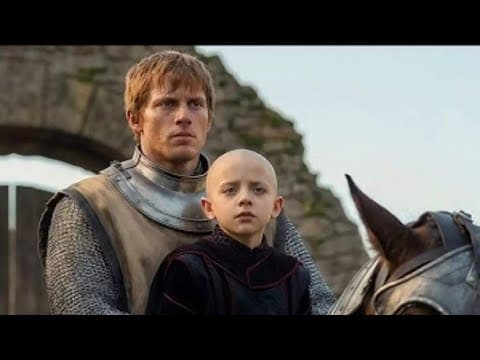
However, Duncan's former master was not well-known, and none of the noblemen Duncan approaches have heard of him. Without proof of lineage, Duncan cannot enter the tournament. While searching for a solution, he befriends a mysterious young boy with a shaved head who calls himself Egg, offering to be Duncan's squire.
Help arrives unexpectedly from Prince Bor Targaryen, a conscientious man who remembers even the most obscure hedge knights. He vouches for Duncan, allowing him to enter the tournament.
Things take a turn when Duncan defends a young woman's honor by fighting Bor's nephew, Aaron. Aaron demands a trial by combat, but with a twist: Duncan and six others will face seven men chosen by Aaron. What will happen in this medieval royal rumble? Who will live and who will die?
Initially, anticipation for the show was low. The original Game of Thrones ended on a sour note for many, and House of the Dragon, despite capable writing and a strong cast, never recaptured the magic or fun.
Yet, from the first episode, opinions began to shift. Viewers experienced a wave of positivity and relief. Relief that the show was not another season of grim, dark misery porn disguised as fantasy. Relief that there was a genuinely brave, likable, decent protagonist to cheer for, one without dark secrets or Machiavellian schemes.
The show sincerely explores concepts like honor and heroism without mocking or belittling them as outdated relics. It features men in full battle armor engaging in brutal combat without the addition of unrealistic "girl boss" characters pretending to fight as well as men.
After a decade of Hollywood's self-imposed malaise, depressing moral ambiguity, and tedious culture war pandering, A Night of the Seven Kingdoms feels like a breath of fresh air. It is a show that brings back fun and adventure to fantasy, making viewers feel good rather than despairing over the human condition.
The show offers a rare glimpse of Westeros through the eyes of common folk rather than kings, generals, and epic power struggles. It explores small villages, farms, and minor tournaments in far-flung provincial outposts, adding a charming slice-of-life aspect.
Narratively, the show moves at a good pace without dawdling, taking just enough time to immerse viewers in the world and its people. Without the burden of juggling numerous plot threads and characters, the show allows audiences to bond with the leads.
Duncan and Egg make a great pairing—contradictory yet complementary. Duncan is physically powerful but naive and inexperienced, while Egg is small and puny but deceptively wise and well-connected. Their chemistry shines in simple scenes of hanging out, talking, and sharing meals, proving how effective simplicity can be when starved of it for years.
Is A Night of the Seven Kingdoms a lucky fluke that slipped through the cracks, or does it signal a major realignment in Hollywood's creative output? Perhaps Hollywood is finally realizing what audiences want—and what they don't.
Audiences are done with bleak nihilism where everyone is bad and nothing is worth fighting for. They are tired of morally gray protagonists nobody likes, ironic mockery, sneering post-modern critiques of classic heroic archetypes, forced diversity quotas, and endless culture war pandering.
What viewers really need is optimism, good old-fashioned adventure, and a window into an exciting, interesting world. A Night of the Seven Kingdoms delivers exactly that.
A Night of the Seven Kingdoms is a show that puts fun and adventure back into fantasy television. It offers a sincere story of heroism and honor, anchored by a likable protagonist and strong character relationships. It is one of the few shows on TV that viewers genuinely look forward to each week.
Whether this marks a new direction for Hollywood or remains a rare gem, it is a welcome change that many fans desperately needed. For now, fans can simply enjoy the ride and appreciate a fantasy show that dares to be optimistic and heartfelt in 2026.
Go away now.