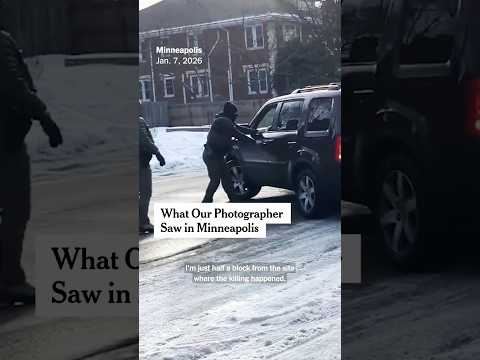
This article presents a photographer's vivid eyewitness account of the tense and chaotic scenes in Minneapolis following a fatal shooting. It captures the interactions between federal agents, protesters, and residents, highlighting the fear, anger, and community solidarity amid the unrest. The narrative reveals the complexity of the situation and the emotional impact on the city's inhabitants.
In the midst of ongoing national unrest, a photographer who has spent months documenting conflict zones abroad found himself capturing the turmoil in his own hometown of Minneapolis. This article recounts his observations and experiences near the site of a recent fatal shooting, providing a raw and detailed perspective on the unfolding events.
The photographer arrived just half a block from where the killing occurred. Initial reports suggested a shooting, possibly fatal, prompting him to rush through an alley to the scene. Upon arrival, he encountered dozens of federal agents and noticed a maroon-colored SUV with a bullet hole in its windshield, signaling the severity of the situation.
Crowds began to assemble at the intersection and sidewalks, vocally expressing their anger and distrust toward the federal agents. Protesters shouted accusations, calling the agents "murderers" and demanding their departure from the area. The atmosphere was charged with emotion and confrontation.
Riot police were deployed to manage the unrest. A small group of protesters locked arms to block an alleyway, preventing a vehicle carrying agents from leaving. In response, the agents used pepper spray against the crowd. The photographer witnessed individuals struggling to clear the gas from their eyes, and a man being wrestled to the snowy ground. Amid the chaos, a snowball struck one of the officers, illustrating the volatile and unpredictable nature of the encounter.
After the agents withdrew, hundreds of people gathered at the site of the killing, transforming it into a living memorial. Chants such as "Human life is so sacred" and "Our streets" echoed through the crowd, reflecting the community's grief and determination.
The photographer focused on capturing the interactions among all parties involved in these rapidly evolving and dangerous situations. He observed vehicles arriving with armed, masked men dressed in military-style uniforms reminiscent of those seen in war zones. Residents emerged from their homes and businesses, blowing whistles and recording the events on their phones.
Federal agents were seen apprehending individuals—grabbing, tackling, handcuffing, and pushing them into vehicles. The scenes were marked by palpable fear and tension.
A prevailing sentiment among the people on the streets was that Minneapolis itself was not the primary target of the protests. Instead, the events represented a galvanizing moment for the community, where residents looked out for one another amid the presence of an intimidating outside force. The photographer noted the widespread fear and uncertainty permeating the city.
This firsthand account sheds light on the complex and emotionally charged environment in Minneapolis following a tragic shooting. Through the lens of a seasoned photographer, readers gain insight into the multifaceted dynamics between law enforcement, protesters, and residents. The narrative underscores the profound impact of such events on a community striving to navigate fear, grief, and the quest for justice.