This blog post outlines a personal journey to financial freedom in Europe, detailing strategies for early retirement, including the importance of saving, investing, and finding high-income opportunities. It emphasizes the 4% rule for passive income, the significance of entrepreneurship, and the reality of semi-retirement for many who achieve financial independence.
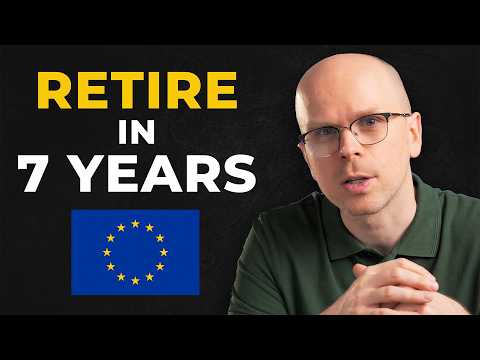
In this blog post, I will share my personal journey from having just €900 in the bank to achieving financial freedom in just seven years. I managed to retire before the age of 40, and I am living proof that it is possible to retire early in Europe. Here’s how I did it and what you can learn from my experience.
Eight years ago, my life took a significant turn when my wife became pregnant. This news filled me with both joy and fear, as I realized I was not prepared to support a family. Throughout my twenties, I had enjoyed life—traveling, dancing, writing, and having fun. Suddenly, I was faced with the responsibility of being a father and provider. This realization served as a wake-up call, motivating me to take control of my financial future.
I knew that to provide for my family, we would need an annual income of around €30,000 to €40,000 to live comfortably. To determine how much I needed to invest to generate this passive income, I turned to the 4% rule, a principle popularized by the FIRE (Financial Independence, Retire Early) movement. This rule, based on the Trinity Study, suggests that if you have a portfolio of stocks and bonds, you can withdraw 4% annually without running out of money.
Using the 4% rule, I calculated that to generate €40,000 per year, I would need approximately €1 million in investments. This became my financial goal. I decided on a 15-year timeframe to reach this target and began to crunch the numbers to figure out how much I needed to save and invest each month.
I created a simple calculator to help determine the monthly investment needed to reach my goal. Assuming a long-term average return of 9% from developed world stocks, I realized that to reach €1 million in 15 years, I would need to invest around €2,500 per month. However, my income as a corporate trainer was only around €1,500 per month, making it impossible to save that much.
Faced with this challenge, I had two options: lower my goals or take massive action. I chose the latter. I reached out to business leaders in my area, seeking opportunities where I could contribute and earn a percentage of the results. Initially, many dismissed my inquiries, including a partner at Ernst & Young, who suggested I stick to teaching.
However, I eventually connected with a group of ambitious individuals looking to establish a new investment company in Latvia. They recognized my skills from my previous experience on Wall Street and offered me the position of CEO. This opportunity was a game-changer for me, as it provided a performance-based salary that significantly increased my income.
During this period, my wife and I made a conscious effort to keep our living expenses low. We lived in a modest Soviet-era apartment and drove an old car, allowing us to invest several thousand euros each month. This disciplined approach to spending was crucial in accelerating our path to financial freedom.
While I initially calculated that it would take 15 years to reach my financial goal, I achieved financial freedom in just seven years. This was largely due to my investments in both the global markets and the stock of the investment company I was leading. The success of the company led to a significant increase in the value of my shares, propelling me to a seven-figure net worth much faster than anticipated.
Although I reached financial freedom, I soon realized that I was burnt out from the demands of my role as CEO. I decided to take a break and retire early, but within a few months, I found myself back at work, this time building an online education company for European investors. I discovered that I truly enjoyed this work, which aligned with my passion for education.
This experience reflects a common trend among those who achieve early retirement. Many individuals do not stay retired for long; instead, they pursue work that they are passionate about. Once financial independence is achieved, the motivation to work often shifts from necessity to choice. This leads to what I call semi-retirement, where investments cover a portion of one’s income, making it easier to pursue fulfilling work without financial pressure.
Retiring early in Europe is challenging but achievable with the right mindset and strategies. Whether you choose to save diligently and invest in index funds or take the entrepreneurial route, the key is to find ways to increase your income significantly. Recognizing that early retirement may not mean complete cessation of work can help you set realistic goals. Aim for semi-retirement, where your investments support part of your income, allowing you to pursue your passions while maintaining financial security. Investing is a crucial skill in this journey, and I encourage you to explore resources that can help you become a savvy investor.