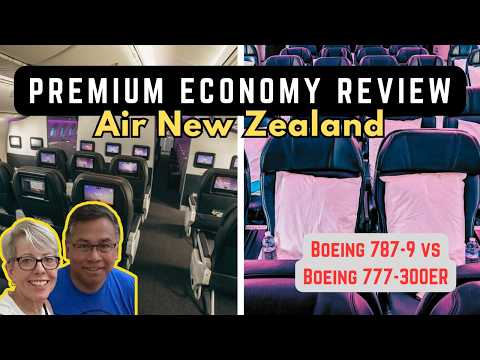
This blog post compares Air New Zealand's premium economy experience on the Boeing 787-9 Dreamliner and the Boeing 777-300ER. It evaluates cabin layout, seat comfort, in-flight entertainment, food, service, and overall cabin atmosphere. The Boeing 787-9 emerges as the overall winner due to its superior technology and cabin environment, while the 777-300ER offers more personal space. Ultimately, the choice depends on individual preferences for comfort and amenities.
When booking a long-haul flight to or from New Zealand, many travelers opt for Air New Zealand's premium economy cabin, known for its comfort and service. However, choosing between the Boeing 787-9 Dreamliner and the Boeing 777-300ER can be challenging. This post will compare these two aircraft in a head-to-head showdown, focusing on seat comfort, in-flight entertainment, food, service, and overall cabin experience.
The seat is arguably the most crucial aspect of any long-haul flight, as it serves as your home for many hours. Let's explore the differences in cabin layout and seat comfort between the two aircraft.
Both aircraft provide a generous seat pitch of 41 to 42 inches, allowing for ample legroom. However, the seat width varies:
Both seats come with leather upholstery, adjustable headrests, and proper leg rests. However, the upcoming retrofitting of the 787-9 in 2025 will introduce a fixed back shell design, enhancing personal space by allowing passengers to recline without encroaching on the space of those behind them.
While the 777-300ER offers a wider seat, the retrofitted 787-9 promises improved privacy and comfort. For now, the extra inch of width on the 777-300ER gives it the edge in this round.
Once settled in, the in-flight experience is crucial. Let's examine the amenities and entertainment options available on both aircraft.
Upon arrival at your seat, both planes provide a welcoming setup, including:
Both aircraft are equipped with a universal AC power outlet and a USB-A port at every seat, ensuring devices can be charged easily. The headphones provided are a significant upgrade from economy class.
The technological advancements in the 787-9, particularly the larger screen and Bluetooth capabilities, make it the winner of this round.
With one round each, the final round focuses on the overall experience, including food quality, service, and cabin atmosphere.
Air New Zealand prides itself on its Kiwi-inspired cuisine, and premium economy dining is a highlight. Both aircraft offer:
Air New Zealand's flight attendants are known for their warmth and professionalism. The service in premium economy is notably more personal and attentive compared to economy class, making for a pleasant experience on both aircraft.
The Boeing 787-9 excels in cabin atmosphere due to its composite materials, which allow for lower cabin pressure (6,000 feet instead of the usual 8,000 feet) and increased humidity. This results in less fatigue and jet lag upon arrival, making it a more enjoyable environment for long flights.
The Boeing 787-9 Dreamliner wins this round due to its superior cabin environment, enhancing the overall flying experience.
After three rounds of comparison, the results are clear:
The Boeing 787-9 Dreamliner emerges as the overall winner, offering a quieter cabin, better air quality, and modern technology that contributes to a less exhausting and more enjoyable flight experience. However, if personal space and seat width are your top priorities, the 777-300ER remains an excellent choice with its wider seat.
In conclusion, for the best all-around experience that leaves you feeling refreshed, the Dreamliner is the way to go. It represents the future of long-haul travel and is a pleasure to fly on.
We invite you to share your experiences with Air New Zealand's premium economy on either aircraft. Which one do you prefer? Let us know in the comments below!