
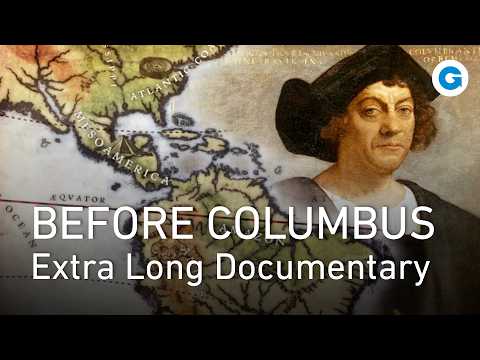
The documentary explores the rich civilizations and ecosystems of the Americas before Columbus's arrival in 1492, highlighting the advanced agricultural practices, diverse cultures, and the profound transformations that followed European contact, including the Columbian Exchange and its lasting impacts on both continents.
In the summer of 1492, Christopher Columbus set sail from Italy with a vision to find a westward route to Asia. Instead, he anchored off the Bahamas, marking the beginning of European contact with the Americas. This documentary delves into the untold story of the Americas before Columbus, revealing the rich civilizations, advanced agricultural practices, and the profound transformations that ensued following European arrival.
By 1491, Europe was in a state of intense competition for wealth and resources. The nobles had grown wealthy through trade with the East, but the loss of the Silk Road to the Turks threatened their riches. Queen Isabella of Spain, desperate to find new routes to India, financed Columbus's voyage, hoping to secure treasures and trade for her kingdom.
Unbeknownst to Europeans, the Americas were home to complex societies and vast ecosystems. The Amazon was densely populated, the Andes housed the powerful Inca Empire, and Mesoamerica was home to advanced civilizations. The Atlantic coast was dotted with villages and fields, showcasing a rich tapestry of life.
In North America, the Mississippians thrived around 1150 AD, known for their impressive mound-building and agricultural practices. They cultivated corn, a crop developed through selective breeding from wild teosinte grass, which allowed them to sustain large populations and build cities like Cahokia.
In South America, the Inca Empire stretched along the Andes, relying on potatoes, another native crop cultivated for thousands of years. The Incas developed advanced agricultural techniques, including terracing, to maximize their crop yields at high altitudes.
The documentary highlights the stark differences between European and American agricultural practices. While Europeans relied on grains and livestock, Native Americans cultivated crops like corn and potatoes without the aid of domesticated animals. This led to different ecological impacts and food production methods.
Europe had a variety of domesticated animals that contributed to agricultural efficiency, such as horses, cattle, and pigs. In contrast, the Americas had fewer domesticated species, primarily llamas and turkeys, which limited their agricultural capabilities.
Contrary to the myth of a pristine wilderness, the Americas were actively managed by Native Americans. They employed techniques like controlled burns to enhance hunting grounds and promote the growth of desirable plants. This management created a rich and diverse ecosystem that supported millions of people.
The arrival of Europeans brought significant changes to the landscape. Columbus's voyages initiated the Columbian Exchange, a transfer of plants, animals, and diseases between the Old and New Worlds. This exchange would have lasting effects on both continents.
The introduction of European crops and livestock transformed the American landscape. Wheat, barley, and domesticated animals flourished, while native species were displaced. The settlers' agricultural practices led to deforestation and overfishing, mirroring the environmental degradation seen in Europe.
Perhaps the most devastating impact of the Columbian Exchange was the introduction of diseases like smallpox to Native American populations, who had no immunity. This led to catastrophic population declines, with estimates suggesting that up to 90% of Native Americans perished due to these diseases.
The documentary concludes by reflecting on the profound changes that occurred in the Americas following Columbus's arrival. The rich civilizations that existed before 1492 were irrevocably altered by European contact, leading to a new world shaped by the forces of ecology, disease, and cultural exchange. The legacy of the Columbian Exchange continues to influence the Americas and Europe to this day, reminding us of the interconnectedness of human history and the natural world.



















