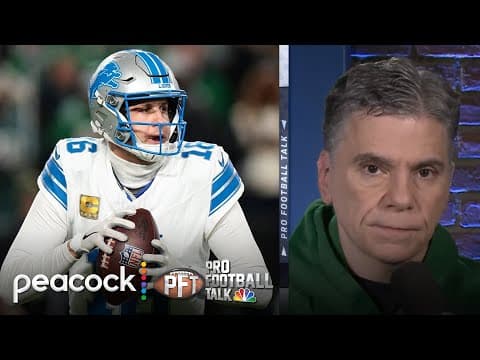
The Detroit Lions faced significant offensive challenges against the Philadelphia Eagles, highlighting the difficulties of Dan Campbell juggling head coach and play caller roles. The Eagles' dominant defense stifled the Lions' run game and limited key players like Jamir Gibbs and Jameson Williams, forcing a pass-first approach that struggled to find rhythm. The article explores the tactical and personnel issues contributing to the Lions' offensive woes and the learning curve ahead.
The Detroit Lions recently faced a tough challenge against the Philadelphia Eagles, revealing significant offensive struggles. This article delves into the factors behind the Lions' difficulties, focusing on coaching decisions, game planning, and the impact of the Eagles' formidable defense.
Dan Campbell, the Lions' head coach, has taken on the additional responsibility of calling plays for the remainder of the season. This decision is not temporary or selective; Campbell plans to call plays against both strong and weak defenses. However, this dual role presents challenges.
Being a head coach involves overseeing the entire team and making big-picture decisions, while play calling requires focusing on the offensive unit's rhythm and flow. Balancing these tasks simultaneously can be overwhelming. Campbell's commitment to calling plays means he must constantly adapt and revise strategies on the fly, a demanding task that requires keeping a finger on the pulse of the team while managing the battlefield.
During the game against the Eagles, some decisions, such as going for it on fourth down, appeared to be made by default rather than through thorough consideration. This highlights the difficulty of managing both macro and micro aspects of coaching simultaneously. The learning curve for Campbell is ongoing, and it remains to be seen how this dual responsibility will evolve.
Successful head coach-play callers often rely on a support system to monitor game details, such as opponent tendencies on third downs, personnel groupings, and coverage schemes. This information helps in formulating effective play calls. Campbell and his staff are likely working on improving this collaborative approach to better adapt during games.
The Lions entered the game with a pass-first mindset, partly due to concerns about their running game against the Eagles' strong front four. Early in the game, this approach was evident, but it also exposed limitations.
The Eagles' defense effectively shut down the Lions' run game. Jamir Gibbs, one of the NFL's top players, managed 5 catches for 107 yards but only 12 carries for 39 yards on the ground. David Montgomery was limited to 27 rushing yards, and Jameson Williams had just 9 yards on a rushing attempt. The inability to establish the run hindered the effectiveness of play-action passes and limited offensive versatility.
The Lions struggled to get the ball to key offensive weapons like Amon-Ra St. Brown, who works the middle of the field and was effectively neutralized. Additionally, the absence of Sam LaPorta further reduced offensive options.
Philadelphia's front four excelled at stopping the run and rushing the passer, creating a challenging environment for the Lions' offense. Their ability to control the line of scrimmage forced the Lions into a predictable passing attack.
The Eagles' defense, led by coordinator Vic Fangio, focused on taking away the middle of the field, denying deep routes and in-cuts that are prevalent in today's NFL. This forced the Lions to attempt throws outside and downfield, areas where the Eagles dared them to challenge.
This defensive approach is reminiscent of the 2011-2012 San Francisco 49ers defense, which relied on a dominant front four to control games without compromising coverage. The Eagles' defense is similarly effective and is expected to remain a top-tier unit throughout the season.
The Lions' offensive struggles against the Eagles highlight areas for growth. Dan Campbell's dual role as head coach and play caller is a work in progress, and the team must develop better in-game adjustments and support systems.
Improving the running game and finding ways to utilize explosive players like Jamir Gibbs and Jameson Williams consistently will be crucial. Additionally, overcoming elite defenses like Philadelphia's will require strategic innovation and execution.
The Detroit Lions' recent game against the Philadelphia Eagles exposed significant offensive challenges, from coaching dynamics to tactical execution. The Eagles' defense proved dominant, limiting the Lions' run game and forcing a difficult passing attack. As the Lions continue their season, addressing these issues will be vital for their success and playoff aspirations.