The Air India 787 crash has sparked speculation about pilot error regarding landing gear and flaps. However, evidence suggests that the crash was likely due to a loss of thrust rather than pilot negligence. This article explores the mechanics of the 787, the evidence surrounding the crash, and potential causes of the engine failure.
The recent crash of an Air India 787 has generated significant discussion and speculation, particularly regarding the actions of the pilots during takeoff. In this article, we will examine the facts surrounding the incident, refute common misconceptions, and explore potential causes of the crash.
In the days following the crash, various theories emerged on social media and from self-proclaimed aviation experts. Two primary claims were made:
Both of these assertions have been widely circulated, but evidence suggests they are unfounded.
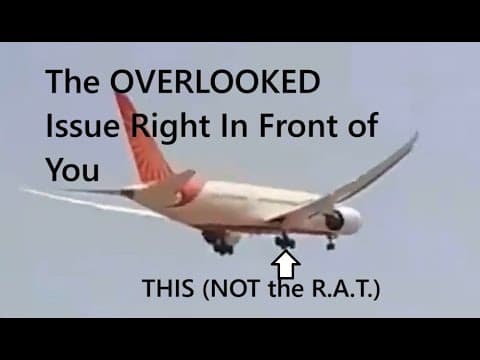
From the available video footage of the incident, it is clear that the landing gear did not retract during takeoff. The plane went down with the gear still extended. Even if the pilots had forgotten to retract the gear, the Boeing 787 is designed to fly with the gear down, albeit at reduced speed and increased fuel consumption. Therefore, this scenario alone would not have caused the crash.
The landing gear of the 787 consists of trucks that contain axles, wheels, tires, brakes, and a tilting mechanism. When the aircraft rotates for takeoff, the trucks tilt to maintain contact with the runway. After liftoff, the trucks should tilt to a position that prepares them for retraction. If the trucks remained in the front wheels down position, it could indicate a malfunction in the landing gear system or a failure of the air-ground sensors that detect when the aircraft has left the ground.
In either case, the evidence suggests that the pilots likely did not forget to retract the gear.
Another theory suggested that the pilots took off with the flaps retracted. However, wreckage analysis and higher resolution video evidence confirm that the flaps were extended during takeoff. While taking off with the flaps up can lead to a longer takeoff roll, the aircraft still managed to gain altitude, climbing to approximately 600 feet above the ground. This indicates that the aircraft was capable of flying, regardless of flap position.
Flaps are crucial for generating lift during takeoff, and modern aircraft are equipped with warning systems to prevent accidental no-flap takeoffs. Even if the flaps had been up, the aircraft's ability to climb suggests that this was not a contributing factor to the crash.
The flight path data indicates a significant loss of thrust, which is likely the primary cause of the crash. The aircraft exhibited a low rate of climb, consistent with insufficient engine power. It appears that the ram air turbine deployed, which typically occurs during dual engine failure.
While the exact cause of the thrust loss remains unknown, several theories have emerged:
The most plausible explanation is that both engines shut down due to a failure in the fuel valves, cutting off fuel supply. However, further investigation, including data from the cockpit voice recorder and flight data recorder, will be necessary to confirm this theory.
The Air India 787 crash has raised many questions and sparked numerous theories, most of which lack substantial evidence. The analysis suggests that the pilots were not at fault regarding the landing gear or flap positions. Instead, the crash appears to be the result of a significant loss of thrust, likely due to a systems failure. As investigations continue, it is hoped that the aviation authorities will provide clarity on the incident, offering some comfort to the victims' families and friends.
This incident serves as a reminder of the complexities of aviation and the importance of thorough investigations to uncover the truth behind such tragedies.