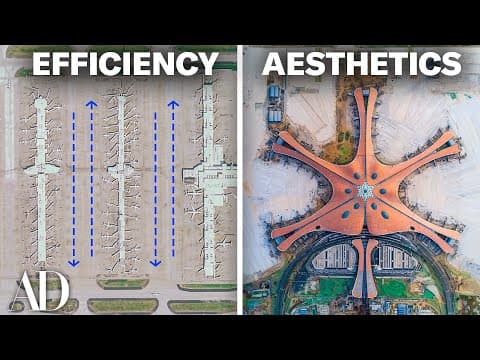
This blog post explores the evolution of airport design, emphasizing the balance between efficiency and aesthetics. It highlights key architectural milestones, particularly the TWA Flight Center and Daxing International Airport, showcasing how modern airports strive to create pleasant experiences for travelers while maintaining operational efficiency.
Airports are often seen as mere transit points, but their design plays a crucial role in shaping the travel experience. Most travelers prefer to spend as little time as possible in airports, making efficiency a primary focus in their design. However, when travelers do find themselves in these spaces, they desire comfort, beauty, and a pleasant atmosphere. This blog post delves into the evolution of airport design, highlighting the delicate balance between functionality and aesthetics.
Airports began as utilitarian structures, primarily serving military and government needs. Initially, they consisted of simple hangars and dirt landing strips. As air travel became more accessible, the demand for larger airports grew, necessitating the inclusion of check-in areas, baggage claims, waiting gates, and retail spaces. Despite the potential for aesthetic design, many early airports resembled office buildings, prioritizing efficiency and cost over visual appeal.
The turning point in airport design came with the completion of the TWA Flight Center at John F. Kennedy International Airport in 1962, designed by Eero Saarinen. This terminal marked a significant shift towards incorporating aesthetic elements into airport design, moving beyond the purely functional approach.
Saarinen, known for his visionary designs, aimed to evoke the excitement of air travel through sweeping curves and dynamic forms. The TWA Flight Center features a unique architectural style that resembles the wings of a bird, creating a sense of flight and discovery. This design was groundbreaking, especially considering it was created before the advent of computer-aided design, relying instead on hand-drawn models.
The interior of the TWA Flight Center is as captivating as its exterior. With swirling forms and a roof made of folded shells, the terminal captures the glamour of air travel in the early 1960s. Saarinen designed the terminal to encourage travelers to linger and enjoy the space, contrasting with the typical desire to rush through an airport.
Other airports that have successfully created a similar sense of excitement include Barajas Airport in Spain, Kansai International Airport in Japan, and Dulles Airport, also designed by Saarinen. These airports emphasize the importance of aesthetics in enhancing the travel experience.
As air travel has become safer and more affordable, travelers are spending more time in airports. This shift has led to a demand for beautiful and engaging airport environments. A prime example of this is Daxing International Airport in Beijing, designed by Zaha Hadid Architects.
Daxing International Airport is the largest airport building in the world, characterized by its organic shapes and massive scale. The design draws inspiration from Saarinen's TWA terminal, featuring similar plastic curves and skylights. The interior is flooded with natural light, creating an inviting atmosphere for travelers.
The airport employs a radial hub-and-spoke design, ensuring that no gate is more than an eight-minute walk from the center. This pedestrian-friendly layout eliminates the need for shuttles or trains, enhancing the overall efficiency of the airport.
While Daxing exemplifies a balance of beauty and efficiency, not all airports achieve this harmony. Hartsfield-Jackson International Airport in Atlanta, the busiest airport in the world, prioritizes operational efficiency over aesthetics. Its design combines linear and satellite configurations to maximize flight efficiency, but this comes at the cost of a visually inspiring environment.
Travelers at Hartsfield-Jackson often find themselves navigating underground connections and multiple modes of transportation to reach their gates, sacrificing the aesthetic experience for functional efficiency.
The essence of effective airport design lies in striking a balance between efficiency and aesthetic experience. As travelers spend more time in airports, the importance of creating beautiful, engaging spaces becomes increasingly clear. Ultimately, the goal is to ensure that while airports serve their functional purpose, they also provide a pleasant environment for travelers.
What are your thoughts on airport design? Share your favorite and least favorite airports in the comments below.