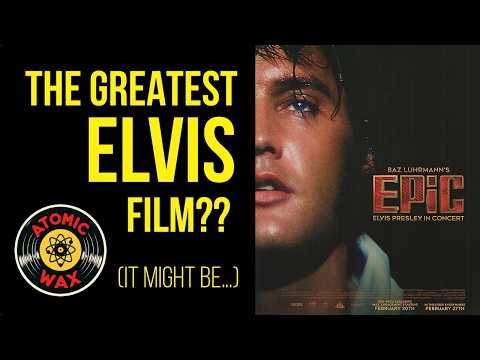
Baz Luhrmann's film Epic offers a unique cinematic experience of Elvis Presley, blending concert footage, interviews, and biography to reveal Elvis's artistry and live performance magic. The film highlights Elvis's gospel influences, his dynamic stage presence, and his ability to unite diverse audiences, providing fresh insight into why Elvis remains a cultural icon.
Baz Luhrmann's latest film, Epic, is a groundbreaking music film about Elvis Presley that defies traditional categories. It is neither a concert film nor a documentary but something truly epic in scope and style. This film offers a cinematic experience unlike any other Elvis film before it, weaving together footage from across Elvis's career, including home movies, television appearances, and concert documentaries like That's the Way It Is (1970) and Elvis on Tour (1972).
Baz Luhrmann uses a unique approach by structuring the film around Elvis's own words from interviews throughout his life, effectively making Elvis the narrator of his story. This choice allows audiences to connect deeply with Elvis as a performing artist rather than just a celebrity or historical figure.
Despite the many Elvis films and documentaries that exist, Epic fills a gap by focusing on understanding Elvis's artistry and live performance style. It connects the dots between his biography, creative process, and final performances, offering a new framework to appreciate what made Elvis so special.
One of the most profound questions the film addresses is: What exactly made Elvis Presley so special as an artist? While many recognize Elvis as an important figure in music history, the reasons behind his greatness have often been elusive.
Phil Spector once said, "You have no idea how great he is. You really don't. You have no comprehension. It's absolutely impossible. I can't tell you why he's so great, but he is. He's sensational." This quote captures the intangible quality of Elvis's style and approach to music.
Elvis did not write songs, was not a virtuoso instrumentalist, nor did he invent rock and roll. Yet, his art lay in his unique application of style and his ability to blend genres.
Elvis himself described his music as a combination of country, gospel, and rhythm and blues. While many histories emphasize the country and rhythm and blues elements, gospel music was a fundamental building block of his style, not just a side passion.
The film highlights Elvis's deep connection to gospel music, showcasing his favorite gospel artists like Jake Hess and Rosie Rozell of the Statesmen Quartet. It also reveals that gospel quartets such as the Jubilee 4, the Jordanaires, the Imperials, and JD Sumner and the Stamps Quartet were integral to his recordings and live performances.
From 1956 onward, Elvis was rarely without a gospel quartet backing him, underscoring gospel's vital role in shaping his sound.
Epic excels in capturing the unique power of Elvis as a live performer. Unlike the common perception that the screaming fans at his concerts were merely reacting to celebrity, the film shows there was something deeper happening.
Marian Kisker, the secretary at Sun Records who first recorded Elvis in 1953, recalled her own overwhelming reaction at his first performance in 1954, describing how she found herself screaming in awe despite being a typically restrained person.
This fervor was not a one-time event but a consistent response from audiences who felt the energy and connection Elvis created on stage.
Elvis handpicked every member of his TCB band, seeking musicians with diverse stylistic backgrounds and those who closely watched and matched his intensity on stage. His iconic stage movements served as a form of conducting the band and engaging the audience, creating a dynamic and living musical experience.
He allowed himself the freedom to follow inspiration during performances, whether incorporating an army march during "Poke Salad Annie" or performing a heartfelt saliloquy of Hank Williams songs before "Walk a Mile in My Shoes."
Each show was unique, shaped by the crowd, the musicians, and Elvis's own spontaneous creativity.
The film pays close attention to Elvis's facial expressions, body language, and interactions with band members and the audience. For example, during "That's All Right Mama," Elvis signals the spotlight operator to highlight guitarist James Burton, ensuring his bandmates receive recognition.
Moments like JD Sumner watching Elvis with rapt attention during "How Great Thou Art" and Elvis tap dancing for Sammy Davis Jr. in the audience illustrate the communal spirit of his performances.
Elvis's concerts were not just performances for strangers but shared experiences with thousands of friends, uniting everyone in the music.
Growing up in the Jim Crow South, Elvis exhibited a radical openness to people from diverse backgrounds. He was genuinely interested in others and incorporated influences from a wide range of artists into his style, becoming truly one of a kind.
This openness helped his music resonate with a broad audience, as people could see parts of themselves in Elvis.
Music, as a universal language, found in Elvis a fluent speaker who bridged cultural divides.
At a 1970 Madison Square Garden press conference, Elvis declined to state a political opinion, saying he was just an entertainer. However, the film follows this with his performance of "Walk a Mile in My Shoes," a song that embodies his message of empathy and unity.
The lyrics emphasize understanding and brotherhood despite differences, reflecting Elvis's inclusive spirit.
Baz Luhrmann and Jonathan Redmond have created a film that captures the alchemy of an Elvis show in cinematic form, allowing new audiences worldwide to experience the magic of Elvis's performances.
Epic invites viewers to appreciate Elvis not just as a cultural icon but as a living, breathing artist whose music and spirit continue to inspire.
Whether you are a longtime fan or new to Elvis's work, this film offers a fresh perspective and a powerful shared experience.
Go see Epic. Bring a friend, or even someone you don't particularly like—you might find new appreciation and have a great time together.
This is one of the best Elvis films ever made, and it deserves multiple viewings. It deepens our understanding of Elvis's artistry and the profound connection he forged with his audiences.
Thank you, Baz Luhrmann and Jonathan Redmond, for this remarkable tribute to the King of Rock and Roll.
Until next time, enjoy the music and the magic of Elvis Presley.