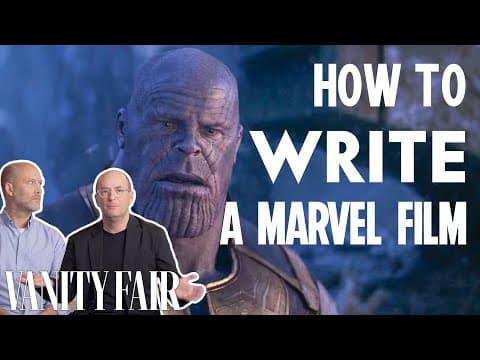
Marvel writers Steve McFeely and Chris Markus share insights into their creative process for writing major films like 'Civil War' and 'Endgame', discussing character development, plot structure, and the collaborative nature of storytelling in the Marvel Cinematic Universe.
In a recent discussion, Marvel writers Steve McFeely and Chris Markus revealed the intricate process behind writing some of the most successful films in the Marvel Cinematic Universe (MCU), including 'Civil War' and 'Endgame'. Their insights shed light on character development, plot structure, and the collaborative nature of storytelling that defines Marvel's approach.
The journey of characters like Captain America and Iron Man is central to the MCU's narrative. McFeely and Markus noted that during the writing of 'Civil War', they recognized the diverging paths of Steve Rogers and Tony Stark. Captain America, who once epitomized self-sacrifice, begins to understand the importance of valuing life beyond sacrifice. Conversely, Tony Stark, who initially had a more self-centered view, learns that true heroism sometimes requires personal loss. This realization led to the conclusion that for Steve to become his best self, he needed to embrace life, while Tony needed to confront the idea of sacrifice.
The writers emphasized that 'Avengers: Infinity War' and 'Endgame' were always intended to be two distinct films, a decision made by Marvel's head, Kevin Feige. They were tasked with integrating Thanos and the Infinity Stones into the narrative, which allowed for the introduction of various characters from the MCU. The writers spent months in a conference room, brainstorming ideas and reviewing previous films to ensure continuity and coherence in the storyline.
The writing process involved extensive collaboration with Marvel's team. McFeely and Markus described a unique brainstorming session where they were presented with a board filled with character names and potential plot points. This collaborative environment allowed them to explore various character interactions and plot developments, leading to the creation of memorable scenes, such as Captain America wielding Thor's hammer.
They utilized a methodical approach to plot development, inspired by screenwriting principles outlined in Syd Field's book, "Screenplay". This framework helped them identify key plot points and character arcs, ensuring that the narrative remained engaging and coherent.
Character arcs were a focal point in their writing. For instance, the writers crafted scenes that highlighted the emotional stakes for characters, such as the reconciliation between Gamora and Nebula. They also emphasized the significance of subtext in their writing, ensuring that each character's journey was meaningful and interconnected.
The drafting process was iterative, with McFeely and Markus creating what they referred to as a "Frankenstein draft"—a rough compilation of ideas that would later be refined. They would assign page counts for different scenes, work independently, and then come together to read and revise the script. This collaborative editing process allowed them to enhance character development and ensure that the script resonated with audiences.
Feedback from Marvel's producers and directors played a crucial role in shaping the final scripts. The writers would present their drafts to a group they humorously referred to as the "Marvel Parliament", which included key producers who provided insights on character consistency and plot coherence. This collaborative feedback loop was essential in refining the narrative and ensuring that it aligned with the broader MCU.
One of the significant challenges the writers faced was crafting a compelling narrative around Thanos, a character with immense power. They needed to create a story that felt authentic and engaging, even when the stakes were incredibly high. The writers found that exploring the emotional reactions of characters to loss was more impactful than the loss itself, as seen in the reactions of characters like Okoye and Rocket.
The process of writing for the Marvel Cinematic Universe is a complex and collaborative endeavor that requires a deep understanding of character development, plot structure, and audience engagement. McFeely and Markus's insights reveal the meticulous planning and creative brainstorming that go into crafting blockbuster films. Their commitment to character arcs and emotional storytelling has played a pivotal role in the success of the MCU, ensuring that audiences remain invested in the journeys of their favorite heroes.