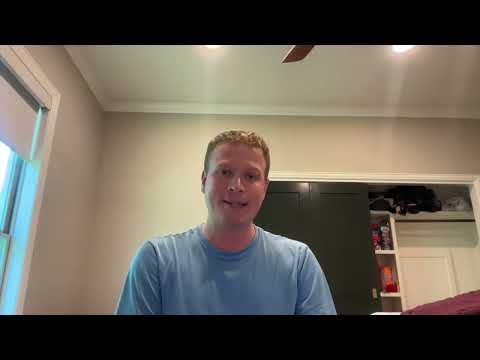
Andy Harris, a safety coordinator with 18 years of experience in the film and motorsport industry, shares his journey from the fire service to working with high-profile productions like Top Gear and Mission Impossible. He discusses the challenges of ensuring safety in high-risk environments, the importance of planning for worst-case scenarios, and the evolution of safety standards in the entertainment industry.
In the world of high-octane entertainment, safety often takes a backseat to the thrill of the moment. However, for Andy Harris, a safety coordinator with nearly two decades of experience, ensuring safety is paramount. From working on Top Gear to Mission Impossible, Andy has navigated the complexities of keeping some of the most daring stunts safe. In this blog post, we delve into his experiences, insights, and the realities of working in a high-risk environment.
Andy Harris is a safety coordinator who has spent the last 18 years working with various high-profile productions, including Top Gear and Mission Impossible. His role involves planning for worst-case scenarios and ensuring that stunts and dangerous activities are conducted as safely as possible. Andy describes himself as someone who helps people do silly and dangerous things while trying to make them safer.
Andy’s journey began in the fire service, where he developed a passion for emergency response and safety. He transitioned from being a firefighter to a safety advisor, leveraging his experience to work on motorsport events and eventually landing a role with Top Gear. His background in emergency services provided him with the skills necessary to manage safety in high-pressure situations.
Initially, Andy worked as part of a motorsport rescue team, volunteering at rallies and events. His big break came when he started working on Top Gear in 2006, where he was responsible for coordinating safety during some of the show’s most ambitious stunts. Over the years, he has worked on numerous projects, including films and events for major brands like Red Bull and Monster Energy.
As a safety coordinator, Andy’s job is to plan for the worst-case scenarios. This involves assessing risks, coordinating emergency services, and ensuring that all safety measures are in place before any stunt or dangerous activity takes place. He emphasizes the importance of having a safety word or signal in case something goes wrong, as seen in his work with Jeremy Clarkson during a particularly dangerous stunt involving a lorry crashing into a wall.
Andy explains that a significant part of his role is to anticipate potential accidents and devise strategies to mitigate risks. For instance, when planning a stunt involving a Eurofighter Typhoon and a Bugatti Veyron, he had to consider factors like jet wash and the potential for crashes. His experience in both motorsport and emergency services allows him to approach these challenges with a unique perspective.
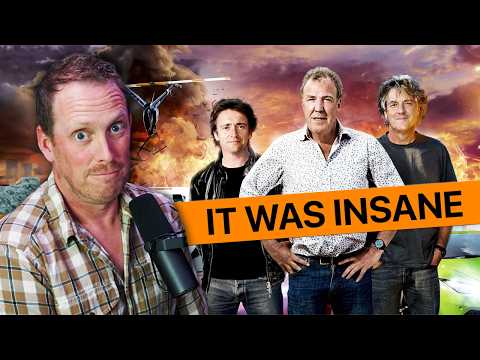
Working with the infamous trio of Clarkson, Hammond, and May presented its own set of challenges. Andy describes Jeremy Clarkson as a creative genius who often pushed the boundaries of safety. He recalls instances where he had to intervene to prevent dangerous situations, such as when Clarkson insisted on filming a scene despite the risk of fire.
Andy found that each member of the Top Gear team had their own personality and approach to safety. He developed a good rapport with Richard Hammond, who shared his enthusiasm for cars and motorsport. In contrast, he had to navigate Clarkson's more reckless tendencies carefully, ensuring that safety protocols were followed without stifling the creative process.
The landscape of safety in the entertainment industry has evolved significantly over the years. Andy notes that while safety measures have improved, the rise of social media and cancel culture has added new pressures. Productions are now more aware of their public image and the potential backlash from accidents, leading to stricter safety protocols.
Andy emphasizes that accidents, while unfortunate, often lead to improvements in safety standards. He cites the example of Richard Hammond’s serious crash in a jet car, which prompted a reevaluation of safety measures in motorsport. Each incident serves as a learning opportunity, helping to prevent future accidents.
As YouTube and social media continue to grow, Andy expresses concern about the lack of safety regulations in this space. He believes that many content creators underestimate the risks involved in their activities and may not have the necessary safety measures in place. He urges YouTubers to be aware of their responsibilities and the potential consequences of their actions.
Andy advocates for the involvement of safety professionals in all high-risk activities, regardless of the platform. He believes that having a trained safety coordinator can help mitigate risks and ensure that everyone involved is protected. This is especially crucial in the world of YouTube, where the informal nature of content creation can lead to dangerous situations.
Andy Harris’s journey from the fire service to becoming a safety coordinator for some of the biggest names in entertainment is a testament to the importance of safety in high-risk environments. His experiences highlight the need for thorough planning, risk assessment, and the continuous evolution of safety standards. As the entertainment industry continues to push boundaries, the role of safety coordinators like Andy will remain crucial in ensuring that creativity does not come at the expense of safety.