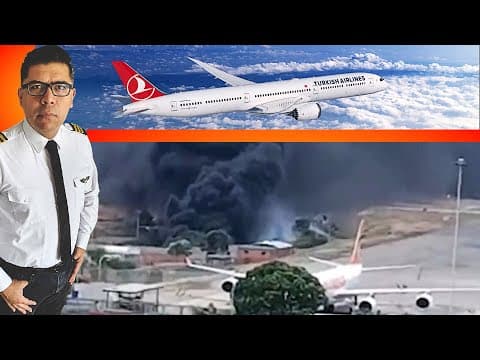
Boeing secures a significant order from Turkish Airlines for 250 aircraft, despite ongoing certification issues. Meanwhile, a tragic Learjet crash in Venezuela and other aviation incidents highlight safety challenges in the industry.
Boeing has made headlines this week by signing a substantial agreement with Turkish Airlines, one of the largest airlines globally, for the sale of 250 aircraft. This deal positions Boeing favorably in the competitive aviation market, especially as it navigates through challenging times marked by certification issues with several of its aircraft models. In contrast, the aviation industry faced tragic incidents, including a Learjet crash in Venezuela and a turbulent flight involving an Airbus A320. This blog post will delve into these significant developments in the aviation sector.
In a remarkable turn of events, Turkish Airlines has placed a massive order with Boeing for 225 aircraft, which includes a mix of the 787 Dreamliner and the 737 Max models. The order is divided into two segments:
This order is particularly noteworthy given Boeing's recent struggles with the certification of its aircraft, including the 737 Max 7, Max 10, and the 777X. The 737 Max 10, which is part of this order, has faced delays in certification, initially expected to be completed last year but now projected to extend until 2026. Despite these challenges, Turkish Airlines has shown confidence in Boeing's products, marking a significant boost for the company.
The deliveries of these aircraft are anticipated between 2029 and 2034, providing Boeing with a much-needed opportunity to recover its reputation and financial standing in the aviation market. This deal not only signifies a strong partnership with Turkish Airlines but also reinforces Boeing's position as a leading manufacturer of commercial aircraft, even amidst ongoing difficulties.
In stark contrast to Boeing's positive news, the aviation community mourned a tragic accident involving a Learjet 55 at Simón Bolívar Airport in Caracas, Venezuela. The aircraft, which was carrying four individuals, including two pilots, attempted to take off but had to abort the takeoff due to adverse conditions. Unfortunately, the aircraft could not stop in time and veered off the runway, resulting in a catastrophic crash.
The Learjet crashed into a ravine at the end of the runway, leading to a fire and the tragic loss of both pilots. The two passengers in the rear survived but sustained serious injuries. Preliminary reports suggest that strong winds, with gusts between 20 and 30 knots, may have contributed to the accident, as the airport is located near the coast, where such weather conditions are common.
This incident highlights the inherent risks associated with aviation, particularly in challenging weather conditions, and serves as a somber reminder of the importance of safety in the industry.
In another incident, a Boeing 737-900R operated by Delta Airlines experienced an engine failure shortly after takeoff from Hartsfield-Jackson Atlanta International Airport. The aircraft was forced to return for an emergency landing. Eyewitness accounts captured sparks flying from the engine, raising concerns about the cause of the failure, whether it was a mechanical issue or bird ingestion. Fortunately, the aircraft landed safely, and all passengers were unharmed, showcasing the pilots' training and professionalism in handling such emergencies.
An Airbus A320 operated by LATAM Airlines encountered severe turbulence during a flight from Chapecó, Brazil, to Guarulhos Airport. The turbulence was so intense that it caused damage to the aircraft's radome, the nose section that houses the radar. Despite the frightening experience for passengers, the aircraft landed safely, underscoring the resilience of modern aircraft in adverse conditions.
Lastly, a United Airlines Embraer ERJ-145 experienced a runway excursion at Roanoke Regional Airport in Blacksburg, Virginia, due to poor weather conditions and a slippery runway. Fortunately, all passengers evacuated safely, but the incident raises questions about the challenges pilots face during adverse weather.
This week has been a rollercoaster for the aviation industry, with Boeing securing a significant order that could help restore its reputation while also facing tragic incidents that remind us of the risks involved in air travel. The aviation community continues to navigate these challenges, emphasizing the importance of safety and reliability in the industry. As we reflect on these events, it is crucial to recognize the dedication of pilots and crew members who work tirelessly to ensure passenger safety.
What are your thoughts on these developments? Which news story impacted you the most? Feel free to share your reactions and comments below.