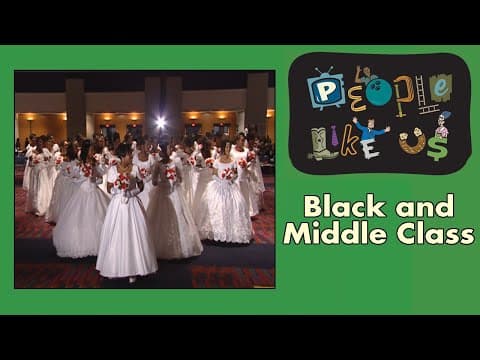
This blog post explores the unique challenges faced by the Black middle class in America, highlighting the intersection of race and class, societal perceptions, and the impact of organizations like Jack and Jill. It delves into the struggles for acceptance, the desire for upward mobility, and the ongoing need for racial solidarity within the community.
In America, the concept of being middle class is often intertwined with race, particularly for Black Americans. The experience of being both middle class and Black presents a unique set of dilemmas that are often overlooked in broader discussions about class and race.
Many individuals identify as middle class based on their socioeconomic status, yet the label of "Black middle class" carries additional weight. This distinction is not merely a matter of income or education; it is a constant reminder of the racial dynamics that permeate American society. The phrase "Black middle class" signifies a struggle against stereotypes that equate Blackness with poverty.
Class is a sensitive subject for all Americans, but it is particularly uncomfortable for Black Americans. The historical context of oppression makes discussions about class distinctions feel offensive to some. There is a fear that acknowledging class differences within the Black community may perpetuate the very stereotypes that have marginalized them. This discomfort is compounded by the perception that striving for upward mobility can be seen as abandoning one’s roots.
Many upwardly mobile Black individuals face the challenge of being labeled as "bougie" or "uppity" when they seek better opportunities. This term is often used derogatorily to suggest that someone is trying to distance themselves from their cultural background. The experience of being called "bougie" can be particularly painful, as it implies that one’s aspirations for a better life are somehow illegitimate or offensive to those who remain in lower socioeconomic conditions.
The desire for acceptance can lead to internal conflicts within the Black middle class. For instance, some individuals may feel pressured to conform to certain behaviors or attitudes to avoid being labeled as different. This pressure can manifest in various ways, such as the expectation to date within a specific social circle or to attend elite social organizations like Jack and Jill, which serves as a social incubator for children of high-achieving Black parents.
Jack and Jill has been a prominent organization for over 65 years, providing a space for social networking among the Black middle class. While it offers opportunities for connection and support, it also raises questions about exclusivity and elitism. Membership is often contingent upon meeting specific criteria, which can alienate those who do not fit the mold. This paradox highlights the ongoing struggle within the Black middle class to balance aspirations for upward mobility with the need for inclusivity and solidarity.
As many Black middle-class families move to suburban areas, they often find themselves distanced from the working-class communities they once belonged to. This shift can create a sense of isolation and a fear of losing touch with their cultural roots. The challenge lies in navigating these changes while maintaining a commitment to racial solidarity. The notion that success equates to abandoning one’s community is a pervasive belief that many Black individuals grapple with.
The Black middle class in America is not a monolith; it is a diverse group with varying experiences and aspirations. The journey toward achieving middle-class status should not be viewed as a betrayal of one’s heritage but rather as a legitimate pursuit of the American dream. It is essential to encourage the Black community to strive for success without the stigma of being labeled as "bougie." Ultimately, redefining what it means to be successful while remaining connected to one’s roots is crucial for fostering a sense of belonging and empowerment within the Black middle class.