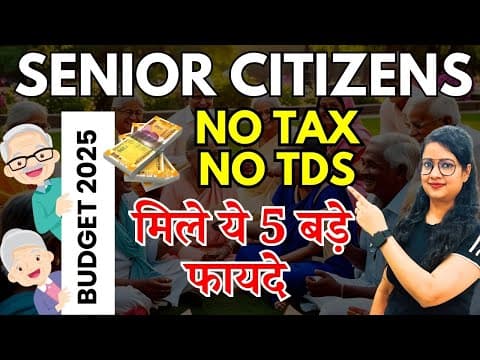
Budget 2025 introduces significant tax benefits for senior citizens, including a tax exemption on income up to ₹12 lakh, increased TDS exemption limits, and relief on rental income, enhancing their financial security.
Senior citizens often look forward to the annual budget announcements, and Budget 2025 has brought some noteworthy tax benefits that cater specifically to them. This blog post will delve into the key tax reliefs provided for senior citizens, ensuring that they are well-informed about the changes that can positively impact their financial situation.
One of the most significant announcements in Budget 2025 is the tax exemption on income up to ₹12 lakh. This exemption applies to all individuals, including senior citizens. The new tax slab allows for a tax-free income of up to ₹4 lakh for everyone, while the income between ₹4 lakh and ₹8 lakh is taxed at 5%, and income from ₹8 lakh to ₹12 lakh is taxed at 100%.
For senior citizens, this means that if their total income is ₹12 lakh or less, they will not have to pay any income tax. This change is expected to enhance their capacity for spending, saving, and investing.
Senior citizens receiving pension income can benefit from a standard deduction of ₹50,000 under the new tax regime. For example, if a senior citizen's annual pension is ₹12,75,000, the standard deduction will reduce the taxable income to ₹12,25,000, further easing their tax burden.
If a senior citizen's income exceeds ₹12 lakh, they can still benefit from marginal relief. For instance, if their income is ₹12,10,000, the tax calculated on ₹12 lakh would be ₹60,000, and on the additional ₹10,000, it would be ₹1,500. However, with marginal relief, the tax will only increase by ₹10,000, ensuring that the tax burden does not disproportionately rise with a slight increase in income.
The budget has also doubled the TDS exemption limit on interest income for senior citizens from ₹50,000 to ₹1 lakh. This means that if a senior citizen earns interest income up to ₹1 lakh from their bank deposits, no TDS will be deducted. This change is particularly beneficial for those relying on fixed deposits for their income.
Additionally, the annual limit for TDS on rental income has been increased from ₹2,40,000 to ₹6,00,000, allowing senior citizens to receive more rental income without TDS deductions.
For senior citizens who own properties and rent them out, the TDS limit has been revised. Under sections 194A and 194I, TDS will only be deducted if the monthly rent exceeds ₹50,000. This change simplifies the tax process for senior citizens who may have multiple rental properties.
Senior citizens with old National Savings Scheme accounts can now withdraw their funds without penalty, as interest is no longer being paid on these accounts. This provision allows seniors to access their funds more freely, especially if they are not receiving any interest income.
While the new tax regime offers significant benefits, senior citizens can still opt for the old tax regime, which provides various deductions under sections like 80TTA for interest income and medical expenses. However, the new regime is expected to be more beneficial for most seniors.
Budget 2025 has introduced several tax benefits aimed at enhancing the financial well-being of senior citizens. With the tax exemption on income up to ₹12 lakh, increased TDS exemption limits, and relief on rental income, seniors can look forward to a more secure financial future. It is essential for senior citizens to stay informed about these changes to make the most of the benefits available to them.