In this in-depth interview, Daryl Solomon, aka Chip "Mad Hatter," recounts his upbringing in the Bronx and Harlem, his early exposure to music and dance, involvement in the hip hop hustle and breakdancing scene, and his later career in fashion modeling. He reflects on the evolution of hip hop culture, the significance of the Bronx, and the importance of preserving hip hop history.
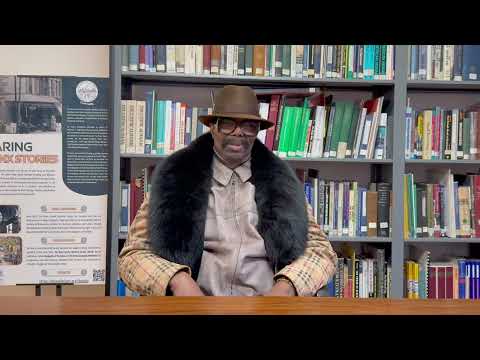
Welcome to the Bronx Hip Hop Oral History Project. On November 25, 2025, Pastor Cresco Jr., research librarian and archivist for the Bronx County Historical Society, sat down with Daryl Solomon, famously known as the notorious Chip "Mad Hatter." A first-generation B-boy, hustle king, and fashion model, Mad Hatter shares his rich experiences growing up in the Bronx and Harlem, his immersion in hip hop culture, and his contributions to the fashion world.
Mad Hatter's mother, Ella Solomon, hailed from Mochi, Georgia, and migrated north through New Jersey before settling in New York. His father, William Solomon, was born in Harlem, with family roots spanning Harlem and the Bronx. Mad Hatter was born in the Bronx in 1956 and grew up between the Bronx and Harlem, experiencing the vibrant cultures of both neighborhoods.
His family was large, including brothers William (deceased) and Si Si Solomon, and sisters Felicia, Linda, and Renee. Early childhood memories include attending kindergarten in Harlem and walking through Spanish Harlem, where he absorbed the sounds and sights of a predominantly Spanish-speaking community.
Mad Hatter recalls the lively atmosphere of Washington Avenue in the Bronx, where his family lived at 1285 Washington Avenue. He fondly remembers the sounds of marching bands, the camaraderie of the cadet corps he joined with his brothers, and his mother's delicious home-cooked meals, especially fried chicken and French fries.
As a child, he was a picky eater, favoring peanut butter and jelly sandwiches, but later developed a taste for more diverse foods. School life included attending PS132 and PS145, and later Taft High School.
Music played a central role in Mad Hatter's upbringing. His father enjoyed jazz and soul, playing artists like James Brown, The Supremes, The Temptations, Quincy Jones, and Frank Sinatra on a well-maintained stereo system. Mad Hatter was inspired by television shows like "The Dick Clark Show" and "Shindig," learning dances such as the Twist and the Jerk.
Family gatherings often involved music and dancing, with venues like Seo Manor and Parkside Plaza hosting family parties where dancing was a highlight.
Growing up, Mad Hatter and his friends played street games like "ring-a-ring-a-roses" and "monkeys up," often involving playful roughhousing. He recalls neighborhood gangs such as the Black Spades, Baby Pearls, Saigons, Savage Nomads, Savage Skulls, Golden Giddies, and the massive Ghetto Brothers, who had their own clubhouse and a strong presence in the community.
Mad Hatter was always a dancer, and by the early 1970s, he was deeply involved in the burgeoning hip hop dance scene. He learned new dance styles from friends like Keith and Kevin, who showed him routines inspired by the Jackson 5 and Michael Jackson, including backdrops and splits.
He attended parties hosted by DJ Cool Herc at 1520 Sedgwick Avenue, where he witnessed the early evolution of breakdancing and the B-boy hustle. Other DJs like Copa Rock and Timmy also played at these events, each with their unique style and playlists.
Mad Hatter and his dance partner Johnny were known for performing the B-boy hustle, a dance style that combined elements of breaking and freestyle. He recounts a memorable battle with Sister Boo, a formidable female dancer, and how his friend Clark Kent (originally known as Poison) developed innovative moves like the baseball run and freeze.
He also describes the vibrant dance battles and competitions at parties, where dancers showcased their skills and challenged one another.
Fashion was integral to Mad Hatter's identity. Inspired by his father and grandfather, who wore hats and stylish attire, he became known for his distinctive hats, earning the nickname "Mad Hatter." The 1970s B-boy fashion included custom-made suits, AJ Lester and Phil Crawford suits, stitch pants, alpaca sweaters, felt hats, snorkel coats, and slip-on shoes.
Girls often wore tennis outfits with large bamboo earrings and scarves. Mad Hatter never wore sneakers to parties, preferring shoes that complemented his style.
In 1984, Mad Hatter began modeling, participating in fashion shows and working with designers like Sonia Brown and the Hollywood Twins. He was signed to the Marsh agency and modeled for various brands, including Italian labels. He also taught modeling to children through a children's agency called Honey Child.
He later returned to modeling, appearing in magazines like Mystique and participating in fashion tours.
Mad Hatter knew many key figures in hip hop, including Cowboy, Melly Mel, Grandmaster Cash, and members of the Sugar Hill Gang. He witnessed the formation of MC groups and the early days of rapping, noting that early rap rarely included profanity, which became more common with the influence of West Coast artists.
He also observed the evolution of hip hop fashion, including the adoption of baseball hats and hoodies, which he personally avoided.
Mad Hatter expressed pride in the global reach of breaking and hip hop culture, noting its presence worldwide and the recognition of international dancers. He lamented not being included in the 2024 Paris Summer Olympics hip hop events and emphasized the importance of involving original pioneers in such celebrations.
He highlighted the significance of DJs like Cool Herc and Copa Rock, who played music that energized dancers and maintained the culture's authenticity.
When asked about the Bronx, Mad Hatter described it as his home and a place he loves deeply. Despite some people's shame about the Bronx, he embraces it proudly and enjoys inspiring younger generations who look up to him and his dance partner Janet.
He emphasized carrying oneself with respect and pride, representing the Bronx positively wherever one goes.
This interview with Chip "Mad Hatter" offers a vivid and personal glimpse into the early days of hip hop culture, the vibrant community life of the Bronx and Harlem, and the enduring legacy of the pioneers who shaped this global movement. His stories of dance, music, fashion, and community reflect the rich tapestry of hip hop's origins and its ongoing influence worldwide.