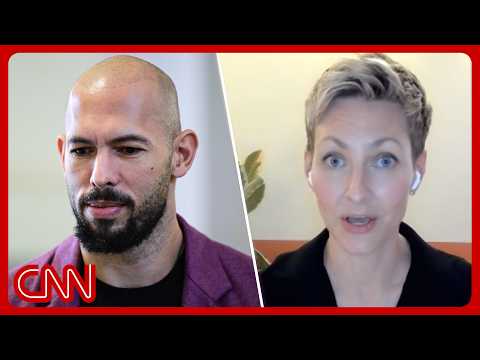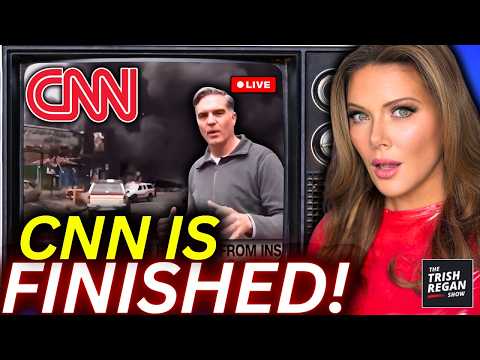
CNN's recent coverage from Iran has sparked debate about media independence and credibility. Despite gaining rare access to report from Iran, CNN faces criticism for operating under the regime's constraints, raising questions about unbiased journalism. The network's decision to air lengthy statements from Iran's leadership contrasts with its treatment of U.S. political events, fueling accusations of compromised editorial control.
CNN has recently come under intense scrutiny and criticism for its coverage of events in Iran. The network's decision to send a reporter into Iran, a country known for its strict control over foreign journalists, has been described by some as a humiliating misstep that exposes the difficulties of maintaining journalistic independence under authoritarian regimes.
CNN was initially praised for managing to get a reporter on the ground in Iran, a rare achievement for an American news network. The reporter, along with photojournalist Claudia Otto, became the first U.S. journalists to report from the city of Thrron. This access was seen as a significant journalistic breakthrough.
However, the reality of reporting from Iran quickly became apparent. The network claimed to have full editorial control and no restrictions imposed by the Iranian government. Yet, critics argue that any journalist allowed into Iran is there only with the regime's permission and must operate within the boundaries set by the authorities.
One commentator pointed out that the reporter's presence in Iran is contingent upon the regime's goodwill, implying that the reporting cannot be truly independent or unbiased. The suggestion is that CNN's coverage is influenced, if not controlled, by the Iranian government, which undermines the credibility of the network's reporting.
The situation in Iran remains tense, with the government taking a hardline stance against street protesters. An Iranian police chief publicly declared that protesters would no longer be considered as such but rather as enemies to be treated accordingly. This statement highlights the regime's willingness to use brutal measures against its own people.
Despite this, CNN's reporter continues to operate in Iran, raising questions about the network's role and the compromises it may have made to maintain access. The presence of such a reporter is seen by some as a form of complicity or at least a limitation on the scope of truthful reporting.
Adding to the controversy, CNN aired a four-and-a-half-minute statement from the Ayatollah, the leader of the Islamic Republic, criticizing the world. This decision contrasts sharply with CNN's refusal to broadcast certain U.S. political events, such as a presidential rally at Madison Square Garden.
Critics argue that CNN's willingness to air the Ayatollah's statement reflects the network's need to appease Iranian authorities to keep their reporter in the country. This has led to accusations that CNN is compromising its editorial independence and prioritizing access over truthful and balanced reporting.
The challenges faced by CNN in Iran are emblematic of the broader difficulties news organizations encounter when reporting from authoritarian countries. Maintaining editorial independence while operating under restrictive regimes is a complex balancing act.
David Ellison, a media executive, acknowledged the political overlays that influence corporate and news organizations. He emphasized the importance of maintaining editorial independence despite ownership changes and political pressures. However, skepticism remains among the public and media critics about whether such independence can truly be preserved.
CNN's experience in Iran serves as a cautionary tale about the limits of press freedom under authoritarian regimes. While gaining access to report from such countries is valuable, it often comes with strings attached that can compromise journalistic integrity.
The network's coverage has sparked debate about the nature of unbiased reporting and the ethical considerations of operating within regimes that suppress dissent and control information. As the situation in Iran evolves, so too will the scrutiny of how international media navigate these challenging environments.
Ultimately, the public's trust in news organizations depends on transparency, independence, and the courage to report truthfully, even when access is restricted or denied. CNN's Iran coverage highlights the ongoing struggle to uphold these principles in a complex global media landscape.