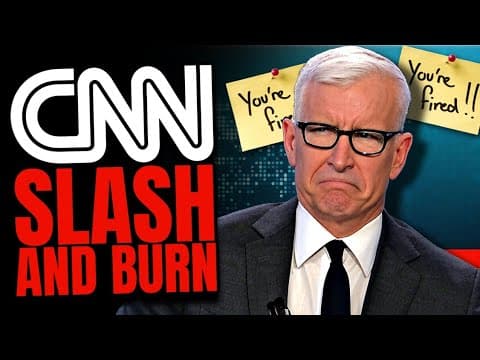
CNN is facing significant changes as new leadership is set to implement drastic budget cuts, potentially leading to the departure of high-profile anchors like Anderson Cooper. The network's struggles with ratings and corporate restructuring signal a challenging future for traditional cable news.
CNN is at a critical juncture, with reports indicating that the network is preparing for significant changes under new leadership. As ratings continue to decline, the future of CNN and its high-profile anchors, including Anderson Cooper, is uncertain. This blog post explores the implications of these developments and what they mean for the legacy media landscape.
For months, analysts have been predicting the retreat of legacy media, particularly cable news networks like CNN and MSNBC. Recent reports confirm that these networks are struggling to maintain viewership, with ratings hitting alarming lows. The situation has prompted discussions about the viability of traditional cable news in an era dominated by streaming and new media.
One of the most significant developments is the news that Anderson Cooper, a prominent CNN anchor earning approximately $18 million a year, has hired a Hollywood super agent. This move suggests that Cooper may be preparing to leave CNN as the network faces impending budget cuts. The decision to switch agents from United Talent Agency to Creative Artists Agency indicates a strategic shift, possibly in anticipation of a career transition.
CNN is undergoing a major corporate restructuring as Warner Brothers Discovery plans to spin off its cable networks, including CNN, into a separate entity by mid-2026. This split is expected to have profound implications for the network, as it will no longer have access to resources and support from its parent company. Industry insiders predict that this will lead to significant layoffs and budget cuts, affecting not only high-profile anchors but also producers and other staff members.
The impending changes at CNN are seen as a necessary correction following the excesses of the Jeff Zucker era, during which anchors were paid exorbitant salaries. The new leadership, led by Gunnar Wiedenfels, is expected to implement stringent cost-cutting measures, which could result in the departure of many familiar faces from the network. Insiders suggest that the current staff may be forced to take on additional responsibilities as layoffs occur, further straining the network's operations.
As CNN grapples with these challenges, the broader implications for cable news are becoming clear. The decline in viewership and the rise of new media platforms have led to questions about the relevance of traditional news outlets. Many believe that CNN, much like MTV, may become obsolete as audiences turn to alternative sources for news and entertainment.
With the decline of legacy media, there is a growing trend of established anchors considering a move to new media platforms. Some speculate that figures like Anderson Cooper may attempt to follow in the footsteps of successful media personalities who have transitioned to platforms like YouTube. However, the competitive landscape of new media, which prioritizes meritocracy and audience engagement, poses challenges for those accustomed to the traditional media model.
The future of CNN and similar networks hangs in the balance as they navigate significant changes in leadership and corporate structure. With ratings plummeting and a shift towards new media, the landscape of cable news is evolving rapidly. As we approach 2026, it remains to be seen how CNN will adapt to these challenges and whether it can survive in its current form. The legacy media era may be coming to an end, and the implications for journalism and news consumption are profound.