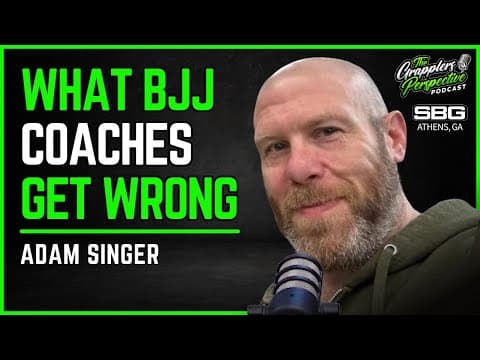
Adam Singer, a seasoned coach with over 25 years of experience in Brazilian Jiu-Jitsu and MMA, shares insights on the distinction between coaching and instructing. He emphasizes that coaching is about creating the right environments for athletes to learn and grow rather than merely teaching techniques. Drawing from his engineering background and collaboration with SBG founder Matt Thornton, Adam highlights the importance of viewing martial arts as sports and focusing on ecological dynamics in a
In a recent podcast conversation, Adam Singer, a veteran coach in Brazilian Jiu-Jitsu (BJJ) and Mixed Martial Arts (MMA), shared his unique perspective on coaching. With over 25 years of experience and having produced more than twenty black belts, Adam offers valuable insights into what distinguishes coaching from instructing, especially in the context of grappling and combat sports.
Adam begins by acknowledging that he is somewhat of an outlier in the grappling community, not being a world-renowned athlete but rather a dedicated coach. This distinction is important as the conversation delves into the evolving nature of coaching in martial arts.
The podcast host highlights a current trend in grappling circles: the debate between ecological training or constraints-led approaches versus traditional information processing methods. This debate often centers on the roles of instructors versus coaches.
Adam reflects on his journey, noting that when he and his brother started training in MMA and BJJ in Georgia, there were very few resources or coaches available. MMA was a new sport, and coaching methodologies were still developing. His academic background in engineering influenced his approach to learning how to coach effectively.
Adam emphasizes that coaching is not merely about teaching techniques but about creating environments where athletes can thrive and develop their skills organically. This approach aligns with ecological dynamics, which focuses on how athletes interact with their environment and adapt to changing situations.
He shares that his primary goal was never just to achieve personal success on the mats or in the cage but to become the best coach possible. This mindset led him to seek out like-minded individuals and philosophies.
A pivotal moment in Adam's coaching career was meeting Matt Thornton, the founder of Straight Blast Gym (SBG). Matt's approach treats BJJ and MMA as sports rather than traditional martial arts, which resonated deeply with Adam.
This sports-centric perspective encourages a more scientific and performance-based approach to coaching, focusing on measurable progress and athlete development rather than rigid adherence to tradition.
Adam proudly mentions that his school recently produced its 22nd and 23rd black belts, a testament to his long-term commitment to coaching excellence. His experience underscores the importance of patience, environment creation, and continuous learning in coaching.
Adam Singer's insights challenge conventional views of coaching in martial arts. By focusing on creating the right environments and adopting an ecological approach, coaches can better support their athletes' growth and performance. His journey from an engineering background to becoming a respected coach highlights the value of interdisciplinary learning and open-mindedness in sports coaching.
This conversation serves as an inspiration for instructors looking to transition into coaching roles and for anyone interested in the evolving landscape of martial arts training.