This blog post explores the differences in media trust and bias between the United States and Europe, highlighting the historical context, the impact of political polarization, and the role of public broadcasters in shaping news reporting. It discusses how the evolution of media has led to a decline in trust among Americans and contrasts this with the generally higher trust levels in European media outlets.
In the mid-20th century, the news media in the United States was regarded as one of the most trusted institutions. However, recent surveys indicate that it now ranks among the least trusted, alongside Congress. As an American living abroad, I began to question whether this issue of partisan and untrustworthy reporting is unique to the U.S. or if it is a broader phenomenon. This post delves into how American media compares to European outlets in terms of transparency, independence, and accuracy.
The story of media bias in America can be traced back to the political realignment following the civil rights movement of the 1950s and 60s. During this time, Americans began to evaluate policies and institutions through a partisan lens, leading to increased polarization. In the past, news reporting was primarily limited to three major networks: CBS, ABC, and NBC, which were regulated by the government to ensure fair treatment in coverage.
The Fairness Doctrine, enacted in 1949, mandated that broadcasters present contrasting viewpoints on controversial issues. However, with the rise of cable television and the proliferation of channels, the need for balance diminished. The Fairness Doctrine was phased out in 1987, paving the way for a radical transformation in how Americans consume news.
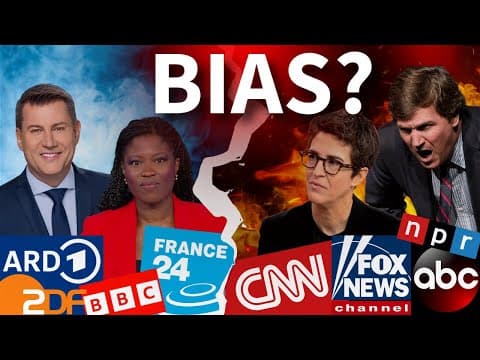
Today, Americans have unprecedented access to information, but this has led to a significant problem: much of the information is presented in a biased manner. Cable news networks prioritize ratings and advertisements, often blurring the lines between news and entertainment. Outlets like Fox News and CNN, despite their names, often focus more on opinions than on factual reporting.
According to Gallup, trust in the media has plummeted since the 1970s. In 1973, a majority of Americans expressed confidence in the news media, but by 2024, only 12% of Republicans and 54% of Democrats reported trusting the media. Interestingly, the only news source that enjoys bipartisan trust is The Weather Channel. Overall, only 13% of news outlets are trusted more than distrusted by both parties.
While the U.S. media landscape is characterized by high levels of mistrust, Europe presents a different picture. Although Europe is not immune to fake news, the distinction between fake news and legitimate opinion is often clearer. The European Union has taken steps to address disinformation, particularly on social media, but mass media outlets tend to maintain a greater degree of balance and neutrality.
In many Western European countries, public news organizations like the BBC in the UK and ARD in Germany are the primary sources of news. These organizations are funded by mandatory fees and are obligated to provide educational and objective content. In contrast, public broadcasters in the U.S., such as NPR and PBS, rank lower in trust compared to private outlets.
Trust in media varies significantly across Europe. Countries like Finland, the Netherlands, and Sweden report high levels of trust, while Greece, Slovenia, and Croatia rank lower. Generally, trust is highest in Nordic and Western member states and lowest in Southern and Eastern member states. An analysis by the University of Oxford found that European news outlets are generally viewed as reputable and objective.
The perception of bias in media is influenced by political ideology. In the U.S., those who embrace populist views are less likely to trust public news media. Interestingly, the U.S. is one of the few countries where supporters of the governing party express less satisfaction with the media than non-supporters. This contrasts with trends in other nations, where supporters of the ruling party tend to be more satisfied with media performance.
The composition of the press corps in the U.S. is predominantly liberal, which can inadvertently influence reporting. Most journalists come from similar educational and socio-economic backgrounds, leading to a potential bias in how news is reported. This raises questions about the objectivity of news organizations, even those that strive to remain neutral.
The differences in media trust and bias between the United States and Europe highlight the complexities of how news is consumed and perceived. While American media struggles with declining trust and increasing polarization, European outlets generally maintain higher levels of credibility and objectivity. As consumers of news, it is crucial to remain aware of these dynamics and seek out diverse perspectives to foster a more informed public discourse.
I invite readers to share their thoughts on media bias and how they navigate their news consumption. How do you ensure you are getting a balanced view of the news?