
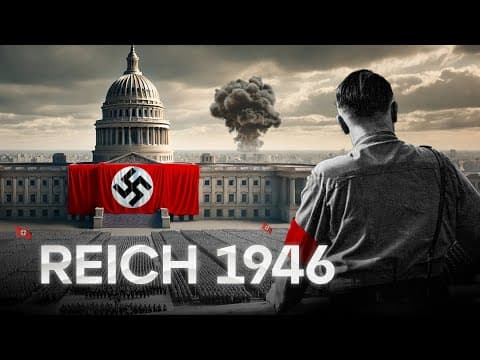
This article explores the hypothetical scenarios in which Nazi Germany could have potentially won World War II, examining key battles, strategic decisions, and the impact of ideology on Hitler's military ambitions.
On May 8, 1945, Nazi Germany capitulated to the Allies, marking the end of World War II in Europe. The war left behind a horrific toll, with estimates of 50 to 60 million deaths, nearly half of whom were civilians. Despite the catastrophic failure of Nazi Germany, myths about the might of its military continue to persist. This article delves into whether, under different circumstances, Germany could have triumphed over the Allied powers.
The early successes of the Wehrmacht in Poland, France, Yugoslavia, and Greece between 1939 and 1941 contributed to the perception of a colossal war machine that was strategically and militarily superior. However, could there have been moments in history where an alternative reality existed—one where the Luftwaffe defeated the Royal Air Force and Operation Barbarossa succeeded, freeing up resources for a total war against the Anglo-Americans?
One of the critical miscalculations by Hitler was underestimating the necessity of engaging the United Kingdom militarily. Hitler believed that physical confrontations were unnecessary for victory, convinced that the British would capitulate after his swift victories in France. However, the rise of Winston Churchill as Prime Minister marked a turning point. Churchill's refusal to negotiate with Hitler galvanized British resolve, leading to the Battle of Britain.
The Luftwaffe initially enjoyed significant prestige, but as the battle progressed, it became clear that the German air force faced limitations. The British Royal Air Force (RAF) managed to inflict substantial losses on the Luftwaffe, and despite initial successes, the German strategy faltered. The RAF's effective radar system and the resilience of its pilots played crucial roles in this battle.
After the failure to subdue Britain, Hitler turned his attention eastward, believing that defeating the Soviet Union was essential for crippling British hopes of victory. The launch of Operation Barbarossa on June 22, 1941, aimed to destroy the Soviet Union quickly. However, the German command's decision to dilute forces across multiple fronts rather than concentrating on a single decisive objective proved disastrous.
The logistical challenges of invading the vast Soviet territory, combined with the underestimated resilience of the Red Army, led to significant German losses. By early 1943, the Wehrmacht was in retreat, far from the invincible force it had once appeared to be.
The entry of the United States into the war marked a significant turning point. Initially, the U.S. maintained an isolationist stance, but as the war progressed, public opinion shifted. The attack on Pearl Harbor on December 7, 1941, galvanized American support for entering the war. Hitler's declaration of war against the U.S. shortly thereafter was a critical miscalculation, as it opened the floodgates for American industrial and military support for the Allies.
The U.S. possessed unmatched industrial capabilities, allowing for rapid mobilization and production of war materials. This industrial strength, combined with a large population ready to enlist, provided the Allies with a significant advantage. The American military's entry into the conflict effectively sealed the fate of Nazi Germany.
In retrospect, it seems highly unlikely that Hitler could have won the war. The combination of strategic miscalculations, logistical challenges, and the overwhelming industrial power of the Allies created an environment where victory for Nazi Germany was nearly impossible.
Hitler's ideology, characterized by a belief in total victory and a disdain for his enemies, led to critical errors that ultimately sealed his fate. The narrative that a German victory was ever truly possible is more a reflection of historical speculation than a reality grounded in the operational realities of World War II.
In summary, while there were moments where the tide could have turned, the structural weaknesses of the Nazi war machine, compounded by strategic blunders and the eventual entry of the United States into the war, made a German victory highly improbable.



















