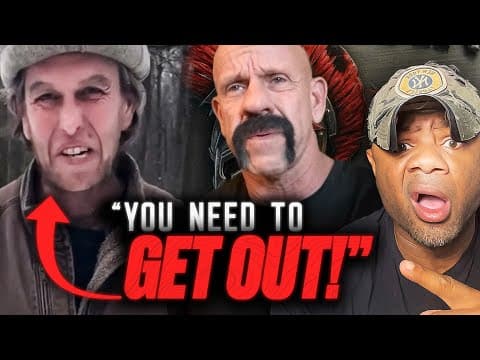
This article covers Dale Comstock's response to Chris Beck, a Navy SEAL who burned his military medals in protest of U.S. actions in Venezuela. Comstock critiques Beck's actions as performative and unprofessional, discusses the complexities of military service and political decisions, and reflects on public figures' interactions on social media. The article also touches on the importance of mental health and the responsibilities of veterans.
In a recent discussion on the Green Bay Chronicles show, Dale Comstock, a retired U.S. Army Green Beret, responded to a controversial act by Chris Beck, a former Navy SEAL who burned his military medals in protest of U.S. military actions in Venezuela. This article explores Comstock's detailed response, his views on military service, political leadership, and the broader implications of such protests.
Chris Beck, a Navy SEAL with over 20 years of service, publicly burned his medals and ribbons as a form of protest against the U.S. intervention in Venezuela. Beck expressed regret over his military career, stating that he wished he had never served. He described the U.S. as a "big bully" in its foreign policy, particularly criticizing the recent actions in Venezuela as disproportionate and unjust.
Beck's protest was emotional and dramatic, involving the destruction of his shadow box containing his medals. He likened the current military engagements to a professional football player playing against kindergarteners, implying that the conflicts are mismatched or unjustified.
Dale Comstock criticized Beck's protest as "performative" and likened it to a childish tantrum, stating that such behavior is unbecoming of a Navy SEAL. Comstock emphasized that while Beck has the right to express his opinions and frustrations, the manner in which he did so was unprofessional and reflected poorly on himself rather than the SEAL community.
Comstock also speculated on Beck's mental and physical state, suggesting that Beck appeared to be under the influence of substances or struggling with internal issues. He urged for compassion and concern for Beck's wellbeing, acknowledging that many viewers expressed worries about Beck's mental health.
Furthermore, Comstock questioned the sincerity of Beck's protest in relation to the benefits he might still be receiving from his military service, such as disability payments or retirement funds. He challenged whether Beck intended to return these benefits if he truly regretted his service.
Comstock shared his own extensive military experience, having served in every campaign from Grenada in 1983 to Yemen in 2016. He acknowledged that while he served patriotically and without much second-guessing at the time, looking back, there were moments of regret and shame, particularly regarding operations like Somalia and the fall of Kabul.
He criticized political leadership, especially under Democratic administrations, for lacking the resolve to finish wars and for having alternative, politically motivated agendas. Despite these criticisms, Comstock recognized the good that military service can accomplish and the complexity of such engagements.
Comstock highlighted the contrast between his mindset when he joined the military 20 years ago and the current perspectives of veterans like Beck. He suggested that understanding what has changed over time is crucial for addressing the issues within the military and its relationship with political decisions.
He encouraged viewers, especially those considering military service, to reflect on these changes and the realities of military life today compared to the past.
The discussion also touched on the recent interactions between public figures such as Dan Crenshaw, Sean Ryan, and Tucker Carlson. Comstock observed that public figures must develop thick skin to handle criticism and differing opinions, especially on social media platforms.
He emphasized that disagreement and debate are natural and that those with a platform will voice their opinions, which is part of the freedom of expression. Comstock encouraged viewers to be prepared for such interactions and to maintain professionalism.
Dale Comstock concluded by urging viewers to support his channel and engage with the content to foster a community of informed and thoughtful discussion about military service and current events. He also reminded viewers to take care of themselves and to approach these complex topics with an open mind and respect for differing viewpoints.
This conversation sheds light on the complexities of military service, personal convictions, and the challenges veterans face in reconciling their experiences with current political realities.