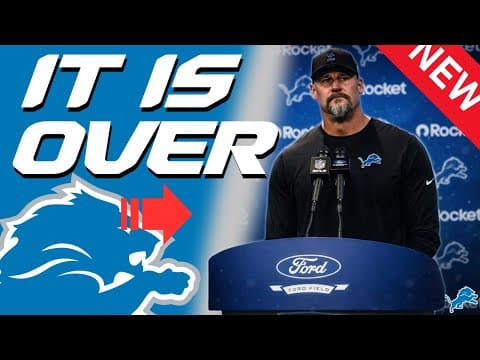
The Detroit Lions are expected to part ways with veteran left tackle Taylor Decker, either through retirement or release, to free up significant salary cap space. This move reflects the team's urgent need to address offensive line weaknesses amid a win-now mindset. General Manager Brad Holmes acknowledges past draft challenges and emphasizes the importance of immediate impact players, signaling a pivotal offseason for the Lions.
The Detroit Lions are on the verge of making a significant roster change that could reshape their offensive line and salary cap situation. Taylor Decker, the team's veteran left tackle and a key starter for the past decade, is reportedly expected to either retire or be released. This development, highlighted by ESPN's Aaron Schatz, has sparked discussions about the Lions' strategy moving forward and the implications for their roster and salary cap.
Currently, the Lions are approximately $2 million over the salary cap. Key players like quarterback Jared Goff carry a substantial cap hit of around $70 million, which the team plans to manage through restructuring. Taylor Decker's cap hit stands at $21 million this year and is projected to be $24 million next year. If Decker retires or is cut, the Lions would free up significant cap space, improving their financial flexibility.
While the team would still owe Decker some money depending on the nature of his departure, the overall cap relief would be substantial. This move would also open a roster spot for a healthier left tackle, addressing a critical position for the Lions.
Taylor Decker has been a cornerstone of the Lions' offensive line for ten years. Despite battling numerous injuries and facing ups and downs, he has been a reliable and respected player. At 33 years old, the physical toll and recurring injuries may have led to the decision that it is time for him to step away from the game.
Decker's situation is reminiscent of former Lions lineman Frank Ragnow, who also played through injuries before retiring. The Lions and their fans hold Decker in high regard for his dedication and contributions.
General Manager Brad Holmes has openly discussed the challenges and plans regarding the offensive line. He acknowledged that while the team has had a relatively veteran offensive line with multiple first-round picks, the position has never been ignored but also not fully addressed due to competing priorities.
Holmes emphasized the need to approach each offseason with urgency to fill any holes, but admitted that sometimes the team had to prioritize other positions, such as defensive end. He highlighted the drafting of developmental players like Giovanni Manu, who was expected to take time to develop rather than contribute immediately.
Holmes also reflected on past draft decisions, noting that while some picks were aimed at long-term development or were injured players taken as potential steals, the current focus is on winning now. He stressed the importance of drafting players who can contribute immediately to support the team's competitive goals.
The Lions have faced difficulties with some recent draft picks intended to bolster the offensive line. Giovanni Manu, a developmental player, has yet to make a significant impact and may not even be on the team moving forward. Other picks like Vaki have struggled with injuries and lost their roles, while players like Rak Straw have also been hampered by health issues.
These challenges have underscored the importance of making smart draft choices and not mortgaging the future for uncertain prospects. Holmes expressed some regret over certain picks and trades, such as trading a future third-round pick for Tesla, who, while talented, may not have justified the cost.
With Taylor Decker likely departing, the Lions will need to find a reliable left tackle to protect their quarterback and stabilize the offensive line. The team hopes to address this through the upcoming draft and free agency, leveraging the cap space that will be freed up.
Holmes and the Lions' management are focused on building a roster capable of winning now and next season, recognizing the fast-changing nature of the NFL. The emphasis will be on acquiring players who can contribute immediately and help the team compete at a high level.
The potential departure of Taylor Decker marks a significant turning point for the Detroit Lions. While it frees up valuable cap space and opens opportunities for new talent, it also highlights the challenges the team faces in maintaining a strong offensive line. Brad Holmes' candid reflections on past draft strategies and the current win-now approach signal a critical offseason ahead.
Fans and analysts alike will be watching closely to see how the Lions navigate these changes and whether they can successfully rebuild their offensive line to support their ambitions.
Let us know your thoughts on this development and what it means for the Lions' future.