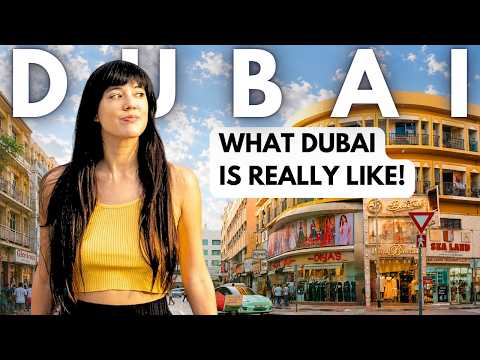
Dubai has transformed from a barren desert into a global metropolis in just a few decades, showcasing luxury and ambition. However, beneath its glitzy surface lies a complex reality shaped by a diverse population, cultural shifts, and the challenges of rapid development.
The Arabian Peninsula is known for its vast stretches of barren desert, much of which is rich in oil. While other regions have risen on the back of this black gold, Dubai has taken a different path. As oil reserves dwindle, the Emirate has focused on ambitious development, transforming itself into a modern metropolis of luxury and excess. However, beneath the surface of this glitzy city lies a more complex narrative, often referred to as its hidden side.
In less than three decades, Dubai has evolved into a global city characterized by towering skyscrapers, man-made islands, complex highways, mega malls, and luxurious hotels. The Burj Khalifa, the tallest building in the world, stands as a testament to this rapid transformation. In 1998, there were only seven buildings taller than 75 meters, but by the 2000s, over 70 such buildings were constructed, marking a real estate boom that reshaped the skyline.
Despite its modernity, Dubai's location in a desert climate presents challenges, with summer temperatures soaring to 50°C. The fact that such a vibrant city exists in this harsh environment is remarkable. Public sentiment about Dubai is polarized; some admire its architectural feats while others criticize its excesses.
Connected to the Burj Khalifa is the Dubai Mall, which is not just any shopping center. It features a real dinosaur skeleton, an indoor ice skating rink, a themed food court, and the largest indoor aquarium in the world. Dubai is a city designed for the wealthy, where excess and conspicuous consumption are the norms. It is often described as Las Vegas on steroids, offering man-made extravagance at every turn.
While Dubai is known for its luxury, it is essential to recognize that Emiratis make up only 5% of the population. The remaining 95% are foreign-born, including a significant number of migrant workers from the Indian subcontinent. These individuals are the backbone of Dubai, contributing to its construction, maintenance, and daily operations.
In Bur Dubai, known as Little India, the influence of South Asian culture is palpable. This area is filled with textiles, Indian businesses, and vibrant markets. The presence of Indian, Pakistani, and Bangladeshi communities has significantly shaped the city's identity. The bustling Mina Bazaar is a testament to this cultural blend, showcasing a variety of goods and traditional foods.
Dubai's rapid transformation raises questions about what has been lost in the process. Critics argue that traditional Arabic culture has been overshadowed by a globalized commercial identity. However, remnants of old Dubai can still be found in neighborhoods like Deira and Al Fahidi, where the Dubai Creek serves as a historical trade route.
The Dubai Creek is a vital waterway that has historically facilitated trade between Africa, the Middle East, and Asia. It was once a hub for pearl harvesting before the discovery of oil. The creek's shoreline features traditional souks, where visitors can find spices, textiles, and gold. This area offers a glimpse into the past, contrasting sharply with the modern skyscrapers that dominate the skyline.
Dubai's diverse population contributes to its rich culinary scene. From traditional Emirati breakfasts to international cuisines, the city offers a plethora of dining options. One standout is Alad, a no-frills restaurant known for its perfectly grilled kebabs, frequented by locals and even the royal family.
Dubai is designed for cars, with expansive highways like Sheikh Zayed Road connecting the seven Emirates. The city lacks pedestrian-friendly areas, making it challenging for residents to interact outside of individual buildings. This car-centric design reflects the lifestyle of its inhabitants, who often spend hours in shopping malls or office complexes.
The transformation of Dubai is largely attributed to Sheikh Mohammed, the ruler of Dubai, whose vision was to create a hub for trade and finance. His ambitious plans have resulted in iconic structures like the Palm Jumeirah, a man-made island visible from space. This development has positioned Dubai as a luxury tourism destination, attracting visitors from around the world.
Dubai is a city that has dared to dream big, evolving from a barren desert to a bustling metropolis in record time. While it is a place of remarkable achievements, it also faces challenges related to cultural identity and social dynamics. Love it or hate it, Dubai's journey is a fascinating story of ambition, diversity, and the complexities of modern urban life.