
This blog post explores Sven Beckett's book 'Empire of Cotton: A Global History,' detailing the historical significance of cotton production, the rise of capitalism, and the impact of colonialism on societies across continents. It discusses the transition from domestic cotton production to industrialization, the role of the British Empire, and the socio-economic consequences of the cotton trade, including slavery and the Industrial Revolution.
Today, we delve into one of the most significant works in the study of capitalism and history, Empire of Cotton: A Global History by Sven Beckett. Beckett, a co-director of the program on the study of capitalism at Harvard University, has produced a book that not only won the 2015 Bancroft Prize but was also a finalist for the Pulitzer Prize for History in 2015. This book is a profound exploration of the rise of cotton production and its pivotal role in the development of capitalism and the Industrial Revolution.
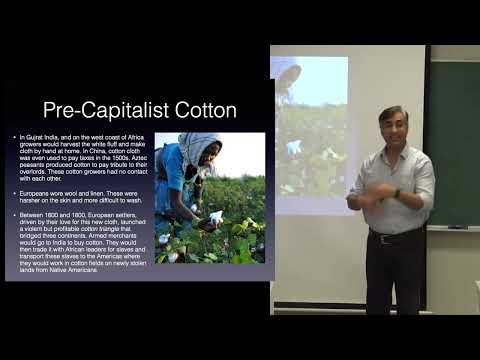
In the first chapter, Beckett traces the origins of cotton production back to ancient civilizations. Cotton was cultivated and processed at a domestic level in various parts of Asia and even in Aztec Mexico. For instance, Gujarat in India and regions along the west coast of Africa were known for their cotton cultivation. In China, cotton cloth was used as a form of tax payment as early as the 1500s, while Aztec peasants produced cotton to pay tribute to their rulers.
Interestingly, these cotton growers operated in isolation, with little to no contact with each other. The labor-intensive process of converting cotton into cloth was primarily a domestic affair, with women handling the spinning and men responsible for weaving. This domestic industry catered to local needs, and there was no global market for cotton prior to the 1600s.
Before the 1600s, Europeans predominantly wore wool and linen, which were less comfortable and harder to clean compared to cotton. As European explorers ventured into Asia and the Americas, they encountered cotton fabrics that were superior to their own. This discovery ignited a desire for cotton in Europe, leading to the establishment of a violent yet profitable cotton trade that spanned three continents: Europe, Africa, and the Americas.
Armed merchants, often associated with companies like the British East India Company, began to dominate the cotton trade. These merchants were not just traders; they were often armed for protection against pirates and other threats during their voyages. The British East India Company, in particular, played a crucial role in this trade, operating as a multinational corporation that wielded significant power in India.
The British Empire's expansion into India had devastating effects on local cotton production. The British imposed policies that favored British-made cloth over Indian textiles, effectively dismantling the domestic manufacturing processes that had flourished for centuries. This led to widespread unemployment among Indian weavers and a significant decline in local industries.
In a parallel narrative, the British also exploited China through the opium trade. After conquering India, they began to cultivate opium and export it to China, leading to widespread addiction and social upheaval. The Chinese government's attempts to curb this trade resulted in the Opium Wars, which further exemplified the brutal realities of colonialism.
The Industrial Revolution marked a significant turning point in cotton production. Samuel Greg opened the first mechanized cotton mill in Manchester in 1784, which utilized water power to increase productivity dramatically. This shift meant that fewer workers could produce the same amount of cotton, leading to an insatiable demand for raw materials from colonies like India and the American South.
The introduction of machines such as the spinning jenny and the power loom revolutionized the textile industry, allowing for mass production of cotton goods. However, this industrial growth was built on the backs of enslaved laborers in the Americas, who were forced to work on cotton plantations under horrific conditions.
The cotton economy was deeply intertwined with the institution of slavery. As demand for cotton surged, so did the need for labor, leading to the forced transportation of African slaves to the Americas. The brutal realities of slavery are starkly illustrated through accounts of slave auctions and the underground railroad, which provided a means of escape for many enslaved individuals.
The U.S. Civil War further highlighted the tensions surrounding slavery and cotton production. Abraham Lincoln's election in 1860, which opposed the expansion of slavery, led to the secession of several southern states and ultimately to a bloody conflict that resulted in the liberation of four million enslaved people.
Sven Beckett's Empire of Cotton offers a comprehensive examination of how cotton shaped global history and capitalism. The book reveals the complex interplay between domestic production, colonial exploitation, and industrialization, illustrating how the quest for cotton transformed societies across continents. The legacy of cotton is not just one of economic growth but also of social upheaval, exploitation, and resistance, making it a crucial topic for understanding the foundations of modern capitalism and global trade.



















