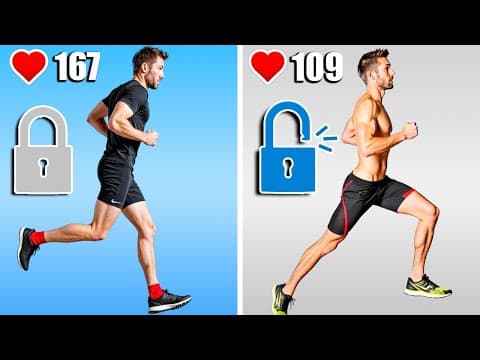
Running faster with less effort depends on improving six key factors: maximum speed, VO2 Max, speed at VO2 Max, time at VO2 Max, lactate threshold, and running economy. This article explains each factor, how to train them effectively, and provides a sample weekly training plan to optimize your running performance without wasting time on ineffective workouts.
If you are training hard but not seeing improvements in your running speed, it might be because you are focusing on only one aspect of your performance. To truly run faster with less effort, you need to improve six critical factors that science has identified as the main determinants of running performance.
My name is Nicholas. I hold a bachelor's degree in sport science, am a certified physiotherapist, and a former professional triathlete. Drawing from scientific research and personal experience, I will guide you through these six factors and how to train each effectively.
According to multiple scientific reviews, including a comprehensive 2020 study on physical predictors of running performance, the six factors are:
Improving one or more of these areas through targeted training is essential to running faster with less effort.
Maximum speed is your top-end sprinting ability. Increasing your maximum speed raises your potential to run faster at all speeds. For example, when I was a professional triathlete, I was known for finishing second because I lacked a strong finishing kick. My coach introduced weekly 150-meter all-out sprints, not to improve my finishing kick directly, but to increase my maximum speed.
After several weeks, my 5K pace improved significantly, and running under three minutes per kilometer felt controlled rather than a sprint. This change led to my fastest season ever, including two top 10 finishes at the World Championships.
A 2019 scientific review on elite sprint performance highlights three key components:
In simple terms, get stronger, improve your sprinting technique, and practice short, maximum-speed intervals with full recovery. Be sure to warm up properly and avoid overtraining to reduce injury risk.
Note that having a high maximum speed alone does not guarantee fast long-distance running, as sprinters often lack endurance and other factors.
VO2 Max is your body's maximum capacity to take in and use oxygen during intense exercise. Think of it as the size of your aerobic engine. A higher VO2 Max means your muscles receive more oxygen, allowing you to run faster, longer, and recover quicker.
A 2015 scientific review shows that both regular endurance runs and high-intensity interval training (HIIT) improve VO2 Max, with HIIT providing slightly greater benefits.
The popular 4x4 minute interval workout involves running hard for 4 minutes, followed by 3 minutes of easy running, repeated four times after a warm-up.
However, VO2 Max alone does not determine your running speed. What matters more is how fast you can run at your VO2 Max.
Speed at VO2 Max is how fast you can run when using your full aerobic capacity. Imagine two cars with the same engine power; the one with better aerodynamics and efficiency will go faster. Similarly, two runners with the same VO2 Max can have different speeds at VO2 Max due to efficiency.
Train at your VO2 Max pace with longer intervals, such as 5 sets of 5 minutes at this pace with 2-minute recoveries. If you don't know your exact speed at VO2 Max, use your 3K race pace or a pace you can sustain for 9 to 12 minutes as a starting point.
Even if your VO2 Max is high, it is useless if you cannot sustain that effort. Time at VO2 Max is how long you can maintain your maximal aerobic effort. For example, being able to run 12 minutes at your VO2 Max speed instead of 9 minutes allows you to run faster for longer.
Train with VO2 Max intervals and progressively reduce rest time between intervals each week. For example, start with 4x4 minutes with 3 minutes rest, then reduce rest to 2:30, then 2 minutes, and so on.
Improving this also involves mental toughness. I personally count the mental walls I break during intervals to push beyond discomfort. Find a mental strategy that works for you.
Running economy is the amount of oxygen your body uses at a given speed. Better economy means you use less energy to run at the same pace.
A 2015 review identifies five ways to improve running economy:
Additionally, two more factors influence running economy:
Your second lactate threshold is the speed at which lactic acid begins to accumulate, forcing you to slow down. It determines your fastest sustainable pace.
Train with intervals at your lactate threshold pace with short breaks. For most runners, this pace is around their 10K to half marathon pace.
Example workout: 5 sets of 6 minutes or 3 sets of 10 minutes at 10K pace with 1-minute rest.
This training helps your body process lactate better and sustain faster paces without fatigue.
Here is an example framework to combine all six principles without overtraining:
Focus on one factor at a time and then combine them into a training cycle. Combining them incorrectly can hinder progress, so plan carefully.
Running faster with less effort is achievable by improving six key factors: maximum speed, VO2 Max, speed at VO2 Max, time at VO2 Max, lactate threshold, and running economy. Each requires specific training approaches, and balancing them effectively is crucial.
By understanding and applying these principles, you can optimize your training, avoid wasted effort, and unlock your full running potential.