The article explores the conflicting narratives surrounding the killing of Osama Bin Laden, focusing on Rob O'Neill's claim versus accounts from other SEAL team members. Andy Stumpf and Brent Tucker discuss the discrepancies, the impact on military integrity, and the broader implications of such disputes within the special operations community.
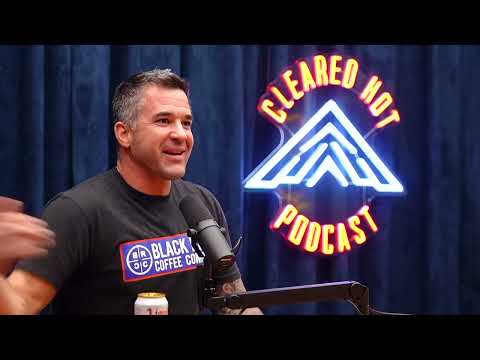
The killing of Osama Bin Laden in 2011 was a pivotal moment in modern history, but the details of that mission have been the subject of controversy and debate ever since. Recently, Andy Stumpf and Brent Tucker discussed the conflicting accounts about who actually fired the fatal shots during the raid, focusing particularly on Rob O'Neill's claims.
Andy Stumpf revealed that he was sued for $25 million by Rob O'Neill, the former Navy SEAL who publicly claimed to have shot Bin Laden. Stumpf has never met O'Neill and has never crossed paths with him. Despite this, Stumpf has spoken with several people who were present during the raid and who remain part of his life to varying degrees. These individuals have reportedly told him that the narrative O'Neill has espoused does not align with what they witnessed.
Stumpf emphasizes that he was not at the raid himself and that his information is third-hand, but he trusts the accounts of those who were there. He notes that no one he has spoken to shares O'Neill's version of events.
The core of the controversy lies in the differing stories about the final moments of the raid:
Rob O'Neill's Account: O'Neill claims that he and he alone confronted Osama Bin Laden, standing directly in front of him, and shot him three times—twice in the head and once on the ground. He asserts that he was the sole individual responsible for killing Bin Laden.
Matt Bissonnette's Account: In contrast, Matt Bissonnette, another SEAL team member, describes a different sequence. According to Bissonnette, the point man, known as "Red," fired the initial shots in the stairwell, and Bin Laden was already dead when the team entered the room. Bissonnette states that multiple team members fired security shots, indicating a team effort rather than a single shooter.
This discrepancy is significant because it challenges the narrative of a lone hero and suggests a coordinated team action.
Amal Bin Laden, Osama's wife, reportedly stated that a team of SEALs killed her husband, which contradicts O'Neill's claim of a one-on-one confrontation. The White House issued a correction shortly after the raid, clarifying that Amal was not used as a human shield, as some stories suggested.
This raises further questions about who shot Amal during the raid, as O'Neill's account does not explain this detail.
Several individuals connected to SEAL Team Six have publicly disputed O'Neill's claims:
The owner of G2 Precision, who was on the raid, stated unequivocally that O'Neill did not kill Bin Laden.
Chris Fetti, a long-time SEAL Team Six member (though not on the raid), said that no one in the team has ever believed any story other than Red being the one who killed Bin Laden in the stairwell.
These statements add weight to the argument that O'Neill's narrative is not widely accepted within the community.
Stumpf and Tucker discuss how it is natural for individuals to have slightly different perspectives on the same event, especially in high-stress combat situations. However, these differences usually occur at a micro level, such as the order of actions or specific details, rather than at a macro level where the fundamental story changes.
For example, in larger operations like a convoy battle, different team members might see vastly different things due to their positions, but when pieced together, these accounts form a coherent overall picture.
In the case of the Bin Laden raid, the puzzle pieces from those present reportedly do not fit with O'Neill's version.
Both Stumpf and Tucker express concern about how these conflicting stories and lawsuits affect the integrity of the military community and public perception. They emphasize that the focus should not be on who fired the lethal shots but on the collective effort and the mission's success.
Stumpf states that he does not care who killed Bin Laden, as the entire team deserves recognition for their roles. He highlights that within the SEAL community, claiming credit improperly can lead to serious consequences, including loss of respect and trust.
The ongoing disputes and public disagreements risk muddying the waters and eroding the greater integrity of the special operations community.
The discussion also touches on the motivations behind public claims and lawsuits. Stumpf suggests that some individuals may be seeking fame or financial gain at the expense of truth and the valor of others who were involved.
He finds it ironic and troubling that some people are more upset with those telling the truth than with those who allegedly fabricated stories for personal benefit.
The debate over who really killed Osama Bin Laden remains unresolved in the public eye, with Rob O'Neill's claims challenged by other SEAL team members and official accounts. Andy Stumpf and Brent Tucker provide valuable insights into the complexities of combat narratives, the importance of integrity, and the potential consequences of conflicting stories.
Ultimately, the focus should remain on honoring the collective efforts of the team and preserving the trust and honor within the military community rather than on individual claims to fame.