
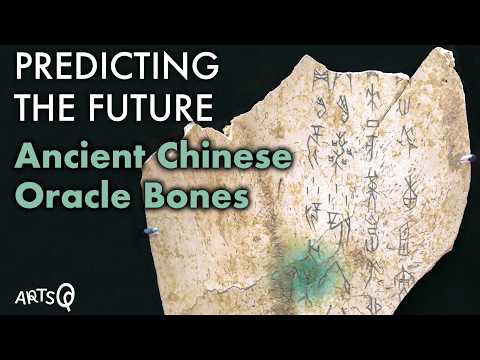
This blog post delves into the fascinating practice of divination in ancient China, particularly during the Shang dynasty under King Wu Ding, who used turtle shells and animal bones to predict the future and address personal concerns, such as health issues.
In ancient China, kings employed unique methods to predict the future and seek answers to pressing questions, much like using a Magic 8 ball. This blog post takes you on a journey back 3,000 years to the Shang dynasty, where we meet King Wu Ding, who faced a troubling toothache and turned to an unusual solution involving turtle shells.
Our adventure begins in the ancient city of Yin, home to King Wu Ding and his wife, Queen Fu Hao. Wu Ding ruled during the Shang dynasty, a powerful kingdom that dominated northern China. This era marked a significant milestone in Chinese history, as it was during this time that writing was first invented. The writing system developed then is an ancestor of the one still in use today, although it was primarily inscribed on animal bones, metal, and dried bamboo rather than paper.
King Wu Ding had many worries that plagued him. He was concerned about the safety of his kingdom, ensuring that his subjects had enough food, and maintaining his own health and that of his family. Additionally, he feared bad luck, particularly unexpected misfortunes like adverse weather conditions.
Like many cultures, the Shang people had a belief system that shaped their understanding of the world. They believed that their ancestors, including those from many generations past, resided in a spirit world and could influence their lives, sometimes negatively. King Wu Ding often attributed his troubles, including his toothache and unsettling dreams, to the actions of his ancestors. However, he was uncertain which ancestor was responsible, prompting him to seek answers through divination.
Divination is a practice used to uncover unknown information or predict future events. King Wu Ding believed in his ability to divine answers, which he likened to a superpower of fortune-telling. Instead of a Magic 8 ball, he utilized oracle bones—specifically, turtle shells and animal bones. These oracle bones served as tools for divination and were also used to record significant events, including the king's divination ceremonies.
Before conducting a divination ceremony, the turtle shells and animal bones were meticulously cleaned and polished. Marks were drilled into one side of the bones, which would be used for the divination process. To seek answers, the king would tap these marked areas with a heated metal stick, causing the shell to crack, similar to cracking an egg.
For instance, if King Wu Ding wanted to determine whether his ancestor, Grandfather Jia, was the cause of his toothache, he would strike the shell while proclaiming, "Grandfather Jia is causing my toothache!" The shell would crack, producing a distinct sound. He would then strike the shell again, stating, "Grandfather Jia is NOT causing my toothache," and read the resulting cracks to interpret the outcome. This process was akin to reading tea leaves, where the patterns formed by the cracks provided insights into his questions.
If the divination indicated that Grandfather Jia was indeed the source of his discomfort, the king would honor his ancestor by placing offerings of food and drink at his resting place, hoping to appease him in the spirit world.
After the divination ceremony, a scribe would carve the details of the event onto the back of the turtle shell. The flat underside of the shell, known as the plastron, was used for this purpose, making it easier for the scribe to write and for the shells to be stored neatly. These inscriptions represent some of the oldest writings discovered in China, providing valuable insights into the concerns and beliefs of the Shang kings.
Our exploration of ancient Chinese divination practices reveals how King Wu Ding utilized turtle shells to address personal and royal concerns, much like a Magic 8 ball. The records left behind serve as a window into the past, showcasing the intricate belief systems and practices of the Shang dynasty. Through this fascinating journey, we gain a deeper appreciation for the ways in which ancient cultures sought to understand and influence their world.



















