
This blog post delves into the rich history of Egypt, focusing on the pivotal role of the Nile River in shaping ancient civilization, the construction of monumental structures like the Pyramids, and the ongoing cultural practices that connect modern Egyptians to their ancestors.
Egypt is known as the birthplace of one of the oldest, most powerful, and longest-lasting civilizations on Earth. This blog post takes you on a spectacular aerial journey, revealing how the magnificent achievements of the ancients helped shape the Egypt of today. By flying over the country's vast and varied landscapes, we uncover how generations of Egyptians battled harsh terrain and scorching temperatures to build a nation like no other.
Covering nearly 400,000 square miles and home to almost 100 million people, Egypt is the largest and most populous country in the Arab world. Life here has always been a challenge, with 97% of the terrain being harsh, arid desert. The key to understanding how the ancient Egyptians built such a powerful civilization lies in the mighty River Nile.
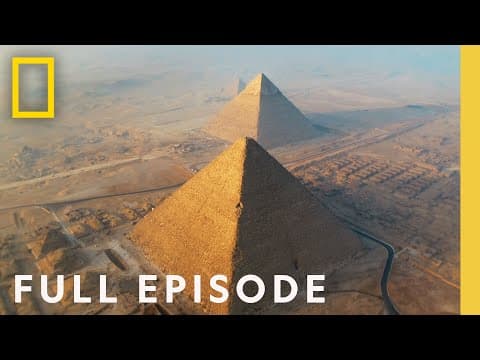
At over 4,000 miles long, the Nile is the longest river in the world. Without it, the ancient Egyptians may never have founded an empire or built magnificent monuments. The most iconic of these monuments, the Pyramids of Giza, lies just eight miles from Cairo's center. From the air, the scale of the engineering is incredible, with the Great Pyramid of Giza being the oldest and largest, completed over 4,500 years ago. It consists of more than 2 million sandstone blocks, each weighing more than a car, and served as a tomb for Pharaoh Khufu.
American archaeologist Mark Lehner has dedicated four decades to studying the Giza Pyramids. He emphasizes that the construction of these massive structures required a whole infrastructure. Archaeological findings in what is sometimes called the "workers' village" reveal bakeries, workshops, and grain silos that supported a labor force of about 20,000 workers who quarried the 5.7 million tons of sandstone needed for the Great Pyramid alone.
The Great Pyramid was originally encased in polished white limestone, which reflected the sun and made it shine brilliantly. The nearest source of this limestone was in Tura, eight miles away, across the Nile. Ancient Egyptians utilized a harbor and canal complex to transport these stones, taking advantage of the Nile's annual flood to lift the blocks closer to the construction site.
The Nile was not only essential for transport but also for food. Many Egyptians still depend on it today for their livelihoods. On Elephantine Island, Yousef and his son Karim Muhammad, part of the Nubian community, continue the fishing traditions passed down through generations. They navigate the congested waters of the Nile to catch tilapia, a staple of the Egyptian diet since the time of the Pharaohs.
The rich silt from the Nile allowed farmers to cultivate crops in the desert. German archaeologist Joanna Seagull is excavating a 5,000-year-old town on Elephantine Island, highlighting the Nile's importance to ancient Egyptians. The annual floods deposited fertile silt across the floodplains, enabling agriculture. The ancient Egyptians even invented a device called a nilometer to predict the flood levels, ensuring successful harvests.
While 96% of Egypt's population lives on the 3% of cultivated land irrigated by the Nile, the vast majority of the country is inhospitable desert. In the Sinai Peninsula, where rainfall can be as little as one inch a year, the Bedouin people have thrived for millennia. Kudra ID Morid, a Bedouin shepherdess, exemplifies the resilience of her people as she navigates the harsh landscape in search of grazing for her goats.
The ancient Egyptians also utilized the desert for burial purposes. The Valley of the Kings, where at least 63 royal tombs were built, served as a secret burial site for pharaohs. The tomb of Tutankhamun, discovered in 1922, remains one of the most famous due to its intact treasures, including the boy king's gold death mask.
In modern Egypt, the relationship with pigeons continues a legacy from ancient times. In Cairo, pigeon breeders engage in competitions, showcasing their birds in races that echo the importance of these animals in Egyptian culture.
The grandeur of ancient Egyptian civilization is also evident in the numerous temples built to honor the pharaohs. Hot air balloon pilot Baha Ahmed provides a unique perspective as he navigates the skies above the West Bank of Luxor, where the Temple of Hatshepsut and the Ramesseum stand as testaments to the power of the pharaohs.
As Egypt transitions into the modern era, the Nile remains the lifeblood of the nation. The Grand Egyptian Museum, set to open soon, will house thousands of artifacts, showcasing the rich history of this ancient civilization. The journey of transporting these priceless relics across Cairo highlights the ongoing efforts to preserve Egypt's cultural heritage.
Flying over Egypt reveals how this proud nation continues to embrace its unique past. The ancient and modern coexist, with the Nile River at the heart of it all, sustaining life and culture for thousands of years. The legacy of the pharaohs and the enduring traditions of the Egyptian people remind us of the remarkable history that shapes the country today.



















