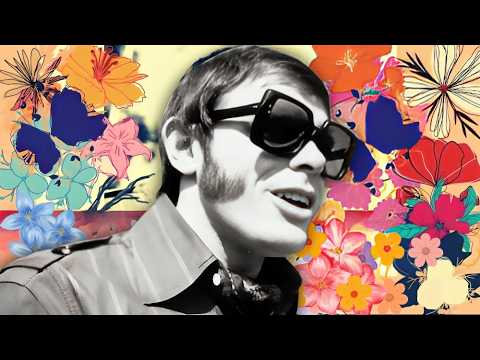
This blog post delves into the efforts of 50s music stars to adapt to the changing musical landscape of the 60s, highlighting their struggles, notable releases, and the overlooked gems that emerged during this transformative period in music history.
The arrival of the Beatles and the British Invasion in the early 60s marked a significant shift in the music industry. Many rockers and crooners who dominated the charts in the late 50s suddenly found themselves struggling to maintain their relevance. As music and fashion evolved, these stars quickly became outdated. By the time the psychedelic movement took hold around 1966 and 1967, they were often viewed as relics of a bygone era. However, some artists refused to fade away quietly and sought to adapt to the new trends. This post explores several 50s stars who attempted to navigate the psychedelic 60s, showcasing their efforts and the hidden gems they produced.
Dell Shannon's music career began in the mid-50s, but it was his 1961 hit "Runaway" that catapulted him to fame, reaching number one on the Billboard charts. During the early days of Beatlemania, Shannon managed to retain some success, becoming the first American to cover a Beatles song with his rendition of "From Me to You," which charted before the original.
Despite this early success, his mid-60s singles struggled to gain traction. In 1966, he released a cover of The Rolling Stones' "Under My Thumb," but it was in 1967 that he truly attempted to adapt. Teaming up with Stones' manager Andrew Oldham, he recorded the album "Home and Away" at Olympic Studios in London. Intended to be the British answer to the Beach Boys' "Pet Sounds," the album was shelved due to poor single performance, only to be released in 1978. Shannon also recorded "The Further Adventures of Charles Westover" in 1967, which, despite disappointing sales, received critical acclaim and is now considered one of the greatest baroque pop albums.
As the British Invasion took hold, many British rockers from the late 50s and early 60s, such as Billy Fury, Adam Faith, and Marty Wild, attempted to reinvent themselves in the psychedelic era. Adam Faith, who hadn't had a hit since 1962, released the psychedelic track "Cowman Milk Your Cow" in September 1967, written by the Bee Gees. This song has since become a cult favorite and a sought-after collector's item.
Billy Fury made a notable attempt at a comeback with "Silly Boy Blue," a song written by a young David Bowie. The track showcased a new sound for Fury, featuring a unique arrangement and lyrics reflecting Bowie's interest in Tibetan Buddhism. Meanwhile, Marty Wild shifted his focus to songwriting, penning hits for other artists, including "Ice in the Sun" for Status Quo.
Roy Orbison, who had a major hit with "Pretty Woman" in 1964, struggled to find success in the late 60s. In 1969, he released "Southbound Jericho Parkway," a seven-minute sitar suite that explored themes of the generation gap and modern life, but it failed to chart. The Everly Brothers also faced a decline in popularity, attempting a comeback with the album "Two Yanks in England," featuring songs by the Hollies. Despite its lack of commercial success, the album contained hidden gems like "She Never Smiles Anymore."
Ricky Nelson, another fading star, collaborated with Coppelman and Rubin to produce "Another Side of Rick," which showcased a different side of his artistry. Although it received positive reviews, it was a commercial failure. The Four Seasons ventured into the psychedelic realm with their ambitious concept album "Genuine Imitation Life Gazette," which satirized American life but went largely unnoticed.
Bobby V, who managed to reinvent himself during the psychedelic era, released the album "Come Back When You Grow Up" in 1967, which reached number three on the charts. Dion, who had a successful solo career after leaving Dion and the Belmonts, experimented with folk and blues influences in his 1965 recordings, but faced commercial challenges until his hit "Abraham, Martin and John" in 1968.
Chubby Checker, known for his dance hits, also ventured into new territory with his album "Checker," which showcased his versatility as a singer. Elvis Presley, despite not needing to adapt to new trends, recorded the psychedelic song "Edge of Reality," which featured unusual lyrics and was later recognized for its unique sound.
Johnny Rivers, who began his career in the 50s, successfully adapted to the changing musical landscape with his psychedelic album "Realization," featuring the hit "Summer Rain."
The late 60s was a strange and transformative period for many stars of the 50s as they attempted to adapt to the psychedelic sounds of the era. While some found success, many others produced remarkable but overlooked records that have since gained appreciation. This exploration of 50s stars adapting to the psychedelic 60s highlights the resilience and creativity of artists striving to remain relevant in a rapidly changing musical landscape.
As we reflect on this era, it becomes clear that the attempts of these artists to reinvent themselves contributed to the rich tapestry of music history, showcasing the enduring spirit of creativity in the face of change.